I don’t know why but last weekend I was thinking about Raymond Chandler, Ernest Hemingway, William Faulkner, F. Scott Fitzgerald, and Alfred Hitchcock. Not necessarily in that order. As I’ve written before, I don’t know why I think the things I do, but I do and that is enough to make me think, and then think that I’d rather not want to think about it.
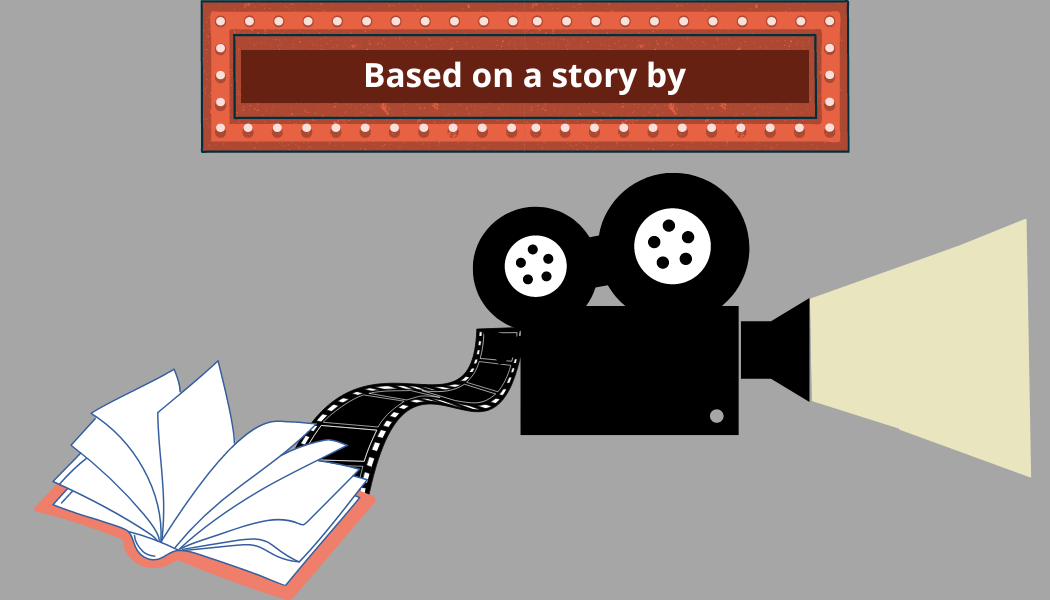
It all started with me re-reading The Curious Case of Benjamin Button which got me thinking about how a movie and a book can be so different. A movie and a 600 page novel, an epic, the proverbial tome may differ because who could get all that detail into a movie people would be willing to sit through, except perhaps Gone With the Wind, but that has its own problems. But with Ben, or BB as I like to call him, that’s a short story, and still Eric Roth managed to write a 2-1/2 hour movie based on a tale that took me a fifth of that time to read, with a bathroom break thrown in. How did he do that! The answer is, he didn’t. Roth and story writing partner Robin Swicord wrote a different story with a title and a character of the same name. It’s a good movie. It’s a good short story. They just aren’t the same. And that’s been going on pretty much since we’ve had movies.
William Faulkner’s 1944 treatment of Hemingway’s To Have and Have Not does the same thing. A character or two are mentioned in both book and movie, and those plus the title are the total of what remains of the story the movie was based on. Now the 1950 adaption, “The Breaking Point,” by screenwriter Ranald MacDougall is much closer to the Hemingway classic. It’s on a different ocean and there’s an extra couple of characters, but it’s recognizable as being a story based on. But does that make it better than the 1944 classic or just different?
You can’t say that Faulkner, who was no slouch in the book writing department, was flexing his writing muscles, because he quite faithfully followed Chandler’s The Big Sleep, changing only what needed changed to make the movie acceptable to those who moderated the 1946 version of the production code (and to make it acceptable to those who wanted to see Bogart and Bacall become Bogart and Bacall). Perhaps that is why when Chandler took to the task of writing the screenplay to Patricia Highsmith’s Strangers on a Train, he stayed as close as he could to the original story. Oh wait, you’re going to say, they aren’t close at all. You might even say in the movie, the strangers are on an entirely different track than the one the train chugs along on in the psychologically thrilling novel. The “Strangers” presented by Alfred Hitchcock that we see is not the version Chandler wrote. That script ran afoul of the censors (and to a large extent, of Alfred) and was almost entirely rewritten by Czenzi Ormomde.
When Chandler and co-screenwriter Billy Wilder adapted James M. Cain’s Double Indemnity, they took much liberty with the original story, changing names and timelines, and most radically, they added a new character, the insurance investigator, which created a completely different story.
“Double Indemnity” and “Strangers on a Train,” a double dose of two books, two movies, four stories, none of them bad but none of them based on any other. So maybe when you have great writers adapting great works of writing, you will get great results, just not always recognizable as the story they are based on.
Now let’s talk about what Leon Uris and Dalton Trumbo did with “The Exodus.”
 Everybody is more engaged and more fun to be around when they feel valued, and they feel most valued when they are treated like people. Read why we say good manners never go out of style at www.roamcare.org. While you’re there, check out the rest of our site, then share us with your friends and family!
 The Real Reality Show Blog
This is like playing the game Telephone, where people try to tell what they’ve heard from someone, but it sounds NOTHING like what was said when it finally makes its appearance again. It’s why I prefer books. Or Marvel movies.
I’ve never seen a Marvel movie although I enjoyed the original Batman and Superman serials from the 40s. Do they count?
I can say that I prefer books but I look at book, movie, or play on its own merit. I’m usually not so disappointed when the action moves in a different direction and I can honestly say that I’ve often found some of those differences just as (and sometimes more) enjoyable than the original.