After last week’s mini diatribe (would that be a monotribe?) I started thinking about word usage more than usual. As one who writes and speaks, words are my tools, and usage has to be precise if I expect to be understood. I decided if I could bump off any word, have it struck from all dictionaries, pulled from thesauri, and eliminated from internet searches, the one that stands out more than any other as offensive to my ears, more so than even the inappropriate use of weaponize, practicability, and disenfranchisement that will escalate over the next 15 months, that one word would be “hack” when used as a tip, hint, or suggestion. (A word I’d like you to consider not considering is “run-on” as in sentence.)
The word hack comes to us from Middle English, hakeney, a horse used for riding. It has been in common use as hackney, a horse of small stature appropriate for riding or pulling a small carriage (versus one used for plowing or pulling wagons) since the 1600s, perhaps earlier. Hack, the obviously shortened version, it along with its adjectival form hackneyed, almost immediately took on more sinister uses.
The hackney pulled carriages became a favorite for rides for hire throughout London, the horse and carriage combination commonly called a hack (which is why we still call taxis, cars for hire, hacks), and anything or anyone offering himself or his property out for hire, also was considered a hack. At this same time, the hackney pulled carriages became so prolific, hackneyed was coined to describe anything commonplace.
Hack continued to grace the pages of English dictionaries as a carriage or vehicle for hire or, in a pejorative way, one of common upbringing, skills, or expectations, and it continued without much controversy as such until Americans got involved. Through the early twentieth century, hacks here were also cabs and commoners but we expanded hack to refer to one who did the bare minimum to earn his pay in almost any field, whether a hack writer or a hack surgeon. And then, just about mid-century, something weird happened. Hack took its turn as a verb in American verbiage, as in, “That’s too much for me, I just can’t hack it anymore.” And that may (MAY) be its entry into computerese.
Mid-century computer programming was a long, difficult, and often trial and error experience. Those who were successful at programming proudly claimed they could hack it. And hack, hacker, and hacking became positive references to those proficient with the inner workings of computers and programming languages. About the time Matthew Broderick was changing grades for him and his high school sweetie, hacking with reference to computers, regained its negative connotation.
None of this explains why today, hack is synonymous with a handy dandy household hint. Etymologically there is no connection. Yet today there will be no less than 48 billion headlines in cyberspace addressing life hacks, kitchen hacks, productivity hacks, dating hacks, health and beauty hacks, and probably hacking hacks. Perhaps 48 billion is a tad hyperbolic. I’ll check for a writing hack on how to get large numbers across in dramatic fashion.
Perhaps it is as one Quorum user suggests, “It sounds edgier. “Tips” are merely interesting and useful. “Hacks” sounds as though you’ve been devious and insightful, perhaps even forbidden. “Hacker” used to be somebody with exceptional skill at computers. “Hacking in” to a computer system was something that required a lot of knowledge and cleverness. “Hacks” carries some of that sense of astuteness, along with some of that sense of having inside information that others don’t have. So it makes people feel important.” He goes on to say, “To me they just sound like a…” but I’ll stop there. This is a family blog. I’d had to get hacked and have my posting privileges revoked.
Etymologically, bias is assuming something. Cognitive biases, nobody listening or discussing, assumes outcomes based on past behavior and can have significant consequences. In the most recent Uplift!, we discuss how with respectful communication we can live, work, and play well together. Take 4 minutes to read it and see if you agree.

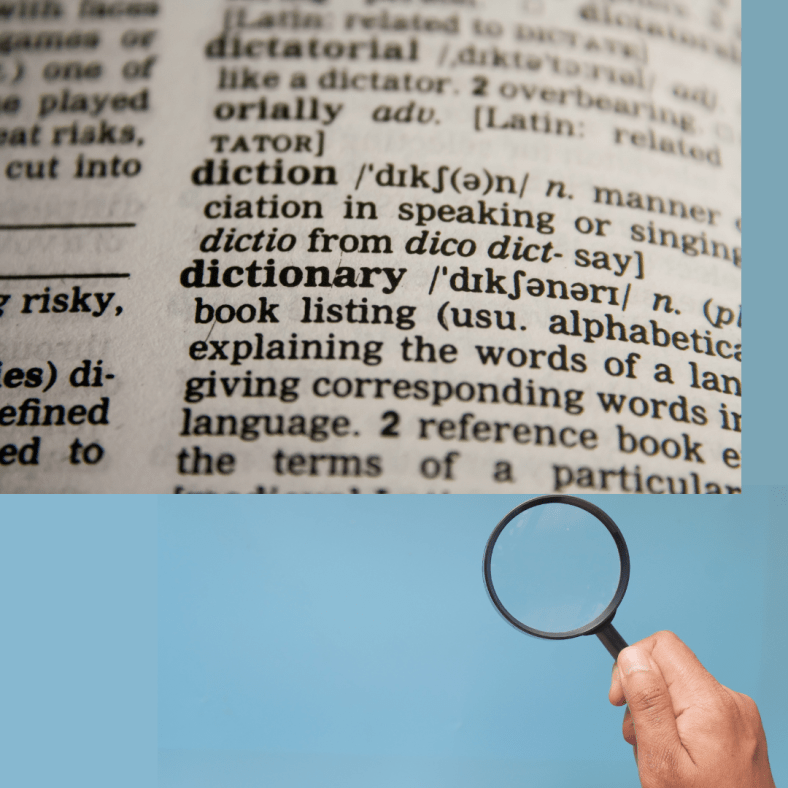
 Speaking of things that describe, we’ve been so busy lately so busy making up rules about pronouns to effectively represent people, that we’ve missed it completely that when it comes to things. When writing, or speaking or even texting (although I hesitate to include text message characters as representative of the English language), and reference is made to two objects introduced in the same sentence, in subsequent reference to one or both (or even more!) our current batch of pronouns is woefully inadequate. And we end up writing things like, “As in them, the things that need describing, not the things that are described.” We need a good shorthand way to refer to thing one and thing two through the duration of the missive.
 If I tell you to picture in your mind classic gray sweatpants, you know exactly what I mean. The picture in your mind is unambiguous. And you no doubt can fill in the rest of the catalog with several tops (long, short, and sans sleeves) and short versions of those pants. But what’s the stuff they are made of? We can describe it, but can we name it? Gray sweatsuit material is just too long. It’s usually cotton but to say, “it’s too warm today for long pants, I think I’ll exercise in my cotton shorts,” sounds like I’m headed to the gym in my underwear. Athletic wear is confused with athleisure which is just spandex you wear in the outside. Technically that gray stuff is a sort of flannel but if I say I plan to jog in my gray flannel suit, people will expect to see someone running down the street more formally attired than I’m comfortable running in. Nope, we need a new word for gray sweatsuit material and that’s that.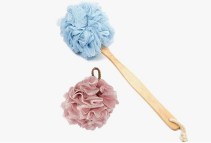

 Did you on June 29 Earth completed a full rotation on its axis 1.59 milliseconds ahead of schedule? Time flies! We talked about that last week at
 the term had then expanded to include other surprises hidden in programs and apps, on DVDs, and even on Google.
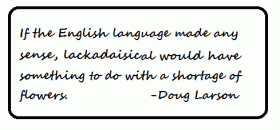 excerpt from I presume one of his favorite authors. I always read them. They often provide a glimpse into the authors mind at the time he or she was working on that piece. But it wasn’t until this time, this epigraph, that I really stopped to think about what I was reading. Not the metaphorical, the inside glimpse, etc., etc., etc. The actual. Why that the epigraph, those borrowed words, are indeed an epigraph.
 So that brings me back, do we need all those words? If they made sense I’d be happy to learn all 600,000 words. But so many of them don’t make any sense. Look at two of the ones that I mentioned: epigraph and paragraph. Both have “graph” and both are similar in that they are a group of words. But when I think of graph I think of a picture.
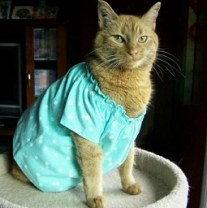 And if that’s not enough, then we have to use words that we know don’t fit a particular situation because that’s the in way to speak and Heaven forbid we aren’t trendy. For example good can’t be good. Since the time when I was torturing my parents with popular vocabulary “good” has been groovy, cool, bad, righteous, divine, outstanding (emphasis on the out), epic, excellent, rad, sick, and ridiculous. But what did they expect? They’re the generation that came up with cat’s pajamas and bee’s knees. Unfreakin’ believable.
 The Real Reality Show Blog