Over the weekend I happened across a protracted online discussion regarding a new (to me) product by Melt (also new to me), uh, drum roll — butter (not new to me) (I thought).
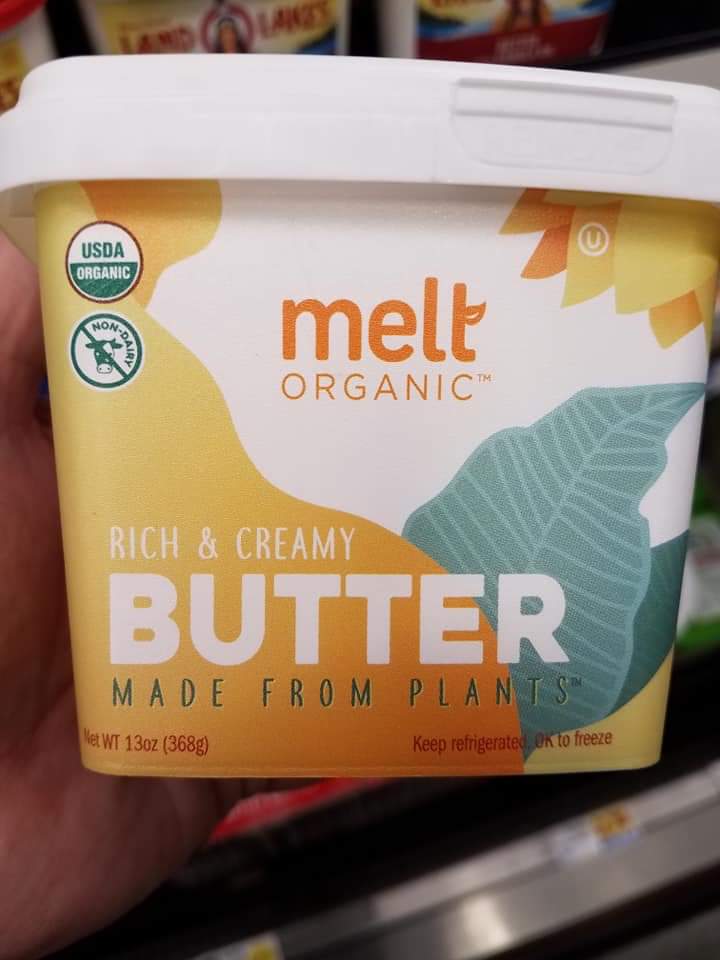
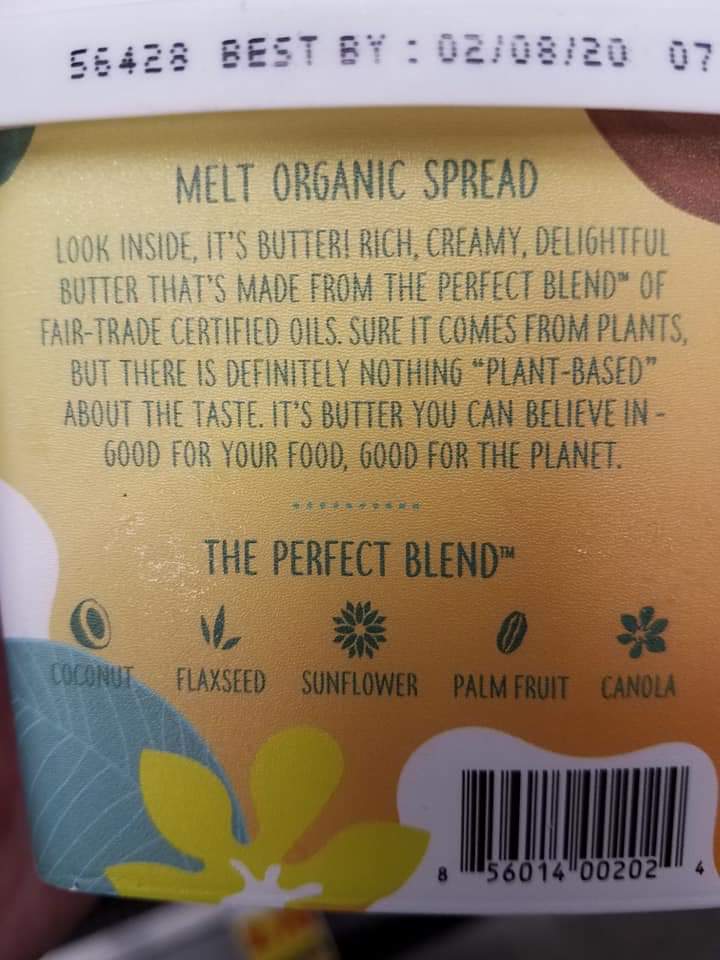
Apparently Melt’s “butter” is what us old guys call margarine. Except instead of corn, soybean, canola, or olive oil, it’s made of this year’s designer oils including coconut and sunflower.
The discussion centered around that the product is labeled butter. Not butter substitute, not vegetable spread, not even “plant butter” ala Country Crock’s vegan spread. Butter. Unlike most of the European countries and Canada, the U.S. does not have a standard for what can be called milk, butter, or a variety of other dairy products. The “for” group pointed to almond milk, soy bacon, and veggie cheese. The “anti” group pointed to almond milk, soy bacon, and veggie cheese. The logic seems to be that each of those products specify its source in the product name and thus does not mislead the consumer.
Personally I have a problem with calling a non-dairy product butter, although I and millions of other carnivores do it routinely when we reach for that tastiest of all spreads, peanut butter. But again, peanut butter isn’t going to be mistaken for the stuff you create sauces with or turn to into cookies (peanut butter cookies, which also use butter butter, notwithstanding). We also confuse issues with the inaccurately named buttermilk, which unlike almond milk is not made with its modifier, and let’s not even talk about head cheese.
So what’s the solution to this confusion. If I had one I’d be chairman of a high powered, and high price, think tank, not writing a blog on a free domain. Maybe we should get back to calling things what they really are, like beef and pork and sausage. But then would even the most hard core meat eater go for “cow,” “pig,” and “your guess is as good as mine?”
 The Real Reality Show Blog