In honor of Dr. Peter Marks’ last few days as director of the Center for Biologics Evaluation and Research I present to you what is possible when there is a compassionate, empathetic occupant at the White House.
Dr. Marks was given the choice of resigning or being fired for not agreeing with HHS Secretary, AKA the black sheep of the Kennedy clan. Dr. Marks wrote in his resignation letter, ““It has become clear that truth and transparency are not desired by the Secretary, but rather he wishes subservient confirmation of his misinformation and lies.” Dr. Marks’ last day will be April 5.
It’s significant all this is happening in April. Just a week after Dr. Marks closes his office door for good, we will celebrate the 80th anniversary of the death of Franklin Delano Roosevelt. It will also be the 70thanniversary of the announcement that the Salk polio vaccine was safe and effective. It is clearly not the most remembered thing about the Roosevelt administration, but had it not been for his instigation, Jonas Salk may have never had the funding behind his monumental research and discovery.
It is no secret that President Roosevelt suffered from polio. He was stricken with the disease in 1921, at age 39 and 11 years before being first elected President of the United States. Polio left him paralyzed from the waist down for the remainder of his life.
During his presidency he founded the National Foundation for Infantile Paralysis (NFIP), a philanthropic organization dedicated to treatment and care for polio victims, raising millions of dollars through “Birthday Balls,” fund-raising dances held across the country on his birthday.
In the late 1930s, the NFIP began soliciting contributions directly from everyday citizens through a counter display program known as the March of Dimes. Through the 1930s and 1940s, through the March of Dimes, the NFIP raised enough money to support the care of every polio patient in the United States and began setting aside funds for preventative care.
With funds raised through the March of Dimes, Dr. Jonas Salk began research in 1947 into a vaccine against the poliovirus, an extremely contagious viral organism in the enterococcus family of viruses. Five years later, safety trials began on human volunteers. After three years of testing, on April 12, 1955, the polio vaccine was determined to be safe and effective for human use.
Within two years of its release, polio in the United States had declined over 90% from 58,000 cases to 5,600 cases. By 1961 only 161 cases of polio were reported in the U. S., a decrease of 97.7% from the 1945 baseline.
Dr. Salk was the single largest beneficiary of the NFIP March of Dimes fundraising efforts, began because of the philanthropic efforts of the man in the White House.
A couple parting thoughts. Roosevelt’s image appears on the American ten cent piece, the dime, because of his efforts behind the March of Dimes campaign. In 1945, Congress voted to feature his likeness on the dime, specifically in honor of his role in the March of Dimes.
If you have an interest in virology, public health, or just curious about what research looked like 80 years ago, an exhibit of Salk’s lab equipment and memorabilia is on display at the University of Pittsburgh School of Public Health, in the common areas of the lobby and second floors of Salk Hall, Fifth Avenue, in the Oakland section of Pittsburgh, PA.
Some may argue Roosevelt would never have been so active in pursuing research for the fight against polio is he himself has not contracted the disease. A valid point but also a petty argument. Nearly all research and funding for research is accomplished through endowments made by patients or patient families. Fortunately sometimes those afflicted with diseases are prominent and/or wealthy citizens who do not mind giving of their time and fortunes to see good is done. Good that can be experienced by all.

Dr. Jonas Salk
Is there any possible way to work in my weekly plug for the latest Uplift post. Hmm. It would be stretch. Last week we published, Coming Attractions, a discussion on balancing progress with the present. Fortunately for us, there are people like Dr. Salk who will always be looking for that next big thing.
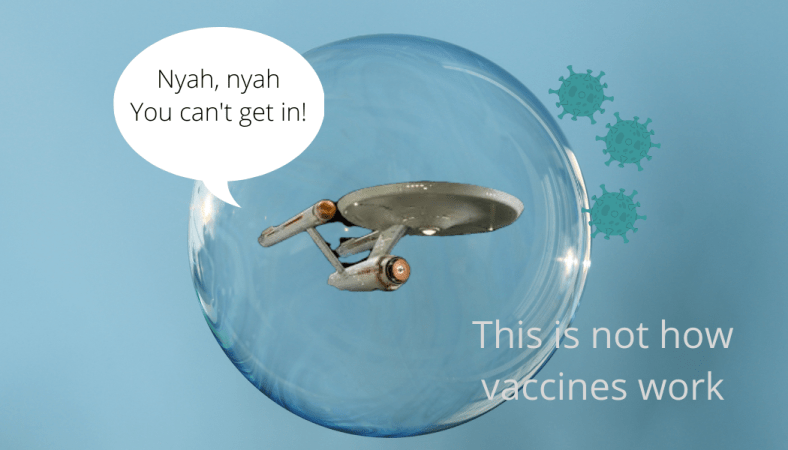
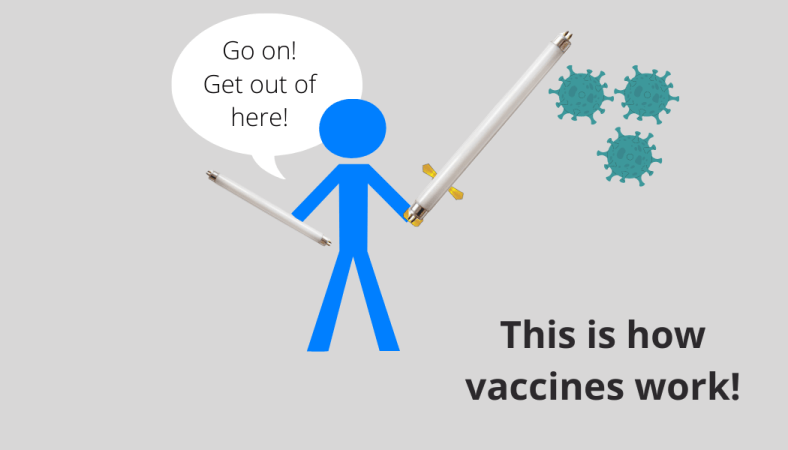
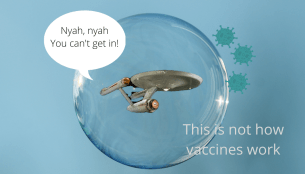 Try to picture this in your mind. Vaccines do not create a force field around you. This is not like in Star Trek. “Shields up, Mr. Sulu.” Even if it was, when do you ever see an episode when the shields weren’t breached, at least even a little bit? “I’m givin’ ‘em all wee got Cap’n, but I doona know how long thar’ll hold!” No, the vaccines are more like the incessant hum of a poorly grounded fluorescent light. You (or in this case the virus) goes into the room, plans on getting comfortable, switches on the light, and after hanging out for as long as you can take, you are driven out screaming, half crazed by the sensory assault. Before you went in the room you thought you found you happy spot. So you go on in but when you turn on the light, the room responds by making it so unlivable you are driven out.
 Vaccines work like those lights. They can’t keep the virus from entering you. Viruses are out there hanging around, looking for a happy place to settle in. They see those big nostril openings and buzz on in. (Note: make sure masks cover noses.) Their presence trips the sensor that turns on the immune system which drives the little buggers out. So you see, the vaccine doesn’t keep you from getting the virus. It keeps you from getting sick from the virus. That explains why 99+% of the people in the US now sick and dying from COVID are unvaccinated. And that also explains why a vaccinated individual can test positive for COVID when they swab the inside of the nasal passages.
 Now, here is something un-ranty. (Un-rantish?) (Un-rantlike?) August is Vaccine Awareness Month. It was founded by National Public Health Information Coalition nearly 10 years ago so it’s not something new just to trick you into getting the COVID vaccine. Remember my older posts. The first vaccine was developed in 1784. This is not new science. Do you part. Go get your vaccines. Already did? Wear a mask!
 According to data generated by the Johns Hopkins University, about 1,880,000 deaths from COVID-19 were recorded in 2020. As of the first week of June 2021, less than halfway through this year, about 1,883,000 deaths due to COVID-19 have been reported. Globally.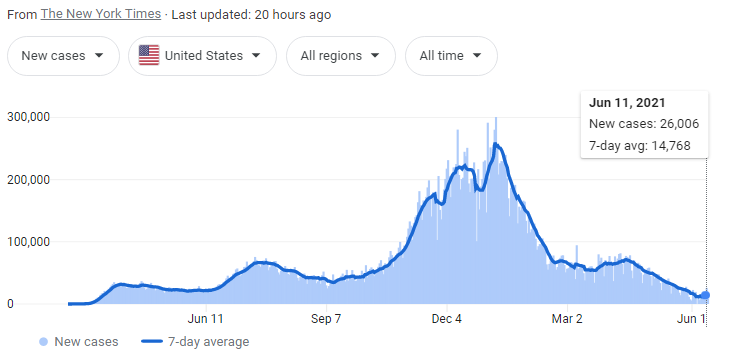





 The Real Reality Show Blog