
Cleaning My Desk


Memo to self: read those memos you write to yourself sometime! Sheesh! You almost missed it.
What did I almost miss? National Toilet Paper Day. Would it have been worth missing? Most assuredly. But my memo said if I could not come up with a post topic for today to rerun “Shopping Math” because of toilet paper’s predominant role in that post I guess. Who know what I’m thinking when I write these memos? Who know when I write these memos?
So, since I almost always do what I tell myself to do, especially now that I’m older and put up up fewer arguments in general, I will repost Shopping Math below. But first…did you know that toilet paper, although mass produced, in China by the 1300s, was not introduced to the US until 1857. In 1883, Seth Wheeler patented rolled toilet paper and the rolled toilet paper dispenser, forever instigating the argument, do you roll you paper over the top or to the bottom? Sometime today thank Seth for his inventiveness. You shouldn’t need to write a memo to yourself to remind you.

It was approaching the mid 1960s and I was nearing third grade in elementary school. Rumors began circulating around town that the school would be moving to “New Math.” We who would be the beneficiaries of such a momentous shift saw it as a bright star in the heavens of learning. Particularly those of us with older siblings who would gleefully taunt us with “wait till you have to learn long division!” Ha! We showed them. Arithmetic is dead. Long live new math!
Yeah, well, that’s why I spent 25 minutes in the toilet paper aisle Sunday afternoon trying to decipher Ultra Strong Mega Rolls and come up with the best buy for my cash challenged paper products budget. I might have once aced the exam on the difference between a number and a numeral but that didn’t help while I was trying to mentally multiply 348 sheets times 9 rolls divided by $9.45 all the while having visions of bears singing about how wonderfully clean their charming toilet tissue makes them feel.
It doesn’t help that there are no federal guidelines for bathroom tissue roll sizes. Double, triple, giant, mega, mega plus, and super were the adjectives in use in that aisle but even when used by the same brands, the same moniker did not represent the same number (numeral?) of sheets per roll. One package of Mega Rolls boasted 308 sheets per roll while another claimed 348 sheets per roll. Double Rolls had either 148 sheets or 167 sheets. None of that made it easier to figure out if 9 rolls for $9.45 was a better value than 12 rolls for $11.45. New math said “x is greater than y when the intersecting sets represent the lesser value of the total compared to the greater value of the sum of the variable(s) represented by the equation,” but old arithmetic said “Hold on there, Baby Bear. That’s not just right.” (If you are trying to follow along without a program, although everybody used it as a basis for comparison, I never found a roll claiming to be “Regular.” Not a good thing not to be amidst all that toilet paper.)
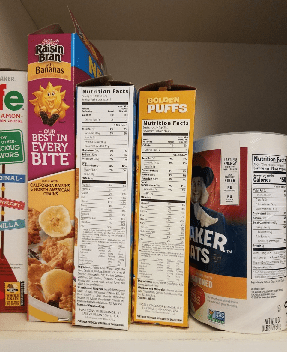
By the time my daughter entered third grade I was happy to see basic arithmetic had returned to the school curriculum and I could look forward to having help balancing my checkbook. Unfortunately even old math was not her passion and anything other than straight addition, subtraction, or division by ten was, though not a challenge, not actively pursued as a Sunday afternoon diversion. And so, now these many years later, I was left standing in the toilet paper aisle pondering if I would rather have “ultra soft” or “ultra strong,” whether the shape of the package would fit in my closet, and finally just going for the greatest number of sheets per roll figuring that equals the fewest number of times I’ll have to change the roll on the holder.
Satisfied I made the most logical if not the most economical choice, I checked my shopping list for the next item up. Hmm. Paper towels. I have to start shopping with a calculator.
—–
Memo to self: Rerun this if stuck for a post on August 26, National Toilet Paper Day. Really, August 26, not the first Tuesday following the first Monday in November. Who knew?
Please bear with me as I try to control myself today. You know how excited I get over special days and holidays. You also know that at least in America, every day is “Something Day.” We have the big ones like Christmas Day, the socially aware days like Blood Donor Day (June 14), the fun ones like Ice Cream for Breakfast Day (first Saturday in February) and the fun ones with a little more activity to work off those celebratory calories like Dancing Day (April 29). Today may seem a day more aimed to a specific special interest than most but it’s a day most of us can well relate to. It is National Underwear Day. Yes, that is a thing. At least in the US. Citizens of other countries may want to consult … I’m sorry, I have no idea who you would consult to determine when your country celebrates Underwear Day. Chances are it doesn’t. Feel free to join us!
Sometime at the start of the century a some marketing people at the e-tailer Freshpair thought it would be cool to celebrate unmentionables. This was genius on their part since Freshpair e-tails nothing but unmentionables. What better thing for them to mention. So after years, months, weeks, or perhaps hours of planning, National Underwear Day was introduced to the nation on August 5, 2003. Ten years later they discovered they set their sights too low and instead should have introduced World Underwear Day to the World.
It was at the 2013 celebration they invited everyone to meet at Times Square in New York City to break the world record for the largest size gathering of people in underwear. Just underwear. I suppose everywhere people gather they are in their underwear but this gathering was for people just in underwear. Or maybe underwear over outerwear. I don’t know, I didn’t get there for that gathering. Who did get there were 800+ people all in their underthings. If you are wondering, that did not break the record which was set on September 24, 2011 when 2,270 participants gathered at the Utah Undie Run in Salt Lake City, Utah wearing only underwear. That’s a lot of skivvies.
Although people have been wearing layers of clothes since the ancient Romans, underwear that we would recognize came around in the 1800s when both men and women started wearing undergarments that resembled pants. Prior to then, although men had been wearing something resembling shorts since the Middle Ages, women wore simple shifts under their dresses until long pant like underwear was introduced at the beginning of the 19th century. Have you ever wondered why we refer to them as a pair of pants or or why panties is plural? (are plural?) The first examples were actually two separate legs that were pulled on separately then tied together at the waist.
Back to the celebration…what will you do to mark National Underwear Day? Whatever it is, wear that wear with pride and try to keep it clean. We’ve progressed as a society with unmentionables so mentionable that they appear in the Guineas Book of Records. No word on if another attempt will be made to break that record but rest assured, wherever you are, most of those around you would qualify.

Not My Underwear
They are magically delicious. They are often the first real solid foods you eat. They’re great. They are the stuff dreams are made of. Wait! No, those are jewel encrusted golden birds from Malta. But that other stuff, yeah, that they are. And they are cereal.
Today is National Cereal Day. Look, every day is something and today the needle points to those grains used for food, often breakfast, such as wheat, oats, or corn. (Thank you Mr. Merriam. Or Mr. Webster. Can anybody tell those guys apart?)
Can you imagine your life without cereal? Probably not. Even if you aren’t a cereal eater now, you once were. Hot, smooth cereals like cooked creamy rice or wheat are often a baby’s first step from “baby food” to the stuff in the house everybody else eats. Those round oat thingies (Cheerios by name) are most toddlers’ favorite snack and few parents of the youngsters leave home without them. And you confirmed anti-cereal zealots, don’t tell me you don’t have a canister of oatmeal or a box of corn flakes somewhere in that kitchen with the idea that they are just to make cookies or to bread chicken.
I’ll admit I’m not a big boxed cereal eater myself today but I have a decent chunk of pantry space devoted to the foodstuff. Hot cereal is different. I always have multiple containers of old fashioned oats on hand for breakfast, lunch, sometimes dinner, often cookies, just as often bars, and occasionally muffins. But those other cereals usually end up masquerading as “a heathy snack.”
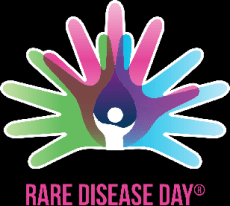
Oddly my favorite cereal from childhood rarely visits my old man kitchen. And it wasn’t even a typical kid brand like Cap’n Crunch. My favorite cereal growing up was plain corn flakes. I’d have a bowl of flakes with a half a banana sliced into it and whole milk. The banana’s other half would go into my school lunch unless somebody got to it first for another breakfast add in. That was breakfast more days than not until I set off for college.
I tried to look up the most popular cereal. I found 5 polls all published within a month of each other, and all wildly different. I guess the most popular depends on where you are, what company is sponsoring the poll, or how honest you feel like being when asked if you prefer Kashi or Fruity Pebbles and your whole pilates class (or bowling team (no judgement here)) is listening.
So we’ll do an informal poll. What is your favorite cereal? Ahh, still no judgement.
Today and tomorrow stretch the limits of diseases. Today, as it is every year on the last day of February, is Rare Diseases Day and tomorrow, as does every March 1, begins National Kidney Month one of the most common medical conditions. I am one of the chosen who get to experience both up close and personal.
Rare diseases and kidney diseases share more than just the cusp of the second and third months of the year. What makes a rare disease a rare disease changes a little from country to country. In Europe a disease or condition affecting is considered rare when it affects fewer than 1 in 2,000 people. In the U.S. that consideration is extended to those disorders affecting fewer than 200,000 people in total. Either way, that’s not a lot of people for a disease. There are over 6,000 conditions listed as rare diseases by the National Organization for Rare Diseases (NORD) and Rare Diseases Europe (EURODIS) affecting over 30 million people. Meanwhile, kidney disease affects over 30 million Americans alone. Coincidence? Maybe not.
If you go back far enough all diseases have been rare at some time. The more common conditions like diseases of the kidneys didn’t become less rare because they affected more people. They became more common as those treating them spoke with others treating similar conditions comparing symptoms, patient histories, disease progression, and constants in presentation. Often when enough data is collected it becomes apparent the rare disease wasn’t as much rare as unrecognized. Treatment options and the responses then get shared, refined, retried, and publicized and the goal shifts from just education and proper diagnosis of the disease so difficult with the rare ones to effective treatment and some day eradication of the disease.

Obviously a disease becoming “common” doesn’t automatically mean we know enough about it to say were well in the way to effectively treating or possibly eradicating it. If it did we’d need far fewer fun runs every weekend. The National Kidney Foundation may not face the recognition challenge like NORD and EURODIS but treatment improvements are still badly needed and 30 million people can attest that eradication is not just around the corner.

Sometimes, whether rare or common, the patient gets lost in the struggle to recognize or combat the disease. The rare disease sufferer often suffers in silence while it’s “clear” to his and her friends and coworkers that it’s all in his head or she just complains a lot. The End Stage Renal Disease patient “fortunate” enough to be able to still work is made to feel guilty that he might be a little slower on the day after dialysis even though he got a whole half day off for it, or that she never wants to take a real vacation, just a weekend here or there when she can work it around her dialysis days.
If you know one of the 30 million people with a rare disease or one of the 30 million people with kidney disease or maybe one of each or one with both take some time today and tomorrow to learn what they go through, what they need, or how you can help. If you feel generous, a donation to one of the hundreds of organizations looking to educate people on, or advance recognition and treatment of one the diseases affecting your friend can’t hurt.
But if you’re feeling really generous, give a call to your friend and say, “Hi, can I do anything for you today?” That could be the rare treat that really makes a day.
This Saturday is National Coffee Day. It might have been the brain child of somebody at Maxwell House but since it seems to have been celebrated only since 2005 or so, chances are better it was the work of those Starbucks people. Or maybe not.
Did you know you can find a food to celebrate every day of the year? Some days two or three! Did you ever wonder where they all come from? Cynically, I used to think they are all promotional activities of a company that produces the particular celebrant. But I recently discovered that’s not always the case. In fact it seems to be not often the case.
The key that this might be true is is the description of those many heralded food stuffs’ celebratory dates. Quite often they read “probably first observed in…” or “not much is known about the origins of…”. Really? We can pinpoint the day and time Dunkin’ Donuts becomes Dunkin’ (Start of Business, Jan. 1, 2019; parent company will continue to be known as Dunkin’ Brands (in case you really needed to know)) but not when Coffee Day became a day when all those chains that push coffee will push free coffee (probably with an additional purchase) that day. But if it was one of those, would they (it?) not have registered or trademarked or whatevered “Coffee Day” so all caffeine addicts would have to beat paths to their doors and thus take full and sole (or sole and full, even) advantage of those additional purchases?

Maybe they didn’t. Um, they being them, those companies, or associations or user groups or other sort of official folk. Maybe it was John-Bryan Hopkins, founder of the Foodimentary website. In a 2004 interview with Money, he said he created hundreds of such “holidays.” When Foodimentary.com went live in 2006, “there were already around 175 food-related holidays. ‘I filled in the rest,’ he said, to ensure there was at least one food holiday for every day of the year.”
So do we thank Mr. Hopkins for Coffee Day, or International Tea Day (December 15) for non-coffee-drinkers (coffee non-drinkers?)? I don’t know, but thanks to him, if it wasn’t before it is now possible to wake up any day of the year and say to yourself “Self, what makes today unlike any other day, food wise that is?” and have an answer.
By the way, if you can’t wait for Saturday to guzzle a mug full of your favorite stimulant, Friday is Drink a Beer Day.🍺
We are moving toward the end of summer and harvest time seems to be in full swing at the local farmers’ markets. A modest investment in fresh produce turned into a couple days spinning circles in my tiny kitchen meal prepping for the next few weeks.
I always try to have something ready to eat on the days when I get home from dialysis. My scheduled time at the clinic is 11:30 which puts me back home around 5 in the afternoon. That’s the perfect time to start dinner except the last thing I want to do after dialysis is … well, anything.
During the summer I spend most of my cooking time in front of the grill on the patio. There it is easy to throw on extra of whatever I’m cooking and pack up a second meal that I would heat up for a future dialysis day dinner (DDD). In the winter, not unlike so many kitchens, mine plays host to casseroles, stews, and chilies. All yield multiple meals that can be refrigerated or frozen for use on those days when the thought of actually preparing a meal is more exhausting that actually preparing a meal.
But now we’ve entered that in between season. Eventually even I tire of my fabulous smoked chicken thighs with grilled zucchini planks and I’m not ready for Italian sausage and acorn squash casserole. What to do? Take some of that farmers’ market bounty and turn it into frozen dinners or sides. So yesterday I did just that, blanching beans, stuffing peppers, rolling cabbage leaves, and more. Now I have a freezer full of DDDs.

The Original
What makes any of this blog worthy? Because today celebrates the birthday of the classic American frozen dinner, Swanson TV Dinner. Yep, Sept 10, 1953 the frozen turkey dinner hit the markets and Swanson figured they’d sell maybe 5,000 of them. The first year they sold over 10 million dinners and created a new market niche.
In 1962 Swanson stopped labeling them as the “TV Dinner” but the term stuck and anybody who ever adjusted a pair of rabbit ears (go ask your grandfather) still calls any frozen meal a TV dinner.
So I’m happy to say I have celebrated National TV Dinner Day with gusto and with gustatory appropriateness (or appropriate gustatoriness).
And it’s been a pleasure to post about anything actually older than me!
Welcome to Selfie Day 2018. I’m not sure if it’s a National or International Selfie Day. I guess wherever there are cameras, err phones, and selfie worthy backgrounds, err phones, people can celebrate.
Personally I think we would be better off celebrating Half Christmas than Selfie Day. Even though marketing people are very up on doing Christmas in July specials that’s only because nothing else is happening in late July. But if you really wanted a hot celebration (Southern Hemisphere inhabitants understandably forgiven for minimal enthusiasm over the summer Christmas thing in general), now is the time, well, in 4 days is the time for summer Christmas. That’s when it’s really halfway betwixt last Christmas and next. Just because American mattress sellers and used car dealers are wrapping up the Banner Flag Day Specials and putting their Hot Fourth of July Sales on deck is no reason to ignore a natural not made up reason to celebrate.
But since we do relish made up reasons to be as selfish as we can, we instead have Selfie Day 2018. When you can mug for all the world and make it look like an almost natural thing to do.
Happy You! And did I mention Happy Summer?
Oh the Golden Rule. Do unto others as you would have them do unto you. Simplified, love your neighbor as yourself. I love me unconditionally, or as Fred Rogers would be happy to hear, just the way I am. I don’t always like me but I do love me. Mr. Rogers would like it if I liked me just the way I am but if I want to be golden about it, at least I am hitting the loving requirement. And by extension, I love you also.
Clearly a lot of people in the world don’t love each other, but lately there have been a lot of people ignoring Mr. Rogers exhortation to even “like you just the way you are.” Not only that but people are taking exception with anybody who doesn’t even think like they do. Forget “like you just the way you are,” the world is taking the stance “it’s my way or the highway” and telling others to hit the road.
We are getting deep into Gay Pride Month and I have a story you can use to improve your Gay, Race, Ability, Origin, or Any Other Variable score. Fans of Mr. Rogers know he had a variety of residents of and visitors to his Neighborhood. Some of these even non-viewers recognize like Mr. McFeely, King Friday XIII, and Daniel Tiger. Others are not so universally recognized like Handyman Negri, Chef Brocket, and Officer Clemmons.
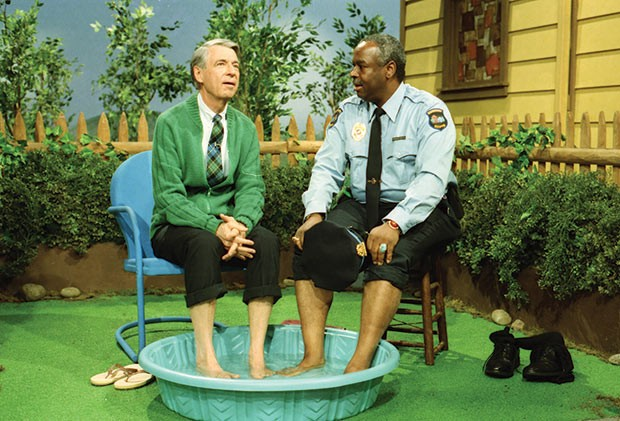
Francois Clemmons was a gay, black man in 1969. Neither was a popular modifier in 1960s America. But only one was evident. Regardless of his sexual orientation, Officer Clemmons was obviously African American. In an early episode in 1969, Mr. Rogers and Officer Clemmons meet outside in the summer heat and sit together, cooling their feet in a child’s plastic wading pool. A black man and white man in the same pool were almost unheard of in 1969. Yet together they sat. In his final appearance on the show 24 years later, Mr. Rogers and Officer Clemmons cooled their feet in the pool again. It wasn’t as unusual by 1993. The physical difference had become the non-issue for many besides Fred Rogers.
That Francois Clemmons was gay never made the airwaves. Neither did his religion, political party affiliation, or college alma mater. These were differences that didn’t matter. Mr. Rogers liked Officer Clemmons, and Fred liked Francois, just the way he was. He also never mentioned that Officer Clemmons was of a different race. Had it not been visibly noticeable, nobody would have thought it was odd that they shared a moment with their feet in the pool together by the way Mr. Rogers treated and spoke with Officer Clemmons. They would have been just two friends who liked each other. Just the way they were.
We have a hard enough time accepting people who look different to us. Do we really have to add to the difficulties by going out of our ways to find differences to dislike that we can’t even see?
This month, and next, and the one after that, when you run across somebody who you might think is a little different than you are, instead of going out of your way to tell him or her to hit the road, go out of your way and say, “Hi Neighbor. I like you just the way you are.”
To hear Francois Clemmons talk about his experience in the Neighborhood, click here.

Photo John Beale (Pittsburgh City Paper)