Positively Impossible

Every day can bring new reasons to be positive, and to connected with yourself and the world. Unfortunately, every day can also bring myriad opportunities to confirm the world really has gone bat shit crazy.

Take a look at the screen shot I’ve posted below. This innocent looking post violates Facebook’s terms of use or service or appropriateness or whatever they want call it. When I clicked in the “click here to find out how we arrived at this decision” the answer is, “this post does violates our community standards.”

I’ve had issues before with anti-social media. I’ve posted literally hundreds of posts for ROAMcare with artwork I’ve generated myself to have several of them removed because of suspicions of being AI generated without declaration. I’ve had posts removed because they included links to websites and therefore are spam and I’m trying to “trick” people into clicking to potentially dangerous sites.

So far, Instagram and Blue Sky are the only sites that haven’t come up with some stupid excuse for removing or limiting any posts.  Give them time.

Now, here’s the most annoying part of all this. We at ROAMcare make nothing from the site or posts. Nothing we do is monetized. We don’t ask people to for access, we sell no ad space. We don’t even ask people to “buy us a cup of coffee.” Everything we do is because we truly believe in what we post and publish and want to spread awareness that it is possible to be enthused about life.

Take the blog post that this post is about, Positively Powerful. A thoughtful discussion about the power of positive thought. Am much as I believe every word that we printed, I get increasingly discouraged by the blatant double standards of the social media world. Unfortunately, most of the outside traffic to our site is generated by the Facebook posts. Oh well.

Perhaps you can look at Positively Powerful or any of the other posts and clue me in on what community would be offended by our work.  While you’re there, consider joining the ROAMcare community and subscribe to have Uplift delivered to your email as soon as it hits the website. In addition to an Uplift release every Wednesday, you will also receive weekly our Monday Moment of Motivation and the email exclusive Flashback Friday repost of one of our most loved publications every Friday. All free and available now at ROAMcare.org.


IMG_2119


opensesame

I had to change a password on one of the many password protected sites we access what seems hourly! I didn’t have to change it because it was that time whether that time is every month, every 6 months, or any time like the site feels like messing with you. I didn’t have to change it because I forgot my password. I had to change it because I kept mis-typing it. I am the king of typos! I’m lucky I can get through an entire sentence when I can actually see the letters taking shape on the screen in front of me. Hid everything behind ******************** and it’s a crapshoot if I got +#^ or +@&. Even if I see them I may not be able to tell if I have it right. But that’s a story for later – later in this post.

When I entered the “select your password” phase of reestablishing my password, the site provided me with their rules. Oddly, not all sites do that. This site, in addition to the upper and lower case letters, numbers, and special characters (why do they call them special, aren’t they the same symbols that have appeared on keyboards since the time keyboards were attached to typewriters? Can’t we just call them “symbols” or is that too symbolic?), this set of rules featured – for the first time ever, live on our stage! (sorry I got carried away – this set of rules included the querulous instruction to not end with a number. Naturally I can’t take an instruction like that and not dig deeper so I dug deeper.

Yes, it appears somebody who studies these sorts of things has determined that passwords ending in numbers are more likely to be hacked. I think maybe it has to do with something about some people’s predilection to serializing their passwords so like maybe they don’t forget them. You may have done it, or perhaps are doing it yourself. OpenSesame1, OpenSesame2, OpenSesame3, etc.  I also discovered that once very popular, opensesame has fallen way down the list of people’s password choices. Now this brings up a couple of questions. First of all, if passwords are supposed to be such closely guarded secrets, often under penalty of on-line death if revealed, how does anyone know what once was and what is no longer popular. (Many of the same sources even noted people are still out there using “password” for their passwords. -Same question fellas!) The other question I have about opensesame is why didn’t I ever think about that? What a great password! And so versatile. The user who selects opensesame or one of its variants (perhaps OpenSesame1, OpenSesame2, OpenSesame3, etc) might be an Antoine Galland fan, a lover of the Three Stooges, or trapped in the seventies singing their way to internet access with Kool and the Gang. Opportunity lost.

Anyway, back to the point of this post (yes, yes, go ahead and smirk), I can live with the odd rules, making my passwords at least 8 characters and not more than 20, using upper and lower cases, tossing in a few numbers as long as one isn’t at the end, even the inclusion of “special characters,” but can I at least see what I’m typing? It appears that the two most common methods of breaking the password code are guessing and “entry intercept” whereby a program, bug, virus, or some malevolent genie captures the keystrokes made to enter the password characters (special and otherwise) and shares them with the head virus writer, bug-programmer, or Ali Baba. So, while we’re struggling with trying to accurately enter jkwp9y%Roa&&fmMqrs!! the virus may see what we’re typing, but all we see is   ********************.

Now I ask you, is that fair?

Blog Art

Learning Life, Again

It will be hockey nights in just a couple more. NHL hockey returns October 3. In recognition of this momentous occasion I’m repeating one of my favorite posts, “Everything I Know About Being a Gentleman I Learned From Hockey.” Why? Because everything I learned about being a gentleman I learned from hockey, that’s why. If only politicians watched more hockey.

So, from November 2016, I give you…


When I was at the hockey game this weekend I got to thinking how much as a society we can learn from hockey. Yes, the sport that is the butt of the joke “I went to a fight last night and a hockey game broke out,” is the same sport that can be our pattern for good behavior.

Stay with me for a minute or two and think about this. It started at the singing of the national anthem. I’ve been to many hockey, baseball, football, and soccer games. Only at the hockey games have I ever been in an arena filled with people actually singing along. Only at the hockey games are all of the players reverent to the tradition of honoring the country where they just happen to be playing even though they come from around the world – Canada, Russia, Germany, Sweden, Finland, even a few Americans.

A decent dose of nationalism notwithstanding, hockey has much to offer the gentility. Even those fights. Or rather any infraction. If a player breaks the rules he is personally penalized for it. Ground isn’t given or relinquished like on a battlefield, free throws or kicks aren’t awarded to the aggrieved party like victors in a tort battle. Nope, if you do something wrong you pay the consequences and are removed from play for a specified period in segregation from the rest of your teammates. No challenges, no arguments, no time off for good behavior. Do the crime. Pay the time. In the penalty box. Try doing that to a school child who bullies and you’ll have some civil liberty group claiming you’re hurting the bully by singling him out.

Hockey is good at singling out people but in a good way. At last Saturday’s game the opposing team has two members who had previously played for the home team. During a short break in the action a short montage of those two players was shown on the scoreboard screens and they were welcomed back by the PA announcer. And were cheered and applauded by the fans in attendance. There weren’t seen as “the enemy.” Rather they were friends who had moved away to take another job and were greeted as friends back for a day.

While play is going on in a hockey game play goes on in a hockey game. Only if the puck is shot outside the playing ice, at a rules infraction, or after a goal is scored does play stop. Otherwise, the clock keeps moving and play continues. Much like life. If you’re lucky you might get to ask for one time out but mostly you’re at the mercy of the march of time. Play begins. After a while play ends. If you play well between them, you’ll be ok.

The point of hockey is to score goals. Sometimes goals are scored ridiculously easily, sometimes goals seem to be scored only because of divine intervention. Most times, goals are a result of working together, paying attention to details, and wanting to score more than the opposing team wants to stop you from scoring. There is no rule that says after one team scores the other team gets to try. It all goes back to center ice and starts out with a random drop of the puck. If the team that just scored controls the puck and immediately scores again, oh well.

Since we’re talking about scoring, the rules of hockey recognize that it takes more than an individual to score goals. Hockey is the only sport where players are equally recognized not just for scoring goals but for assisting others who score goals. Maybe you should remember that the next time someone at work says you’ve done a good job.

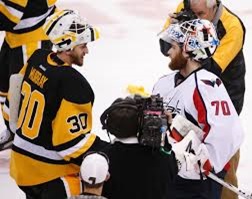
handshakeThe ultimate good job is winning the championship. The NHL hockey championship tournament is a grueling event. After an 82 game regular season, the top 16 teams (8 from each conference) play a four round best of seven elimination tournament. It takes twenty winning games to win the championship. That’s nearly 25% as long as the regular season. It could take as long as 28 games to play to the finish. That’s like playing another third of a season. After each round only one team moves on. And for each round, every year, for as many years as the tournament has ever been played, and for as many years as the tournament will ever be played, when that one team wins that fourth game and is ready to move on, they and the team whose season has ended meet at center ice and every player on each team shakes the hand of his opponent player and coach, wishing them well as they move on and thanking them for a game well played. No gloating. No whining. No whimpering. Only accepting.

So you go to a fight and a hockey game breaks out. It could be a lot worse.



More Lessons on Ice

When they were picking teams for dodge ball in the playground behind the school, were you one of the last to go? OK, clearly I’m old. You can tell by the references to dodge ball, playground, and the picking of teams for any activity not associated with trivia night at the bar. Even if you are too young to remember these, or too savvy to acknowledge them, you probably have heard of such things as being “picked last in grade school for..” in many episodes of The Big Bang Theory. And you know it didn’t get them down. They all now make lots of money and are really big stars. I’m sorry, I’m mixing real life with fantasy.

But somewhere being unwanted and reaching a modicum of pinnacle-ness of success is happening right here in North American reality. Those are the NHL Vegas Golden Knights. The first expansion team to reach the Stanley Cup Final and proof once again that all you need to know to survive and succeed you can learn from hockey.

Ok, first things first. I said the first expansion team to the reach the final round and you keep hearing in the sports reports that they are the second. Technically, the St. Louis Blues reached the final in their inaugural year but only because in 1967 the NHL decided to make one conference out of all six expansion teams and the other one out of the existing six teams, thereby guaranteeing an expansion team a spot in the finals. Five of the six “Eastern Division” existing teams finished the season with more points than any of the six expansion “Western Division” teams and the Montreal Canadiens swept the final round in four games.

VGN

Vegas Golden Knights

Enough of history though. Back to the future when the Golden Knights will be the first expansion team to get to the Stanley Cup Final by winning their way there. With a team made up of a bunch of guys nobody wanted. When the expansion draft that stocked the Vegas team with players took place last year, each existing team was allowed to protect 10 or 12 players depending on how many offense versus defense skaters were included on the protected list and that included a goaltender. Each NHL team can dress 24 players (usually 22 skaters and 2 goaltenders) per game. So the existing teams could protect up to half of who they would put on the ice for a typical game. And Vegas could select one of the remaining “bottom half” talent.

And out of this group of players not wanted by anybody else, players who call themselves the “Golden Misfits,” skated a team who finished with the fifth most points, won the fourth most games, and scored the third most goals of any of the 31 teams in the league. And they are about to begin the fourth and final round of the Stanley Cup Tournament which this year will determine if misfits is synonymous with champion.

Moral of the story? Being picked last for dodge ball isn’t the end of the world. Don’t treat it like it is.


Every Day Is a Great Day

Hockey season started yesterday. I was there for it. In my seat, the one I’ve occupied for the past couple of years. It’s not a bad seat. Over the years I’ve sat in several spots around the arena. Lower bowl, upper bowl, center ice, behind the net, on the dots. In the old arena. In the new arena. None are bad seats. Amidst a handful of people in my little section amidst the 19,000 or so seats all occupied by people in their little sections we sat in not bad seats there just to see a hockey game. No other agenda, hidden, assumed, obvious, or imagined. Just hockey.
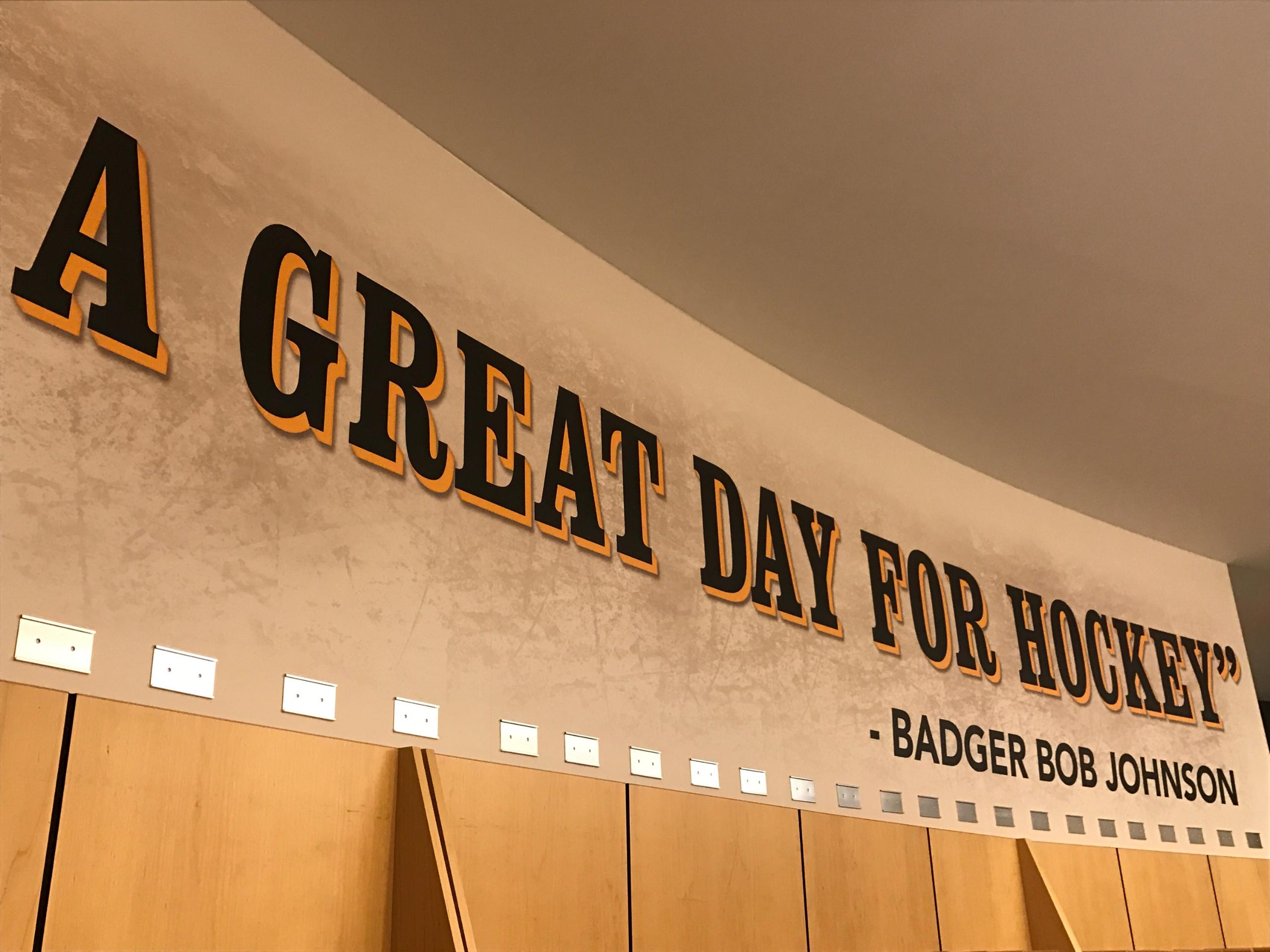
But before the game we stopped to pay respects to those who lost lives and loved ones in Las Vegas and all 19,000 were silent. Every one. Silent. Then we paid respects to the flag and all 19,000 sang. Every one. Singing. And I thought how once again all I know about being a gentleman I learned from hockey and how I was once so moved by that realization that I posted my thoughts on it right here. And I thought, just as “Badger” Bob Johnson knew every day is a great day for hockey, that every day is a great day to learn from hockey.
So I’m doing today something I’ve never done before. I’m reprinting “Everything I Know About Being a Gentleman I Learned From Hockey.”

IMG955568

EVERYTHING I KNOW ABOUT BEING A GENTLEMAN I LEARNED FROM HOCKEY

Originally posted November 26, 2016

When I was at the hockey game this weekend I got to thinking how much as a society we can learn from hockey. Yes, the sport that is the butt of the joke “I went to a fight last night and a hockey game broke out,” is the same sport that can be our pattern for good behavior.

Stay with me for a minute or two and think about this. It started at the singing of the national anthem. I’ve been to many hockey, baseball, football, and soccer games. Only at the hockey games have I ever been in an arena filled with people actually singing along. Only at the hockey games are all of the players reverent to the tradition of honoring the country where they just happen to be playing even though they come from around the world – Canada, Russia, Germany, Sweden, Finland, even a few Americans.

A decent dose of nationalism notwithstanding, hockey has much to offer the gentility. Even those fights. Or rather any infraction. If a player breaks the rules he is personally penalized for it. Ground isn’t given or relinquished like on a battlefield, free throws or kicks aren’t awarded to the aggrieved party like victors in a tort battle. Nope, if you do something wrong you pay the consequences and are removed from play for a specified period in segregation from the rest of your teammates. No challenges, no arguments, no time off for good behavior. Do the crime. Pay the time. In the penalty box. Try doing that to a school child who bullies and you’ll have some civil liberty group claiming you’re hurting the bully by singling him out.

Hockey is good at singling out people but in a good way. At last Saturday’s game the opposing team has two members who had previously played for the home team. During a short break in the action a short montage of those two players was shown on the scoreboard screens and they were welcomed back by the PA announcer. And were cheered and applauded by the fans in attendance. There weren’t seen as “the enemy.” Rather they were friends who had moved away to take another job and were greeted as friends back for a day.

While play is going on in a hockey game play goes on in a hockey game. Only if the puck is shot outside the playing ice, at a rules infraction, or after a goal is scored does play stop. Otherwise, the clock keeps moving and play continues. Much like life. If you’re lucky you might get to ask for one time out but mostly you’re at the mercy of the march of time. Play begins. After a while play ends. If you play well between them, you’ll be ok.

The point of hockey is to score goals. Sometimes goals are scored ridiculously easily, sometimes goals seem to be scored only because of divine intervention. Most times, goals are a result of working together, paying attention to details, and wanting to score more than the opposing team wants to stop you from scoring. There is no rule that says after one team scores the other team gets to try. It all goes back to center ice and starts out with a new drop of the puck. If the team that just scored controls the puck and immediately scores again, oh well.

Since we’re talking about scoring, the rules of hockey recognize that it takes more than an individual to score goals. Hockey is the only sport where players are equally recognized not just for scoring goals but for assisting others who score goals. Maybe you should remember that the next time someone at work says you’ve done a good job.

handshakeThe ultimate good job is winning the championship. The NHL hockey championship tournament is a grueling event. After an 82 game regular season, the top 16 teams (8 from each conference) play a four round best of seven elimination tournament. It takes twenty winning games to win the championship. That’s nearly 25% as long as the regular season. It could take as long as 28 games to play to the finish. That’s like playing another third of a season. After each round only one team moves on. And for each round, every year, for as many years as the tournament has ever been played, and for as many years as the tournament will ever be played, when that one team wins that fourth game and is ready to move on, they and the team whose season has ended meet at center ice and every player on each team shakes the hand of his opponent player and coach, wishing them well as they move on and thanking them for a game well played. No gloating. No whining. No whimpering. Only accepting.

So you go to a fight and a hockey game breaks out. It could be a lot worse.

—–

So there you go. Everything you need to know about being a gentleman, or a lady. Courtesy of the folks who brought you hockey. They’re not bad lessons if I say so myself. And I think even Badger Bob would agree.


Rules for Memorial Day

These are my rules for Memorial Day. Surprisingly they will work in any country that commemorates the ultimate sacrifice made by those in service of the protection of the rights of the people.

  1. Don’t wish me a Happy Memorial Day. There’s nothing happy about it. It’s a solemn occasion and should be treated with respect. That doesn’t mean you can’t be happy and do fun things. Like a funeral, the commemoration is for the living and life is fun. Also like a funeral, the reason for the gathering is to remember that someone who is special to us is with us no longer.
  2. Say a prayer. Or meditate. Or reflect. Or whatever you do to appeal to whomever is your higher power that we don’t have to continue to unnecessarily add to the rolesMemorialFlags of those remembered this day that you will be, if not a part of that effort, not a hindrance to it.
  3. Go to a cemetery or whatever you need to do to remember those most special to you who lost their lives so you can be here to remember that they lost their lives in keeping you here to remember them. Somewhere in your family tree there is someone who made that choice to fight for you and yours because you were, or maybe not even yet were, one of theirs.
  4. Go to a parade. Or have a picnic. Or sing a song. Or whatever you do to celebrate with your friends and neighbors who are here living in peace and enjoying freedom because of those who know that you don’t win freedom and keep peace just because you say so.
  5. Even if you can’t remember those who should be remembered every day between now and next Memorial Day, at least don’t forget about them completely until next Memorial Day.

Till next time, have a blessed Memorial Day reaping the blessings provided to you by those who make this holiday possible.

Making the Case for Glitter Free Decorating

You all know I am just out of the hospital a few days now. I was out only a few hours when I discovered that my fingertips shimmered in the dark. No, it wasn’t some reaction to a drug I was given. It wasn’t a remnant of some procedure done. No, it was glitter. Glitter. That shimmery, flaky stuff that adorns cards, bows, wreaths, probably even some brands of toothpaste for all I know. Oh how I hate glitter.

While protected under the blanket of sterility and cleanliness of the hospital I was able to enjoy a couple of weeks knowing my immediate environs were blissfully glitter-free. Then I got better. I was released to the world overrun with those sparkly specks. Oh how I hate glitter.

Why do I so hate glitter? First consider that I too recognize the prettiness of light twinkling from multiple surfaces. I just wish one of those surfaces wasn’t me! Once I come into contact with glitter it is with me forever. I can’t wipe it off. I can’t blow it off. It doesn’t wash off, scrape off, or soak off. It doesn’t even loofah off. Glitter on me is like iron filings on a magnet.

I think we need to establish some glitter rules. First, no surprise glitter. If I see a glitter gilded wreath on a door I will gladly climb through a window to get into that house. But if you send me a glittery card in a plain, white envelope – that’s just not fair. Second, manufacturers of shiny objects must identify the presence and level of glitter used in the making of said sheen. And third, stores, particularly card and home good shops, must provide a glitter free zone for glitter magnetic consumers.

I’m sure working together we can have a glitter free society where sparkly prettiness and good mental health can coexist.

That’s what I think. Really. How ’bout you.

Everything I know about being a gentleman I learned from Hockey.

When I was at the hockey game this weekend I got to thinking how much as a society we can learn from hockey. Yes, the sport that is the butt of the joke “I went to a fight last night and a hockey game broke out,” is the same sport that can be our pattern for good behavior.

Stay with me for a minute or two and think about this. It started at the singing of the national anthem. I’ve been to many hockey, baseball, football, and soccer games. Only at the hockey games have I ever been in an arena filled with people actually singing along. Only at the hockey games are all of the players reverent to the tradition of honoring the country where they just happen to be playing even though they come from around the world – Canada, Russia, Germany, Sweden, Finland, even a few Americans.

A decent dose of nationalism notwithstanding, hockey has much to offer the gentility. Even those fights. Or rather any infraction. If a player breaks the rules he is personally penalized for it. Ground isn’t given or relinquished like on a battlefield, free throws or kicks aren’t awarded to the aggrieved party like victors in a tort battle. Nope, if you do something wrong you pay the consequences and are removed from play for a specified period in segregation from the rest of your teammates. No challenges, no arguments, no time off for good behavior. Do the crime. Pay the time. In the penalty box. Try doing that to a school child who bullies and you’ll have some civil liberty group claiming you’re hurting the bully by singling him out.

Hockey is good at singling out people but in a good way. At last Saturday’s game the opposing team has two members who had previously played for the home team. During a short break in the action a short montage of those two players was shown on the scoreboard screens and they were welcomed back by the PA announcer. And were cheered and applauded by the fans in attendance. There weren’t seen as “the enemy.” Rather they were friends who had moved away to take another job and were greeted as friends back for a day.

While play is going on in a hockey game play goes on in a hockey game. Only if the puck is shot outside the playing ice, at a rules infraction, or after a goal is scored does play stop. Otherwise, the clock keeps moving and play continues. Much like life. If you’re lucky you might get to ask for one time out but mostly you’re at the mercy of the march of time. Play begins. After a while play ends. If you play well between them, you’ll be ok.

The point of hockey is to score goals. Sometimes goals are scored ridiculously easy, sometimes goals seem to be scored only because of divine intervention. Most times, goals are a result of working together, paying attention to details, and wanting to score more than the opposing team wants to stop you from scoring. There is no rule that says after one team scores the other team gets to try. It all goes back to center ice and starts out with a random drop of the puck. If the team that just scored controls the puck and immediately scores again, oh well.

Since we’re talking about scoring, the rules of hockey recognize that it takes more than an individual to score goals. Hockey is the only sport where players are equally recognized not just for scoring goals but for assisting others who score goals. Maybe you should remember that the next time someone at work says you’ve done a good job.

handshakeThe ultimate good job is winning the championship. The NHL hockey championship tournament is a grueling event. After an 82 game regular season, the top 16 teams (8 from each conference) play a four round best of seven elimination tournament. It takes twenty winning games to win the championship. That’s nearly 25% as long as the regular season. It could take as long as 28 games to play to the finish. That’s like playing another third of a season. After each round only one team moves on. And for each round, every year, for as many years as the tournament has ever been played, and for as many years as the tournament will ever be played, when that one team wins that fourth game and is ready to move on, they and the team whose season has ended meet at center ice and every player on each team shakes the hand of his opponent player and coach, wishing them well as they move on and thanking them for a game well played. No gloating. No whining. No whimpering. Only accepting.

So you goto a fight and a hockey game breaks out. It could be a lot worse.

That’s what I think. Really. How ‘bout you?


Textiquette

These aren’t novel observations. In fact, She noted much of this several years ago when cell phone use just exploded. To make a long story short, we need more phone use etiquette, particularly when texting. To make a short story a blog post, read on.

What people weren’t listening to just a little while ago is now hitting morning radio, Internet sites, news fillers, and feature stories. Everybody has their own pet peeve that semms to have finally reached the last straw. Now that it is happening to them, they want somebody to do something.

Some of the annoyances people are tired of include:

People who don’t answer their phones but then text back a “what’s up?”
People who don’t answer their phone but will answer a text.
People who call and if you don’t answer leave a voice mail and then text the same message.
People who call to tell you that they just sent a text.
People who can’t end a text and/or have to get in the last word.
Texts so long they require scrolling.

They don’t seem like much but they are getting lots of ink as we used to say in the old days. But then, in the old days most of this would have been covered under the general heading of good manners.

Odd, nobody mentioned texting at the dinner table.

That’s what I think. Really, How ’bout you?
hbdLB

Misunderstood Olympics

The winter games of the Olympics are almost over and we realized something the other day that we hadn’t given much thought.  As we were watching the women’s bobsled competition we decided that we have no idea what the people in the bobsled actually do.  We’re certain that it takes skill, stamina, and strength, but that’s about it.  Does the brake man (or perhaps the brake person) have to do any braking along the way or is her job just to keep a low profile and stop the sled when it gets to the bottom.  Does the other person (and we don’t even know what to call the person who sits in the front) actually steer the sled or is it more like the sleds of old where one just torques one body and the sled goes in that general direction.  It all looks like fun – perhaps at half the speed they are travelling – and we enjoy watching it but we really aren’t certain of what we are watching.

There are other winter events that have us scratching our heads.  Take the various relays.  In the summer games, a relay has a clear handoff.  In track the hand off is quite literal as the runner of one leg passes the baton to the runner of the next leg.  In the pool, the swimmer must clearly touch the wall with everybody watching before the next swimmer is off for his or her leg.  But in winter there seems to be less formal transitions.  In the cross country skiing relay the skier finishing up a leg slaps the back of the next skier.  What if it’s a miss, not a hit?  And through all of the winter gear and bibs and what have you that they are wearing, are we even certain that the slappee feels the slapper’s slap?  The speed skating relays are just too chaotic to even think about.  It looks like every skater from every team, and maybe even a few extra, circle the track waiting for a push on the backside.  That’s when they know to get into gear and spend a couple laps figuring out who gets pushed next.

We understand snowboards and half-pipes.  We were a little confused when we saw the competitors on actual skis on the half-pipe.  Where were we when they invented that game?  We missed the memo or surely we would have commented on the relative dangers of flipping and twisting while wearing five foot long skies just waiting to get hung up on the rim on the way down.

We love the grace of anybody doing just about anything on ice.  Yet even though we hear the explanation every 4 years we still don’t know why there is pairs skating and ice dancing.  Something about lifts and turns and syncopated motions.  They are both beautiful but can you really take something seriously when it has a compulsory movement called the “Twizzle?”

Regardless if we understand them all or we don’t, we’re still watching and we’re still enjoying and we’re still rooting for our team.  Someday we’ll figure them all out.  It only took us 12 years to be able to watch curling with the confidence that we actually know what they are doing out there.  If we can mentally master curling we can certainly figure out a twizzle.

Now, that’s what we think. Really. How ‘bout you?