Did you get your deal on Amazon Prime Days. Maybe you picked picked up a special price on a Summer Black Friday at Best Buy. Or maybe you’re still cashing in on the Christmas in July savings at Target. As a consumer nation we are nothing if we aren’t a bunch of sheep.
That’s really not a horrible thing. I picked up a collector edition of a book I’ve been eyeing on a Thrift Books this week while grabbing a couple kitchen gadgets at Macy’s.com. Following the path of a bunch of other bargain hunters chasing sales thought up by other companies at another time of the year saved me over $70. That’s a month Internet service.
Unfortunately as a nation we are still a bunch of sheep when it comes to things like political alliances. I’m sure other than for George Washington and probably Gerald Ford, political mudslinging at our highest offices has been going on since the 1700s. (George and Jerry get excluded because neither one really had aspirations of becoming President as much as just were the benefactors (or victims) of circumstances. Recently though through the “miracle” of social media can the common man act as stupid as the ones we elect to office. In the years that started with a “1” it took organized efforts and multiple layers of volunteers to get people to believe their preferred politician was one miracle short of sainthood. Today that happens with blinding speed matched only by the efforts to convince followers that their least favorite politician is two steps ahead of the devil for the race to evil emperor.
We no longer care about right or wrong, truth or lie, sense or nonsense. If we read it on-line, particularly if it was posted by somebody we know well to have had a drink with or want to know well enough to buy a round of drinks for, we eat it up like sugar coated, double dipped, sprinkle laden ice cream in a waffle cone. I’m quite convinced many of not most of us know the tenets of the political party with which we identify or the actual background of its “stars players.” In my state a bill passed by the state legislature that, among other reforms including the purchase of new voting machines (which it could ill afford financially) was vetoed by the governor because it also called for the elimination of the single lever straight party voting option. Considering how Congress has itself voted with a straight party mentality for this century that shouldn’t have been a surprise coming from a politician.
I think I have a solution that can actually result in more amicable relations among all parties (apparent there actually are more than two), eliminate party voting mentality, and save us enough money to actually pay for things like health care, infrastructure, or education.
First we eliminate Congress. That’s not exactly right, we eliminate the Congressional presence in Washington. Since they have clearly demonstrated since 2001 that our elected officials – Representatives and Senators – vote en bloc however the leaders want them to vote there is no need for them in Washington. They can stay in their districts were they can actually serve the people by helping with disability forms, selecting Medicare supplement plans, and going to the occasional Fourth of July picnic. Back in Washington each house gets two representatives, one from each party who can hash out their own deals and compromises without the distraction of party rhetoric.
Second we forbid all elected officials from using social media and prepared press releases. If anybody wants to communicate with their constituents, and it is only their constituents they should be communicating with, they must do it in person. Because all but four representatives will be in their home districts that will not pose any burden. Further, if somebody already elected to an office wants to give up that office to run for another office, then he or she or other must actually give up their office. No ignoring their work so they can apply for another job.
Now here’s where the real fun stuff happens. Did you know the average average salary for the rank and file Congressman is $174,000. Majority and minority leaders of the House and Senate make $193,400. The Speaker of the House is the highest paid member of Congress at $223,500. (These are 2016 figures. A handful of websites reporting these salaries mention these salaries are comparable to mid-level managers in the private sector. They go on to say that Congress has not accepted a raise since 2009. I was firmly in the middle of mid level management and I can tell you I would have had to work almost two full years before I made $174,000 in 2009 dollars.) In addition, Congressmen are permitted to make up to 15% of their salary from outside salary sources like with the law firm they all seem to still belong to. There is no limit on non-salary sources of income such as interest, dividends, and honoraria. And of course they all get money to run their offices.
The staff allowance for members of the House of Representatives depends on the size of his district which is determined by the official U. S. Census but in 2016 the average allowance was $1,268,520. That’s not the total. That’s per representative. That’s almost 1.3 million dollars. Times 435 representatives that’s $551.8 million dollars. That’s over a half a billion dollars. For office expenses. Per year. Senators in 2016 averaged $3,306,570 allowance per Senator. The math here is pretty simple. That comes out to $330,657,000 for the full senate. Every year we spend over $882 million to staff representatives’ offices. If we eliminate half of their offices by limiting Congressional work to the local office that will save us $441 million.
And finally, because they all like to remind us of what our founding fathers meant when they said something, they should be paid like them. Not in 1789 dollars. That would be cruel. In 1789 a Senator only made $50 a day and had to cover his own expenses except for postage for official correspondence. They did get lunch though. Note that salary was not per year or per session, it was per day. Today’s Congress should be paid likewise. When a member shows up he or she or undecided can punch a clock and get paid for the days worked. Assuming 225 working days per year. That’s $773 per day. I think that’s more than fair. But since 2001 Congress has average only 138 legislative days per year the average Congressman can expect to take in about $107,000 per year. This will save us $35,845,000. Added to the $441 million we already saved we are now $477 million ahead.
That’s close enough to a half a billion for me. That’s about as much as the CDC gets for immunization research. Congress might not still be worth the trouble they cause but maybe now we can find a cure for them!
Coming soon…Fixing the Presidency.


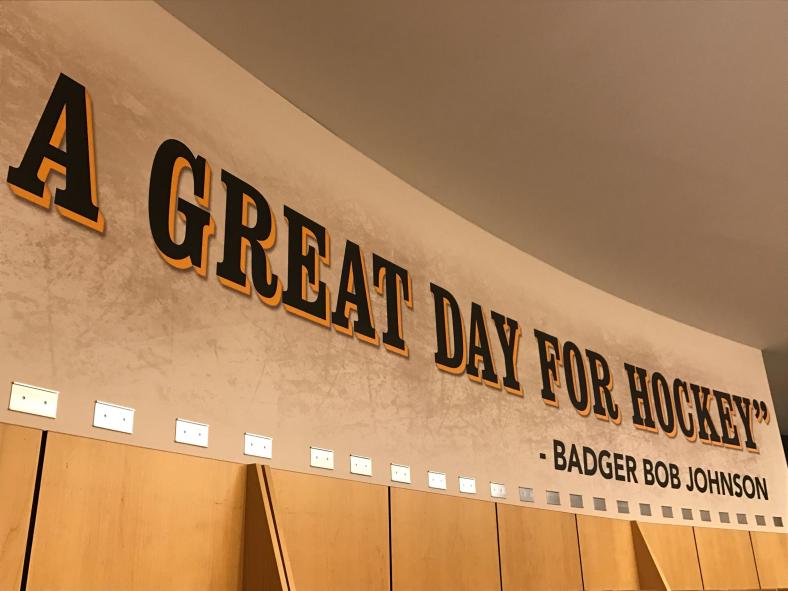
 The ultimate good job is winning the championship. The NHL hockey championship tournament is a grueling event. After an 82 game regular season, the top 16 teams (8 from each conference) play a four round best of seven elimination tournament. It takes twenty winning games to win the championship. That’s nearly 25% as long as the regular season. It could take as long as 28 games to play to the finish. That’s like playing another third of a season. After each round only one team moves on. And for each round, every year, for as many years as the tournament has ever been played, and for as many years as the tournament will ever be played, when that one team wins that fourth game and is ready to move on, they and the team whose season has ended meet at center ice and every player on each team shakes the hand of his opponent player and coach, wishing them well as they move on and thanking them for a game well played. No gloating. No whining. No whimpering. Only accepting.

 The Real Reality Show Blog