That’s what happiness is!

A couple days ago I was doing my housework and had just completed the vacuuming part of the dust and vacuum routine. I looked across the room as I was stowing the machine’s cord and broke out into a big smile. I might have broken out in song but if so I was singing subconsciously. If I was singing at all, I would have been singing along with the Ray Conniff Singers as they warbled they way through the 1966 Parnes and Evans composition, “Happiness Is,” for few things instigate as big a smile on my face as seeing those parallel tracks of the vacuum wheels across a newly cleaned carpet. I was struck so happy by the event, I actually remarked on it to a friend later in the day, questioning if she too experiences that odd joy. “No,” she literally deadpanned, “but the husband does. It must be a guy thing,” and dismissed the entire event as something only half the world could enjoy.

Eh. She’s probably right. In fact, vacuum tracks in carpets bring inordinate happiness to probably even less than half the world because I know for sure there are way more men who haven’t even pushed a vacuum around a living room to have seen such a remarkable sight. To them, an oil pan drain plug not leaking after a DIY oil change likely brings that profound happiness.  The point is, as Ray’s singers will have you singing along, happiness is “different things to different people!”

These aren’t the pillars of happiness: life, liberty, and the pursuit of really big, life changing events. These are the little things that are part of getting us from one hour to the next, the things that turn drudgery into if not joy, at least something faintly tolerable.

It won’t solve all of earth’s problems, but it is possible that if we spent more time enjoying what makes us happy and less time becoming frustrated when we can’t figure it why we aren’t as happy as others doing what makes them happy, or worse trying to foist our idea of happiness onto anyone else, we might all end up a little happier. And happier people are less likely to instigate world wars.

People are unique. Even people who grow up together, live together, and love together, don’t have to love everything about each other. Yes, it is the differences among people that make us collectively great, but it is appreciating the differences and encouraging others to pursue those differences that bring them happiness that make us collectively awesome!

Somewhere in your psyche is some quirk of life that brings you immense joy. Relish in the quirk and savor that joy. Don’t give it up for anybody and if somebody should ever admit to you that they get untold happiness from hearing the creak of a rocking chair, encourage them to creak all they want and hope they someday will encourage you to continue chasing your dream of parallel tracks on carpets, or whatever makes you smile at the enjoyment of living life. Because, that’s what happiness is.

What’s your happiness?
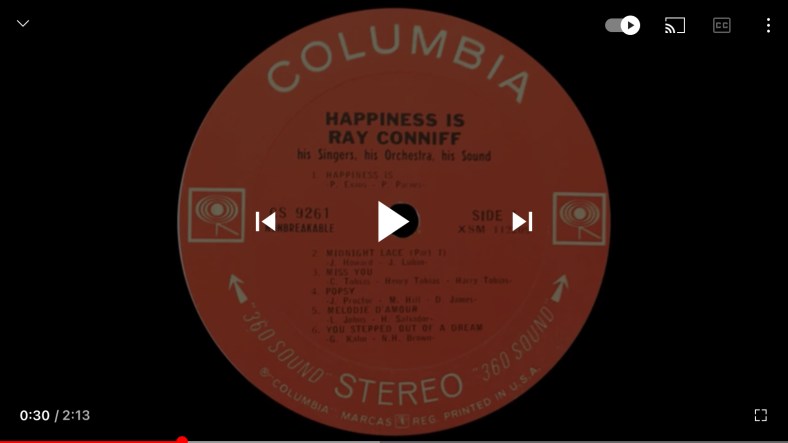
IMG_0002

Happiness Is


Blog Art (16)Did you stop by ROAMcare last week to read the meaning of life in five words. It’s worth the 3 minutes it takes to read the other 495 at www.roamcare.org. And check out the rest of our site too. Everything you need to refresh your enthusiasm for life with that extra motivation you need to push through the day! Stop by and visit, then share us with your friends and family!

Reach Out But Don’t Touch Someone

I saw this posted on Instagram last week and I was certain that had they had more than this in 1918 we would still be in the throes of the Spanish Flu pandemic although by now it would be epidemic because only in the U.S. would there still be people claiming “it’s going to go away.”
 20200718_192656
 
Imagine being able to share your opinions with only the closest of friends and family. It had to be with only those closest to you or you’d be broke long before your mask wore out. In 1918 when this ad was published*, although local service was only $1.50 a month, long distance was pricey, and long distance started not that far away. A cross country call ran about $5 per minute, cross state a little less than $2, and cross town, as much as 15 cents per minute. All in a time when the average 3 bedroom apartment was renting for $10 a month and a laborer was clearing $5 a day when a day’s work was available. 
 
There was no hue and cry over masks, isolation, soap shortages, or whether college football will be played this fall. Well, they may have been huing and/or crying but you kept it to yourself rather than passing yourself off as some sort of an expert because you read something in the Evening Star. (Although in fairness to this pandemic’s questionable coverage, that of 100 years ago was also often sparse, conjecture laden, contradictory, or all three.) (And then some.) (But then 1920 was also a Presidential election year so why should they have expected any less.) (Or more.)
 
There’s a particular hue being cried in our neck of the woods. A local amusement park is being sued because it is requiring all patrons to be masked at all times and on all rides, the exceptions being in their food venues while one is eating. The suit is brought by the parent of a child with sensory challenges and cannot wear a mask and the prohibition to entry without one violates to his rights. I don’t claim to be a Constitutional lawyer but my cursory review of the document didn’t reveal reference to the freedom of rollercoastering. Perhaps she’s hanging her mask on the line “life, liberty, and the pursuit of happiness” from the Declaration of Independence. The suit led by a mother who states she also has anxiety and cannot wear a mask had gathered the support of several other families and seeks compensatory and punitive damages for pain, suffering, anxiety, humiliation, emotional distress, and “the loss of the ordinary pleasures of life.” 
 
Silly me, I always thought the ordinary pleasures of life were music, reading, sitting under a tree on a sunny day, friends, food, and chasing dreams never meant to be caught. I suppose I should call my lawyer for further clarification. Fortunately it’s not long distance. 
 _____
*The person who originally posted this noted it was an actual ad from 1918 and I have no reason to doubt her, she not being one prone to hype, hysteria, or hyperbole**. However, that phone looks more like what was most common after 1920. But then on the other however, it is an ad from a telephone company so they would likely illustrate it with the most cutting edge equipment they have. You don’t see T-Mobile pushing iPhone 6’s.
 
**Okay, I have to ask this, what do you think about hype and hyperbole? In the dictionary, “hype” in the sense of extravagant promotion includes it first entered the English language in 1920 from the United States but with no etymological origin, or more often, “origin unknown.” I’m thinking it came about when fast patter was taking hold in informal speech and was most likely just a shortened version of hyperbole, which was convenient because it shortened the word dramatically and important because it shortened a word most people tend to either misspell or mispronounce. 
 
***You can stop looking for three asterisks in the post body, there isn’t one. Well, actually there is one asterisk but there isn’t one instance of 3. Anyway…speaking of misspellings, I had a heck of a time getting spellcheck to let me keep “throes” in the first paragraph. It insisted I really meant to type “throws” or “thrones” and would not take my word for it that not only did indeed I want “throes” I want it added to the dictionary. This from a program that has no problem adding words I legitimately misspelled and then have to go through Tartarus**** and back to remove. 
 
****That it knows!