Tomorrow is a special day for me. Almost as special as Groundhog Day (and if you read this blog for any of the last 8 Groundhog Days you know how special that day is). January 12 is National Pharmacists Day. It’s special to me because even though you might think I could make a decent living on the goofy blog circuit I actually have a professional side to me and for over 40 years have hung a hunk of paper from the state’s board of pharmacy declaring me to be one of them. Pharmacists not groundhogs.
National Pharmacists Day is an opportunity to recognize all pharmacists for their contributions to the nation’s health and health care systems throughout the country regardless of their practice settings or specialties. Yes pharmacists work in a variety of health care settings and do sit for specialty boards in a variety of conversations from psychopharmacology to eldercare.
Pharmacists trace the root of the profession to ancient Egyptian, Greek, and Roman civilizations. Recipes for remedies have been found on papyri dating to the 15th century BC. In the 1st century AD, the Greek physician Dioscorides wrote his five volume textbook on the practice of medicine and the use of medical substances and remedies. Pharmacy and medical students may more readily recognize its Latin translation De Materia Medica. It would another 700 year though until individuals took on specific roles of preparation and dispensing of medicaments that we associate with the specialty of pharmacy when the Taihō Code defined this role in 701 at the end of Japan’s Asuka Period. The roles of pharmacists and physicians would sometimes separate and sometimes blur through the first half of the second millennium. In 1683 the city council of Bruges formally separated the practices and passed an ordinance forbidding physicians from filling medication orders for their patients.
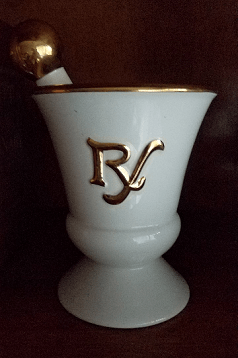 In the United States, Benjamin Franklin is credited for creating an autonomous apothecary within the Pennsylvania Hospital which opened in 1754 in Philadelphia. Although apothecaries were operating in the North American colonies, the pharmacist physician separation was not the standard practice as it was becoming common in Europe and England. Franklin’s insistence on the establishment of a separate service for the hospital was seen as an opportunity for drug research and development as well as to manage and dispense a fragile inventory.
Since 1754 pharmacists have taken more diverse roles, formally specialized, led development, and revolutionized education. Still the pharmacist is a dispenser. Whether of medications or information, whether to ambulatory patients, hospital staff, nursing home residents, fledgling students, or even to the International Space Station, pharmacists’ role is to give. Pharmacists embrace that role regardless of where they practice and continue to hone their skills and define their roles.
If you should happen to cross paths with a pharmacist tomorrow, join the dozens of people who even know this special day exists and wish him or her a Happy National Pharmacist Day!
 The Real Reality Show Blog