Last week I moderated a program on of all things, leap year. I didn’t know much about leap year, other than one comes around every 4 years, mostly, and this year is one. So, I made it my business to learn what I could about this quadrennial event, and now that I have all this knowledge floating around in my head, you’re going to learn what I could too!
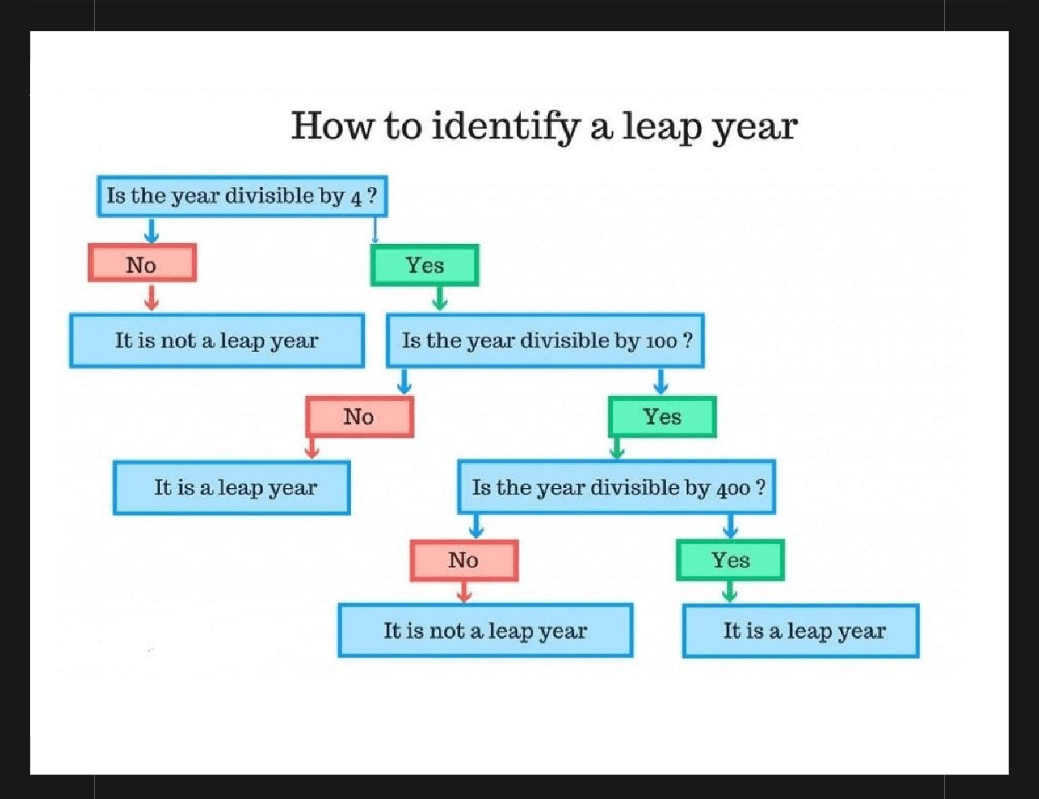
To start, do you know that leap year does not happen every 4 years. Unless you are over 124 years old you would not have ever experienced a 4 year cycle without a leap year. That is because the leap year of 2000 was the exception, not the rule. Although we began leaping years in 46 BCE, it wasn’t until the 16th century that we started leaping them with the rules we now know. (And if you ask me, but neither Caesar, nor Pope Gregory did, leap year is a misnomer. We aren’t leaping anything, we are adding. Thus the more technical “intercalary year” is also to more accurate description of what we do every 4 years, but also harder to say.) Now, if we add what amounts to 1/4 day a year, over 100 years, we’d be gaining time compared to our actual solar orbit, negating what we have been trying to correct. So the plan was that every 100 years, on the “century year” (1700, 1800, 1900) we would skip the traditional addition to February. But then, “they” figured out we’d be back to losing time if we did that all the time, so every century year that is evenly divisible by 400 (like 2000) gets its February 29.
Not everything I learned about leap years was that dry. There were some truly fun facts too. For example, we might actually know somebody whose birthday is February 29. Before we started making February 29 the extra day, local customs could add a day anywhere in the last 5 days of February, and it would keep the same date! Imagine how confused those people were, but at least they got to celebrate a birthday every year.
We’ve most all have heard of Sadie Hawkins, Al Capp’s cartoon unmarried, 35 year old “old maid.” To make a long story short, Sadie, with the encouragement of her father, set out to literally chase and catch an eligible bachelor. This morphed into the Sadie’s Hawkins days and Sadie Hawkins dances when the women asked the men on dates or to dance. Sadie Hawkins Day has nothing to do with leap year and in fact, began sometime in October 1937, decidedly not a leap year. But did Mr. Capp perhaps get his inspiration from Queen Margaret of Scotland (1503-1513). Legend has it that she enacted a law setting fines for men who turned down marriage proposals from women during a leap year. Because February 29 wasn’t recognized by English law; if the day had no legal status, it was OK to break with convention and a woman could propose. I wonder if Margaret was the inspiration for these Scandinavian leap year customs. In Denmark, a man refusing a woman’s proposal must give her a dozen pairs of gloves, and in Sweden, a gentleman refusing a woman’s proposal must gift her with enough fabric to make a skirt.
A last couple fun and still historical facts. Before Leap Years were inserted into the calendar, all months in the ancient Roman calendar had either 29 or 31 days specifically because they felt even numbers are bad luck (Julius Caesar probably would have argued that point on March 16 had he been given that chance). All this talk about Leap Year is only valid for the Gregorian calendar. Leap Day is a phenomenon specific to solar calendars like the Gregorian Calendar we are most familiar with. Other calendars approach the earth’s inconsistent orbit around the sun differently. Lunar calendars like that used to determine the Asian Spring Festival insert a leap month 7 times every 19 years, not always in the same place, and taking the same name as the previous month. By coincidence, the Chinese lunar calendar leap year is occurring this year and will be placed in what the Gregorian calendar calls February. So, if I have it right, this year, there will be two months of Zhengyue in this Year of the Dragon. I think. Maybe. I don’t know. I’m still trying to figure out what the Romans had again even numbers.
Have you broken your resolutions yet? Personal improvement is not a one-time activity. Anytime can be a great time to embrace improvement. We talk about that in the latest Uplift, “New Year Not Required.”







 Something I haven’t done yet this year, besides writing until today, is I also have yet to resolve anything. But hey, that’s the norm for me. I won’t even think about “New Year’s Resolutions” until sometime in March. I may not do anything then either but I will give it a good think. My resolution of years and years ago not to make New Year’s Resolutions in January (which I am proud to say I have kept quite well thank you) did not have the universal impact I was hoping for, encouraging others to likewise temper their plans for self, and often world, improvement as each year begins. I see by delaying my first post of 2020 for 9 days I’ve gotten here too late to see many people who forged ahead with New Year’s Resolutions on January 1 adhering to those grand plans. How can I tell? Well…
 The Real Reality Show Blog