A flood of information

Quick, name a devastating flood that happened in the US recently. Did you say Texas? Did you know there have been seven fatal floods and flash flood in the US since the Guadalupe River valley was flooded on July 4. There were another three in the two weeks preceding the Fourth of July Texas floods.

Indeed, the Texas July 4 flood was the most devastating, but to those who lost loved ones in Maryland, West Virginia, or New Jersey, devastation is not a relative term. Why do we not think of these or those in. North Carolina, New York, or New Mexico.

I though about all these places because of local flooding that has been happening here in my neck of the woods over the past few weeks. We’re sort of used to them. We see flash flooding routinely, and though not as often, river flooding occurs regularly also. We haven’t had a deadly flood for a few years. Those in my neighboring states of West Virginia, New Jersey, New York, and Maryland can no longer say that.

I have my thoughts about the dearth of information surrounding these floods when there should have been a flood of information. Let’s stick with that. Considering these areas will not have emergency funds funneled to them by our benevolent leader, we bear the responsibility to care for our neighbors.

In yesterday’s Uplift we talked about what it means to be a neighbor, to share your humanity, to let your goodwill flow, it was British theologian Richard Whatley who spoke of neighborliness as “an ongoing flow of goodwill.”  He identified five steps to being a good neighbor: be generous, be ethical, be fair and honest, be kind constantly, and be peaceful.

Is a neighbor just the guy next door? Your neighbor is your fellow man who deserves your neighborliness. How do we that? We have suggestions in Will you be my neighbor?

Kindness Is Not an Option


Two big things happened in my general part of the country this past weekend. Pennsylvania celebrated 143 Day for the entire weekend and the city of Toledo, Ohio renamed its airport The Eugene F. Kranz Toledo Express Airport. Gene Kranz was the director of NASA mission operations, noted for the modern mantra, failure is not an option, and 143 Day was inspired by America’s favorite neighbor, Fred Rogers. Naturally these two belong in the same discussion. Don’t they?


MrRogers_ImagineWhatOurIf I had to make a list of the Top Ten People to Ever Walk the Face of the Earth, Pittsburgh native Fred Rogers would be high on that list. He lived for kindness and his type of kindness is returning to vogue, especially now that the generation that mocked him, his quiet, unassuming manner, and his gentleness to everybody, is now having grandkids and their favorite expression is “why can’t you be nicer?” Mr. Rogers didn’t love everybody regardless of race, color, creed, national origin, or gender identity. Mr. Roger loved everybody. Period. His mantra, “I like you just the way you are,” ended every one of his 912 shows. “You’ve made this day a special day, by just your being you. There’s no person in the whole world like you, and I like you, just the way you are.”

If I had to make a list of the Top Ten People to Ever Walk the Face of the Earth, Toledo native Gene Kranz would be high on that list. As the division chief for the Apollo missions, Gene Kranz was in the midst of it all at the time of NASA’s Apollo 1 disaster that took the lives of Astronauts Gus Grissom, Ed White, and Roger Chafee. He told his assembled team during the aftermath while several investigations were ongoing, that although he had no knowledge then of what the investigations would determine to be the cause, “…I know what I find. We are the cause! We were not ready! We did not do our job.” He further went on to say that from then on, “Flight Control would be known by two words, Tough and Competent.” To him, tough equaled accountable, and competent meant to be never short on knowledge and skill.

Fred Rogers used 1-4-3, his favorite number, as his special code for “I Love You” based on the number of letters in each word. He once said, “Imagine what our real neighborhoods would be like if each of us offered, as a matter of course, just one kind word to another person.” Putting those two together, 143 and offering a kind word to somebody, the Pennsylvania Department of Community and Economic Development in 2019 established 143rd day of the year (May 23 most years) as ‘143 Day In PA,’ and even created a tracker on their website asking people to report when they did something nice for someone.

genekranzGene Kranz was the Flight Director for Apollo 11 and Apollo 13. Apollo 11 is known for its success, landing two men on the moon and meeting President John Kennedy’s 1962 challenge to reach the moon before the end of decade. Apollo 13 is known for its inflight disaster, potentially losing another full Apollo crew, when faulty wiring caused a spark and explosion that caused the spacecraft to lose its oxygen supply. Rather than a moon mission it became a survival mission, racing the clock to return the astronauts to earth before their oxygen ran out. Those who read the book or saw the movie know the Flight Control team took accountability for the disaster and used their knowledge and skill to bring the flight crew safely home.

Time magazine recently published an article suggesting 143 Day should become a national holiday. In the article they quoted from a Pew Research Center study and reported, “nearly 90 percent of Americans think it’s possible to improve our confidence in one another. Their prescription, it turns out, is a simple one: neighborliness.” One of those polled in the study was quoted, “Get to know your local community. Take small steps towards improving daily life, even if it’s just a trash pick-up.” The magazine’s recommendation to make it a recognized national holiday rather than an informal day of remembrance would make a dedicated date as a permanent reminder for kindness, “even if just for one day.” They conclude the article with the thought that a national 143 Day can be, “A day not to accept every neighbor’s views, or to abandon accountability, or to sacrifice justice at the altar of being kind, but instead to do the most difficult work there is: loving thy neighbor exactly as they are.”

After the Apollo 1 fire and his meeting with the Flight Control team, Gene Kranz instructed his team to write on their office blackboards, “Tough” and “Competent” and to never erase them. “They are the price of admission to Mission Control,” he said. Tough and Competent may have been reserved for his inner team but the outside world may more readily remember another statement by Gene Kranz. Failure is not an option. As is so common of these things, even though Mr. Kranz used the phrase for his autobiography, he did not originate the phrase. It was coined by a screenwriter working on the “Apollo 13” movie project. He did live the phrase however, and his life and work epitomizes true leadership: dedication to excellence beyond self.


Fred Rogers may never be remembered with a national celebration of 143 Day and Gene Kranz may never have another airport dedicated to him, but both men have otherwise long resumes of competence, compassion, accountability, and kindness. Failure is not an option. Neither should be kindness. That should be a the natural course!

Kindness tough-competent

Continuing with my experiment on the WordPress/Anchor partnership, Don’t Believe Everything You Think is available on these platforms. 

Anchor   Spotify BreakerLogo PocketcastsLogo RadioPublicLogo

Please let me know what you think. So far I’m still mostly just recording the blog posts but eventually there will be more than that. We might even get into a discussion about how we all got into blogging. 

This post will begin to be available on these platforms later today.

Plan, Check, Do

  In the very nearly eight years that I’ve been sharing my sometimes questionable mind with you I’ve rarely brought up religion. Maybe a half-dozen times and then probably just at Christmas or Easter not that I’m only Christmas or Easter religious, but it’s not a topic I often speak or write about. Today there seems no escaping it, not that it needs escaped from of course.
   Unless you live in a world devoid of internet access and by virtue of you reading this we know that’s not true, or unless you have been out of the country this week and even then you probably still reached back with that internet access that we know you have, you’ve gotten to read about the newest controversy, that is how dare Ellen DeGeneres sit next to President George W. Bush and at a baseball game, a social event even, of all places.
   If you should happen to be scrolling through the archives here you know we’re approaching the one-year anniversary of the mass murders at the Tree of Life synagogue in Pittsburgh Pennsylvania, the deadliest such event at any religious setting.
NoExceptions
   I’m sure you’re now asking yourself what do these two events have to do with each other? Less than a year ago people were posting all over social media how we have to love one another, respect one another, live in harmony with each other. In the past few days some of those same people had commented how could someone like Ellen socialize with someone like George W. knowing his past and their differences? And they did it with less than loving, respectful, or harmonious words. Ellen’s initial response to the comments that you don’t have to agree with someone to like him or her or even to be civil to that person or group of people was met with even more outrage. And then a post or two later whether on Twitter or Facebook or in the comments section to a news article, those same people we’re counting the ways they were going to commemorate the Tree of Life tragedy with love and respect, and in the spirit that we are all the same and belong together.
IMG_20191010_195519
   It takes so much more than words whether spoken, printed, or typed and sent into the interwebs. It’s the action that matters. No matter if you are agreeing, disagreeing, clarifying, or condemning, some true action is needed if you’re expecting change. Or even love and respect.
   I probably would have just read all of the posts, become frustrated at the consistent contradictory reactions of people, then had a second cup of coffee and let it be forgotten before the day’s end. But then that’s where religion snuck in. It was right there in front of me in today’s Gospel, “…ask and you will receive; seek and you will find; knock and the door will be open to you.” (Luke 11:9) These three are interconnected, not independent. It doesn’t stop at ask.
   If you’re having trouble thinking theologically, consider the business maxim, “plan, check, do.” Ask is step one, it’s the plan. What do we want? Do we want to live in harmony? Do we want to punish somebody for past offenses? Do we want to love our neighbor? The second step you seek, or checking the plan. How do we get what we want? How much do we need to be happy? How severe should the punishment be? Can we get away with just liking our neighbor? And then you have to act on it. You have to knock on the door and announce how you will do your plan. Sometimes that plan means you have to change, you have to be more in tune with others, you have to love more. It’s not always going to be the other person who has to adjust to be in harmony with you. In fact, more often than not the one doing the work will be you.
   So whether it’s being civil to someone, loving your neighbor, or rethinking past times when you’ve been less than those, now is probably a good time to plan, check, and do.
cropped-ltn1.png

Every Day Is a Great Day

Hockey season started yesterday. I was there for it. In my seat, the one I’ve occupied for the past couple of years. It’s not a bad seat. Over the years I’ve sat in several spots around the arena. Lower bowl, upper bowl, center ice, behind the net, on the dots. In the old arena. In the new arena. None are bad seats. Amidst a handful of people in my little section amidst the 19,000 or so seats all occupied by people in their little sections we sat in not bad seats there just to see a hockey game. No other agenda, hidden, assumed, obvious, or imagined. Just hockey.
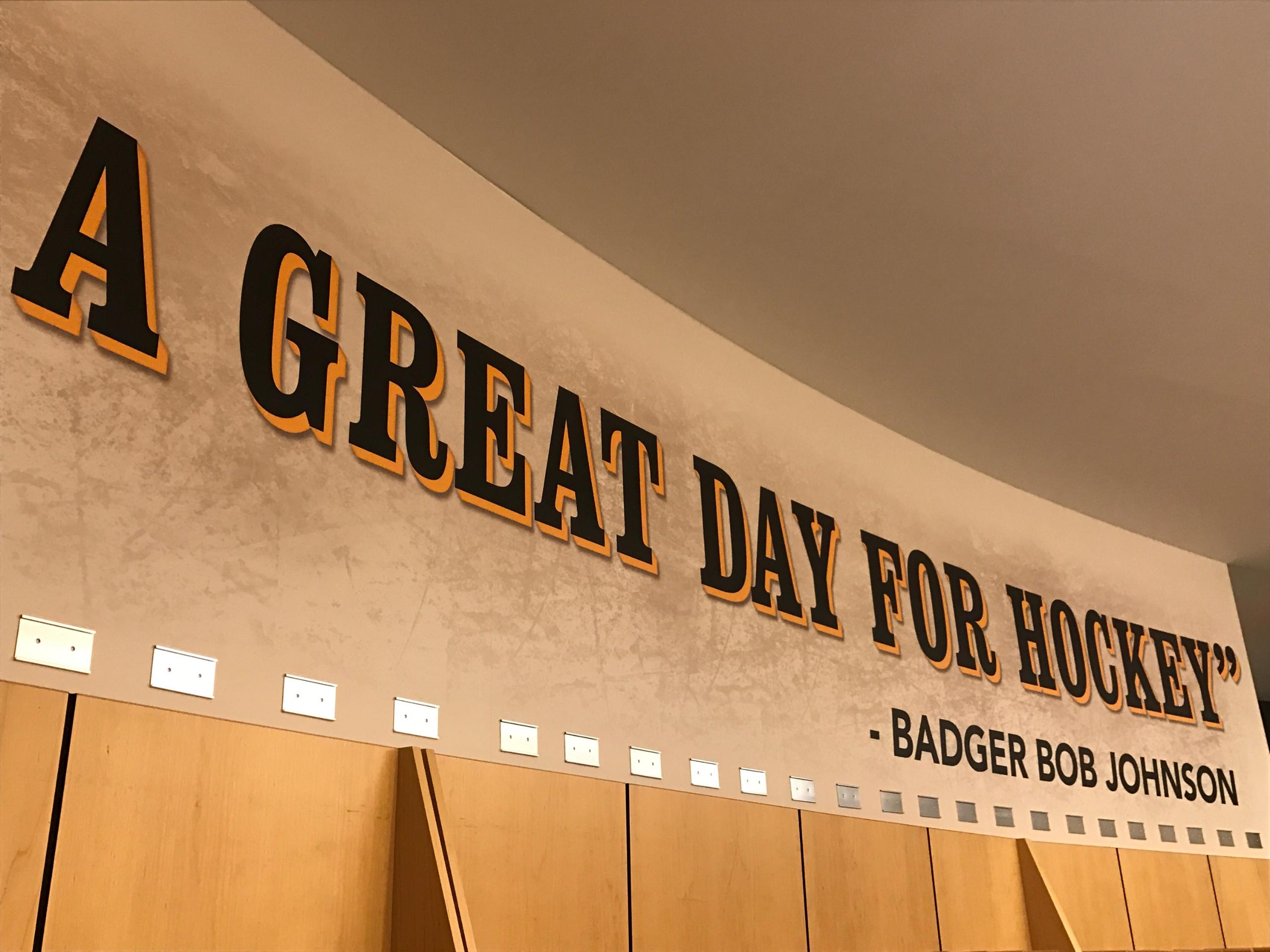
But before the game we stopped to pay respects to those who lost lives and loved ones in Las Vegas and all 19,000 were silent. Every one. Silent. Then we paid respects to the flag and all 19,000 sang. Every one. Singing. And I thought how once again all I know about being a gentleman I learned from hockey and how I was once so moved by that realization that I posted my thoughts on it right here. And I thought, just as “Badger” Bob Johnson knew every day is a great day for hockey, that every day is a great day to learn from hockey.
So I’m doing today something I’ve never done before. I’m reprinting “Everything I Know About Being a Gentleman I Learned From Hockey.”

IMG955568

EVERYTHING I KNOW ABOUT BEING A GENTLEMAN I LEARNED FROM HOCKEY

Originally posted November 26, 2016

When I was at the hockey game this weekend I got to thinking how much as a society we can learn from hockey. Yes, the sport that is the butt of the joke “I went to a fight last night and a hockey game broke out,” is the same sport that can be our pattern for good behavior.

Stay with me for a minute or two and think about this. It started at the singing of the national anthem. I’ve been to many hockey, baseball, football, and soccer games. Only at the hockey games have I ever been in an arena filled with people actually singing along. Only at the hockey games are all of the players reverent to the tradition of honoring the country where they just happen to be playing even though they come from around the world – Canada, Russia, Germany, Sweden, Finland, even a few Americans.

A decent dose of nationalism notwithstanding, hockey has much to offer the gentility. Even those fights. Or rather any infraction. If a player breaks the rules he is personally penalized for it. Ground isn’t given or relinquished like on a battlefield, free throws or kicks aren’t awarded to the aggrieved party like victors in a tort battle. Nope, if you do something wrong you pay the consequences and are removed from play for a specified period in segregation from the rest of your teammates. No challenges, no arguments, no time off for good behavior. Do the crime. Pay the time. In the penalty box. Try doing that to a school child who bullies and you’ll have some civil liberty group claiming you’re hurting the bully by singling him out.

Hockey is good at singling out people but in a good way. At last Saturday’s game the opposing team has two members who had previously played for the home team. During a short break in the action a short montage of those two players was shown on the scoreboard screens and they were welcomed back by the PA announcer. And were cheered and applauded by the fans in attendance. There weren’t seen as “the enemy.” Rather they were friends who had moved away to take another job and were greeted as friends back for a day.

While play is going on in a hockey game play goes on in a hockey game. Only if the puck is shot outside the playing ice, at a rules infraction, or after a goal is scored does play stop. Otherwise, the clock keeps moving and play continues. Much like life. If you’re lucky you might get to ask for one time out but mostly you’re at the mercy of the march of time. Play begins. After a while play ends. If you play well between them, you’ll be ok.

The point of hockey is to score goals. Sometimes goals are scored ridiculously easily, sometimes goals seem to be scored only because of divine intervention. Most times, goals are a result of working together, paying attention to details, and wanting to score more than the opposing team wants to stop you from scoring. There is no rule that says after one team scores the other team gets to try. It all goes back to center ice and starts out with a new drop of the puck. If the team that just scored controls the puck and immediately scores again, oh well.

Since we’re talking about scoring, the rules of hockey recognize that it takes more than an individual to score goals. Hockey is the only sport where players are equally recognized not just for scoring goals but for assisting others who score goals. Maybe you should remember that the next time someone at work says you’ve done a good job.

handshakeThe ultimate good job is winning the championship. The NHL hockey championship tournament is a grueling event. After an 82 game regular season, the top 16 teams (8 from each conference) play a four round best of seven elimination tournament. It takes twenty winning games to win the championship. That’s nearly 25% as long as the regular season. It could take as long as 28 games to play to the finish. That’s like playing another third of a season. After each round only one team moves on. And for each round, every year, for as many years as the tournament has ever been played, and for as many years as the tournament will ever be played, when that one team wins that fourth game and is ready to move on, they and the team whose season has ended meet at center ice and every player on each team shakes the hand of his opponent player and coach, wishing them well as they move on and thanking them for a game well played. No gloating. No whining. No whimpering. Only accepting.

So you go to a fight and a hockey game breaks out. It could be a lot worse.

—–

So there you go. Everything you need to know about being a gentleman, or a lady. Courtesy of the folks who brought you hockey. They’re not bad lessons if I say so myself. And I think even Badger Bob would agree.


Forgotten West Virginia

The post Hurricane Sandy news yesterday was that power would finally be restored to most of those in New York and New Jersey who had been without electricity for two weeks.  Nobody said anything about West Virginia.

At the height of the storm, whatever weather you were facing, wherever you were, was the most important news of the time.  As your weather crisis passed, whether it was weather, weather related, or just interesting, you turned your attention to the New Jersey New York Sandy Aftermath or whatever clever title your favorite news outlet wanted to give to the disaster.  The country was riveted to their televisions watching how New York City was recovering from the storm. Except some in West Virginia.

With all the sympathy and support, assistance and aid due the residents of New York and New Jersey, please don’t forget the already forgotten in West Virginia.  Thousands there are still without power, phone, water, and roads.  In West Virginia the storm story wasn’t water, it was snow.  Snow measured in feet was dumped on the Northeast counties of West Virginia in the mountains near the Pennsylvania border.  As the snow fell so did trees and electric poles and with them power. 

There the power wasn’t just for heating and cooling and refrigeration and lights.  There many of the houses’ water supplies are from wells and power is needed to run the pumps to bring water to the house for drinking, bathing, washing, and flushing.

As the snow and the trees and the poles fell on West Virginia, a lot of that fell on the roads.  Many are still impassable which is why many are still without and will continue to be without electricity, school, work, and trips to the store.   Local officials project it will take up to six months to clear the roads, the roads they were attempting to clear from a previous wind storm before Sandy hit.

Wherever disasters hit, decency follows.  Many of the residents were able to help themselves and their neighbors clearing roads with their own tractors and being able to get to those who needed the most help.  When those with the power (political, not electric) couldn’t get to those who needed to get to someplace warm, or to get to medical aid, or to get to their prescription refills, the neighbors did.  When electricity or natural gas wasn’t available with which to cook and heat, neighbors delivered propane tanks and stoves to those who then could and did.  

That some can dig their way out to help others is a remarkable story someone should tell.  If someone can get there.  While Homeland Security officials toured the devastated areas in New York and New Jersey, they attended a briefing in West Virginia’s capital a couple hundred miles away. 

Don’t take away from the efforts to restore normalcy to the coast.  And don’t forget to give to the efforts to do the same in the mountains.

Now, that’s what we think. Really. How ‘bout you?