The almost annual Christmas movie review

Welcome to the almost annual Christmas movie review! This year, the non-Christmas Christmas movies.

Did you know that some group out there surveyed the entire country about their favorite non-Christmas movies that are set during Christmas time. I know it was the whole country because the nice people on the TV news desperately searching for filler material found this report and it included a map of the U.S. noting each state’s favorite. I assume they mean the movie most commonly cited by the survey participants in those states, but “they” said the state’s favorite so let’s go with that.

Surprisingly, none of the favorites included “The Poseidon Adventure” which I think is a dandy Christmas-set non-Christmas movie even though it’s really set on New Year’s Eve. That counts as the Christmas “season,” right? The most often mentioned movie was or is depending on how current this information is (filler, remember), is “Mean Girls.” Only one state named “Die Hard” as their favorite which is where it belongs. Err, in the Christmas-set non-Christmas movie category, not just in one state. Although as a Christmas-set non-Christmas movie it’s really not that good. So there’s a tree it in. Big freaking deal. If the line had been written as “Yippie ki yay fella” it would have disappeared 3 months after its release. Anyway, the second most cited movie was/is lGremlins.” I suppose that’s reasonable.

But that was them. This is me. And naturally, I have my own ideas, just as I did in the most recent almost annual Christmas movie review when we discussed (haha, when I told you), the best Christmas movie ever (i.e. my favorite that year), I will lead you gently to the most Christmassy Christmas-set non-Christmas movie.

It’s quite amazing how many such movies there are. For some reason, the first that comes to mind is “When Harry met Sally,” although, like Poseidon, that leans more to New Year’s. And then that makes me thinks of “Ocean’s Eleven,” the good one (aka the original) which also is set mostly on New Year’s Eve. But with all the planning that went on, you know there was a Christmas tree and presents exchanged upstairs in Mr. Acebos’ living room.

A good choice that is, but there are other Christmas-set non-Christmas movies from the golden years of cinema. Let’s look at some of them.

For those who can’t imagine Edward G. Robinson in a Santa Suit there’s “Larceny, Inc.” from 1942. If you watch it, you will still have to imagine him thusly costumed because he wears a regular suit in it all the way through, but the action does take place during the Christmas shopping season.

Another possibility is 1946’s “Lady in the Lake.” I wrote about it a few years ago and mentioned that even though the opening credits of the movie were presented in a series of Christmas cards, Christmas carols provided the background music, trees and wreaths are prominently displayed, and one scene even opened with a recitation of Dickens “A Christmas Carol” playing on the radio, the Philip Marlowe mystery definitely is not a Christmas movie, merely another Christmas-set non-Christmas movie.

But my favorite Christmas-set non-Christmas movie from those olden, golden years is “The Thin Man,” the Hackett and Goodrich adaption of Dashiell Hammett’s mostly fun murder mystery featuring Nick and Nora Charles. The story begins some unspecified time before the end of the year that I contend was around Thanksgiving, and concludes with them on a train heading home where they disembark on New Year’s Eve, encompassing the entirety of the Christmas season. How much non-Christmassy can you get.

That’s all folks!

Blog Art 2


The holidays bring a sense of generosity and togetherness. We can maintain this spirit throughout the year.  Small acts of kindness create a caring and enthusiastic world.
If you think that’s profound, you should read the rest of Do Unto Others. You know, life is life lived alone

But before you go look, have you still not thought about joining the ROAMcare community and have the weekly Uplift blog delivered to your email as soon as it hits the website? In addition to an Uplift release every Wednesday, you will also receive weekly a Monday Moment of Motivation, and our email exclusive Friday Flashback repost of one of our most loved publications. All free and available now at  ROAMcare.org.
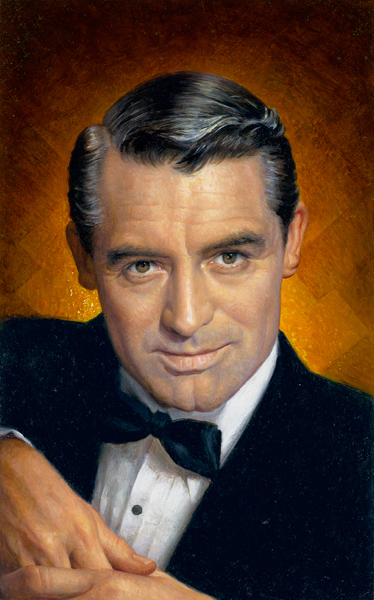

Proper Attire Required

I think I’ve reached fuddy duddy stage. I know I’ve gotten to fuddy duddy age yet I don’t feel I’ve overly dudded any fuddies. I believe I qualify for the standard because I know I look spectacular in a tuxedo yet have nowhere to wear one.

It became clear to me and confirmed for me that what is wrong with modern America (besides aging former reality stars insisting we’re part of the Me Generation), while watching Mr. Lucky (the fabulous movie, not the over-acted TV offering although it has a pretty nifty theme song) is we don’t dress for dinner anymore. Of course, the 1940s film industry wasn’t known for putting out documentaries of real-life America, but even the humble middle-class family was having more fun and doing it better dressed than most of us.

Consider this. In nearly every 1940s vintage film offering from romance to comedy to drama to noir, someone is going out to dinner where there will be dancing, at least one torch song singer singing at least one torch song, someone falls in love, the bad guy always pays and the good guys always end up with the lady. And all those people dancing at dinner? Formal attire required. Casino hopping? Tuxedos and gowns. Murder in the penthouse? The corpse is wearing no less than a smoking jacket and if the responding detective happened to be at dinner when the call came in – yep, even he shows up in a tux. Once I remember even white tie and tails.

Perhaps those at is not the norm but it’s not a stretch to say that the average 1940s family sat to dinner with jacket and tie, and dress and pearls. Possibly paste knock offs but something was hanging around mom’s and eldest daughter’s necks. After dinner together they repaired to the drawing room where apparently they drew stuff.

But back to Mr. Lucky with Cary Grant and Laraine Day. He wants to swindle her war relief group. She gives blood. He gives blood. They get together for a late night drive. They fall in love. He transforms his gambling boat into a medical supplies transport. It sinks. Neither is ever out of at least semi-formal attire until the last scene when he shows up in sailing garb. They live happily ever after. I cried.

How could you not get emotional when Cary Grant as Joe Adams as Joe Bascopolous (it’s complicated) tells Laraine Day as Dorothy Bryant, “I don’t know what to make of a dame like you,” and Dorothy answers, “Neither do I,” as they both look out into the countryside with the fire crackling in the fireplace after they drive all the way from New York to Maryland (apparently without stopping since she changed and tied his tie while they were on the road) to prove to her father she would marry him if she had to? (Yes, that was a question. Go back and read it slower.) I get choked up just thinking about it – and thinking how they both look still impeccably put together after a 5 or 6 hour drive in an open convertible. It’s uncanny.

Every movie from the 1940s that I’ve seen, which is close to every movie (worth seeing) from the 1940s, has that formula. Dinner, dancing, singing, at least one murder, accidental death or sufficient injury slash illness to render one character hors de combat, fall in love, question decision to fall in love, bad guy gets what he deserves, fall in love again, live happily ever after, all in formal attire.

I want to go to a casino in my tux and not be given the side-eye, or pop into Olive Garden in a white dinner jacket and bow tie (it is before 6!), or go dancing and end up with the snooty dame who nobody likes (whom nobody likes?) but is really a misunderstood sweetheart who only needs to see me in my formal wear to realize that yes happiness is right around the corner and I’ll be there waiting for her!

Ah sweet dream. Does that sound fuddy duddy to you? Of course it doesn’t!

I wonder where my cuff links are.


IMG_1573

Not me but darn close!


It is said, “It is not  the destination, it is the journey.” With our apologies to Emerson, it is neither.  The experience of any journey, the joy of any destination, is found in the people it is shared with. We explain our thinking in the latest Uplift post, The Road Most Travelled.


Ahoy Matey!

Okay, first things first. Do people really say that? Ever said that? It seemed an appropriate title because this post is about sailing, although sailing is a poor choice of verbs because the boats I am talking about don’t sail. I was on a sailboat once, in the Gulf of Mexico off the Florida coast and it was fun, lots of fun. But even that boat had a motor. I suppose if the winds died, those who paid for the privilege of pretending to be Blackbeard, or Bluebeard, wouldn’t die along with them. I don’t remember if I ever wrote a post for this blog about that experience. That’s the closest, and I’m sure the only time I will be even that close, to a real sailboat. And I dare say, will most everybody I know who has ever gone “sailing.”

But I digress. Let us talk about sailing, and the boats that do, even though they don’t. I have been on only a handful of boats: a 35 foot fishing boat in Lake Erie a few times, always to do battle with the walleye. I’ve been on the sightseeing cruise ships that ply the rivers around my town and a few others, although “cruise” seems as inapt a verb when talking about these vessels as “sail” does when we (eventually) get to the big boats I mean to talk about, which to be honest, really isn’t the real subject of this post but it makes a nice vehicle, or vessel. And then of course there have been the odd human powered boats including, row, outboard motor, canoe, and paddle. Oh and twice on the boating equivalent of public transportation to get from mainland to nearby island (ferry boat?). I guess that actually is four times because I got back each time also.

Now then, about that sailing I had started with, the one that isn’t actually sailing although they always say sail, which is I suppose more attractive sounding that telling someone, “I went dieseling last week,” when you return from a cruise. And now we got to the crux of the matter, or of the vessel. Those big cruise ships. I have never been on a “cruise” (unless you want to call any or all of those other boats cruising which only seems fair since the big cruise boats seem to insist that they sail) and although I honestly don’t believe I have missed anything, I now find myself considering one but a very specific and particular one.

You should have read enough of these posts to know I am close to fanatical when it comes to old movies, as in older than me, which means movies from the 30s, 40s, and some of the 50s. The definitive stops for old movie buffs for routine viewing are television’s Turner Classic Movies (TCM) and The Criterion Channel. Of those, TCM also sweetens the cinephile’s pot with an annual film festival and – drum roll please – a cruise. The cruise alternates coasts and this year it “sails” from Florida. Not in my backyard but at least on the same side of the country.

I have never considered splurging on a TCM festival either on land or on sea, and I started thinking, I should go ahead and splurge on a vacation I would truly enjoy (because if there are old movies involved I will enjoy it) and on something I’ve never done (which is sailing on a diesel powered floating hotel). You know, I’d not be so reticent about big cruise ships if they weren’t so big. What ever happened to the Love Boat? So I thought I should consider it, fear of floating hotels notwithstanding.

Well let me tell you something! I always thought I was one of sufficient means. To paraphrase the dialogue of what I consider to be world’s greatest movie, Casablanca, when Rick tells Sam that Ferrari would pay him twice as much if he were to work for him, I don’t have enough time to spend the money I do have. Then I got a look at what it costs to watch a couple old movies while bopping along the Caribbean Sea and/or Atlantic Ocean. It doesn’t sail until October and already the luxury and not quite that fancy cabins and suites are sold out. The only space left are mostly interior cabins and a few small mid-ship ocean views and they are going at better than 5 grand a cabin! Do you know how many movies I can see at the local theater showing classic films for $5,000? About 500 – with popcorn!

Not to be all Scrooge-like about it, I could still be talked into considering it. If anybody out there would like to “sail” the Caribbean and/or Atlantic and watch some old movies, presumably in swim and vacation wear (I’ll bring my tux for dinner just in case), please let me know in the comments. We can discuss financing.


Can an egoist be redirected to a more sharing and caring lifestyle? We say yes, you, and they can be someone’s sunshine. Read how in the latest Uplift, Out of the Shadow.


Blog Art 2 - 1


Read the book

Not too many posts ago I wrote one about the changes that a story goes through on its way from printed page to silver screen. That got something stirring in me and I set out to read or reread as many of the books that have been the inspiration to some of my favorite movies. Along the way I noticed something curious. Many modern movies hold themselves much closer to the original stories than movies from the golden age, and while I think that’s a good thing for the high school football star who has little time for such nonsense as reading, the older movies are typical of a higher quality, story telling wise and even production wise. (Yes, I know, but that’s my opinion. It’s also my blog. Get over it.)

We likely have Will H. Hays to thank for the creative license taken by screen writers in the 1940s and 50s. Although the so-called Hays Code “governed” film propriety until 1968 when the now familiar 4 tiered Motion Picture Association of America rating system was adopted, it was during the golden age of moviemaking (1936-1962) that the classic movies differed much from their classic written beginnings – but often in a good way.

Reading the book versions of some film classics revealed three major changes. Most movies were targeted to run from 105 to 115 minutes. Provocative talk was okay, action was not. The bad guy not only never wins, he always gets more than his due.  Although I the past two weeks I’ve read The Thin Man, The Maltese Falcon, The Big Sleep, and To Have and Have Not, I’m going to use Farewell, My Lovely, adapted to “Murder, My Sweet” as the film/book comparison. I’m case you want to read, watch, or do both with this story and have not yet done either, I will not reveal any plot information in this discussion.  

Raymond Chandler’s Farewell, My Lovely, released in 1944 as “Murder, My Sweet”* has enough character exposés and plot twists to fill 3 hours of screen time. Even “Gone With the Wind” couldn’t keep audience members who were honest entertained for 180 minutes. To keep it to a reasonable length, some sub-plots were completely eliminated and characters combined to make transactions flow through the deleted scenes less awkwardly. Of thirteen main characters from the novel, eight made the transition to the screen version and three of them were significantly altered.

Before we discuss plot changes it is worth noting the Chandler was not a stickler for plot details. Rather than relying on formula and a certainty that everything wraps up neatly at the end, he said he was more interested in the message conveyed by his stories. During the adaptation of another of his novels, The Big Sleep, screen writer William Faulkner, a pretty good novelist himself, was unable to reconcile one of the murders. It is said that after many hours of trying to successfully reveal, or at least hint at the culprit responsible for the character’s demise, the screenwriting team decided to call Chandler and ask who did it. His response? He didn’t know either!

In both book and movie, a missing necklace and a missing woman are central to the story. While the compactness of the plot and some subplot elements that were victims of time are obvious if you read the book before watching the movie, but if your first exposure to the tale is at the movies, there are no unresolved issues.  How the woman and necklace become missing and found, and what happened in between were victim to the censors and may leave your wondering if the suspension of disbelief might be stretched just a little. Illegal drug use, questionable social couplings, racial and economic disparities, and police corruption were tempered or cast aside. The resulting screenplay, although missing many of the stops along the way to the conclusion, does not suffer for these details. In most cases, the viewers can replace with their imaginations what was handed to them in writing. This is not always a bad thing. Often your imagination can make a better story than the one first considered and when the inferences are made deftly, the conclusions can be fairly consistent. In a different movie/book tandem, The Thin Man by Dashiell Hammett, although Nick and Nora sleep in separate beds in full pajamas with dressing robe and gown, there is no question that they are giddyingly in love with each other and present as a passionate couple.

The conclusion of “Murder, My Sweet,” although satisfying, takes a major departure from the novelist’s vision. Again, needing to satisfy the censors of the time, the character wrap up are quite different. Some “bad guys” in the novel are still walking around when the last page is turned. The Hays Code wanted audiences to see that crime not only doesn’t pay, but exacts a price. We never see the bullets fly (too violent) but we see the results. And who does the “cleaning up” and how they are manipulated so nobody gets an easy way out are somewhat vague. A final twist is the movie’s version of a happy ending, although working well for the movie, may not have been exactly as Chandler would have written it.

The is no question that if you watched “Murder, My Sweet” you know you are watching the story behind Farewell, My Lovely. It is faster paced, you might think you missed something when you went to re-butter the popcorn, and at the end you could be saying, “oh, yeah, I can see that,” but it’s clearly the same story. It’s just not the same.

Is it a bad thing that movie adaptations deviate from their source materials? Not always. When nothing but the title and a character name are all that are recognizable you get the sense the studio or production company know they have a dog of a story and the only way they stand a chance to make money is to buy a popular title. But a good story in the hands of talented screen writers, especially if they are source writers themselves, will show through regardless of constraints placed by the questionable morals police or to the keep it short so they don’t get bored police.

To quite somebody from some book or movie, “It’s all good!” (But it wouldn’t kill you to read the book.)

Blog Art 2 3


* Murder, My Sweet was not the first screen adaptation, nor the last, nor was the screen the only adapted medium of Farewell, My Lovely. Although the latest adaptation was made in 1975, it still was subject to significant changes for time and cultural references.


You affect everyone you meet, whether with words, actions, or just a smile. Read why we say you brighten everybody’s day with your presence at http://www.roamcare.org.