There’s no fooling Mother Nature

We sure pulled off a couple good ones on old Mother Nature these last couple weeks, didn’t we? First, last week we added an extra day to her natural progression around the sun because nobody who was ever important enough (or perhaps self-important enough) to proclaim this is the calendar we are going to use was smart enough to create a usable calendar without readjusting it ever 4 years. And then Saturday night we took an hour away from her because we don’t like when she decided to have sunsets. Well she got back at us for sure.  I din’t know about where you are, but here, after a week of beautiful spring like weather, she gave us torrential downpours on Saturday and snow (snow!!!) on Sunday. Of all the nerve!

The way we willy-nilly our way around physical constants you would think humans are in charge. Ha! You know what we’re in charge of? The universe’s blooper reel! We can start with the clock and calendar. Pick point, any point in space and call it Point A. Now however long it takes for this planet you are sitting on to go around the sun from Point A to Point A is one year. Period. Now… however we want to divide it is up to us. Maybe something like this, 10 months in a year, 10 weeks in a month, 10 days in a week, 10 hours in a day, 10 minutes in an hour, 10 seconds in a minute, and we can make the second as long or as short as we need to make it come out even.  No, after a variety of questionable decisions we finally land on 365.25 days in a year made up of, 12 months in a year, 28, 29, 30, or 31 days in a month, let’s forget about weeks in a month but put 7 days in them, 24 hours in a day except for twice a year when we make one 23 hours and one 25 hours (but make those changes at night so nobody will notice), 60 minutes in an hour, and 60 seconds-ish in a day except on those days we randomly add a “leap second” or two so everything comes out even.

People have a hard enough time dealing with other people, do we really want to pit man against nature? Is it because we know we can’t amicably deal with other humans that we decide we’ll just make up stupid “laws of nature” and that will show everybody else how masterful we are. Guess what? We aren’t! As a species, man is selfish, stupid, and stubborn. People see things right in front of them but claim it didn’t happen. You don’t like the facts? Make up alternate facts. Don’t like what somebody says, make up a catchy insult. Don’t like that it gets dark so early? Push the hours around on the clock.

Nature isn’t like a mousetrap that you can make better. We can argue with each other as much and as long as we want. Chances are, neither side is right. But let the natural order of things go on naturally. Or else, don’t complain when next year there are more hurricanes than last year, that lakes appear and disappear in the dessert, and when eventually the Yellowstone volcano erupts. Until then, be happy you got to wake up this morning. Many didn’t and now what will they do with an extra hour of daylight. (By the way, you know you can get that “extra” hour by just waking up an hour earlier.)

Now, let’s talk about the genius who put 128 ounces in a gallon and said the metric system is too confusing?


It’s time to make a New Year’s resolution. What now? See why we say “Yes, Now!” in latest Uplift!


D68BDB30-CC4A-4785-9C55-742B1B6AC9DC


Leaping into the New Year

Last week I moderated a program on of all things, leap year. I didn’t know much about leap year, other than one comes around every 4 years, mostly, and this year is one.  So, I made it my business to learn what I could about this quadrennial event, and now that I have all this knowledge floating around in my head, you’re going to learn what I could too!

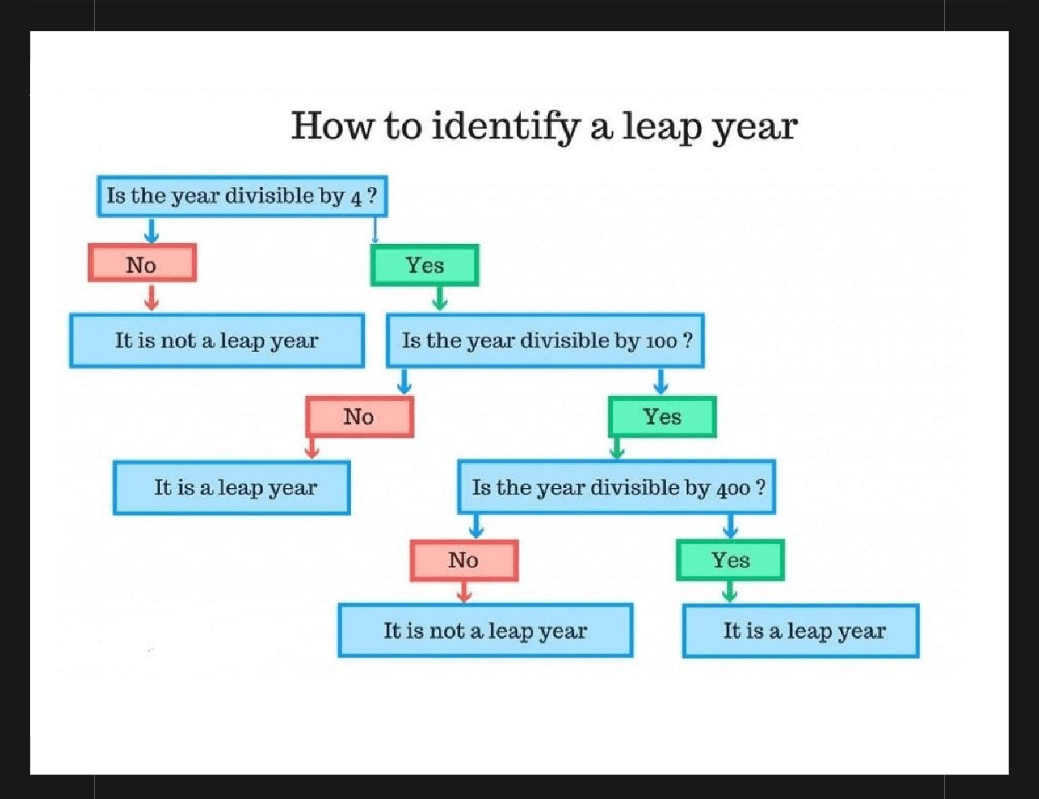
To start, do you know that leap year does not happen every 4 years. Unless you are over 124 years old you would not have ever experienced a 4 year cycle without a leap year.  That is because the leap year of 2000 was the exception, not the rule. Although we began leaping years in 46 BCE, it wasn’t until the 16th century that we started leaping them with the rules we now know.  (And if you ask me, but neither Caesar, nor Pope Gregory did, leap year is a misnomer. We aren’t leaping anything, we are adding. Thus the more technical “intercalary year” is also to more accurate description of what we do every 4 years, but also harder to say.) Now, if we add what amounts to 1/4 day a year, over 100 years, we’d be gaining time compared to our actual solar orbit, negating what we have been trying to correct. So the plan was that every 100 years, on the “century year” (1700, 1800, 1900) we would skip the traditional addition to February. But then, “they” figured out we’d be back to losing time if we did that all the time, so every century year that is evenly divisible by 400 (like 2000) gets its February 29.

Not everything I learned about leap years was that dry. There were some truly fun facts too. For example, we might actually know somebody whose birthday is February 29. Before we started making February 29 the extra day, local customs could add a day anywhere in the last 5 days of February, and it would keep the same date! Imagine how confused those people were, but at least they got to celebrate a birthday every year.

We’ve most all have heard of Sadie Hawkins, Al Capp’s cartoon unmarried, 35 year old “old maid.” To make a long story short, Sadie, with the encouragement of her father, set out to literally chase and catch an eligible bachelor. This morphed into the Sadie’s Hawkins days and Sadie Hawkins dances when the women asked the men on dates or to dance. Sadie Hawkins Day has nothing to do with leap year and in fact, began sometime in October 1937, decidedly not a leap year. But did Mr. Capp perhaps get his inspiration from Queen Margaret of Scotland (1503-1513). Legend has it that she enacted a law setting fines for men who turned down marriage proposals from women during a leap year. Because February 29 wasn’t recognized by English law; if the day had no legal status, it was OK to break with convention and a woman could propose. I wonder if Margaret was the inspiration for these Scandinavian leap year customs. In Denmark, a man refusing a woman’s proposal must give her a dozen pairs of gloves, and in Sweden, a gentleman refusing a woman’s proposal must gift her with enough fabric to make a skirt.

A last couple fun and still historical facts. Before Leap Years were inserted into the calendar, all months in the ancient Roman calendar had either 29 or 31 days specifically because they felt even numbers are bad luck (Julius Caesar probably would have argued that point on March 16 had he been given that chance). All this talk about Leap Year is only valid for the Gregorian calendar. Leap Day is a phenomenon specific to solar calendars like the Gregorian Calendar we are most familiar with. Other calendars approach the earth’s inconsistent orbit around the sun differently. Lunar calendars like that used to determine the Asian Spring Festival insert a leap month 7 times every 19 years, not always in the same place, and taking the same name as the previous month. By coincidence, the Chinese lunar calendar leap year is occurring this year and will be placed in what the Gregorian calendar calls February. So, if I have it right, this year, there will be two months of Zhengyue in this Year of the Dragon. I think. Maybe. I don’t know. I’m still trying to figure out what the Romans had again even numbers.


Have you broken your resolutions yet? Personal improvement is not a one-time activity. Anytime can be a great time to embrace improvement. We talk about that in the latest Uplift, “New Year Not Required.


9CBE2DCA-C410-4AD4-98AC-B68374183E02

Extra! Extra!

What are your plans for Saturday? You remember Saturday? February 29, our quadrennial reminder that in the struggle between man and nature man is lucky to struggle into second place.
 
We (that’s the big “we” and that means you too), we so arrogantly preen and posture and spends oh so much energy saving the planet for future generations that we completely miss that we know so little about our planet.  We can’t even tell how long it takes to get around the sun.
 
Years, months, days, hours, minutes. All man made methods of marking time. We (the big “we”) came up with these. They weren’t forced upon us. We defined them as we chose. Can you hear the discussion? “I know, let’s make a ‘year’ our standard.” Great! What’s that? “The length of time it takes to go around the sun.” Wonderful! How long is that? “Heck if I know.” And in the true sense of being human in a world where being human was seemingly an afterthought, and an arrogant one at that, we picked 365 days. ish. Hmm. What’s a day? 
 
And so, because somebody didn’t take the time to measure twice, declare once, we get an extra day every 4 years. ish. Every couple of years, nothing specific mind you, an extra second gets added in order for man to keep up with nature and the natural order of things. Somebody decides when to insert these “leap seconds” by probably following some multi-page calculation harkening as many laws of physics as possible in a single formula. Probably the same people deride poor Punxsutawney Phil as an inaccurate teller of things to come. 
 
We absolutely must do our best to preserve the resources nature let’s us borrow, but we should also take heed that we are not in charge. Long before the first underarm deodorant was sprayed the glaciers began receding to carve out the Great Lakes and the Liddar Valley. Long before the first well was drilled the great land mass began separating into a handful of continental chunks. It’s not done. Long after man leaves Earth nature will continue its ongoing process of global renewal. 
 
It’s good we screwed up measuring time. Now at least once every four years we get to remind ourselves that we aren’t all that after all. To be honest, I’m surprised somebody hasn’t worked in a drinking holiday or appliance sale around Leap Day. I suppose it’s only a matter of time.
 
 
Feb29