Wordsmithing and the common man

Yesterday’s Uplift post at ROAMcare revolved around the word “common.” A comment had us thinking about how the meanings of words change. I thought about that a little more on my own and I was amazed at the number of words that once meant one thing now have little and sometimes no resemblance to their original meanings. I was also somewhat aghast at the temerity of humans to play willy nilly with established norms – although, at least with words, the norm established was established by humans so I guess humans can do what they want with them. It’s not like anybody is trying to change science. (People holding high government offices in Washington notwithstanding, given that I’m not so sure they are actually human anyway.)

Some words haven’t quite yet made that complete flip, or flop if you prefer, and carry two meanings opposite each other. Oversight can mean examining for inconsistencies from expectations or the inconsistency itself. These are called contranyms. My favorite contranym is Handicap. – An advantage provided to ensure equality (think golf), or a disadvantage that prevents equal achievement. (Why is this my favorite? Because I am. I have a handicap. Because of reasons too abstruse to go into here, I walk with a cane. It may look cool and all swaggerish, but every time I need to carry or hold something I am limited to only one-half of my carrying and/or holding appendages. People want to call all those with handicaps disabled but we are just as able as anyone else, perhaps more so due to our handicaps, whihch might make that a contranym within a contranym.)

Other common contranyms are model (an exemplary original or a scaled copy), puzzle (a problem or to solve one), and for out baseball fans, strike (to hit or to miss).

And then there are the antagonyms, words that have completely changed meanings over time. Awful is a classic example of a word today meaning the opposite of what it was meant to be. Five hundred years ago a bully was more of a heartthrob, one of outstanding physical prowess. Now it means fake president of a used to be major power. Prestigious, as in renown, has only been a positive example for the last hundred years or so. Before that, a prestigious someone was an imposter who gained wealth by way of trickery (sort of like…oh, never mind).

But back to “common.” I’m not sure where that fits in. everyone’s first definition is something generally met with and of nothing special. But its root is the same as community and it is used to described things shared, like a common border. Or as we wrote in that post, a common good, and even common sense, which most people want to ascribe to individuals but really is knowledge derived from shared experiences. Take a look at it. We think it is uncommonly good.

Encore again

Don’t look at me like that. I thought I was done too, but you know, sometimes it takes more than one trip to the curb.

When I’m not writing or speaking, I’m reading or listening. Listening to a really good speaker is fun because I can imagine what the speaker was doing or going through as I hear the words, see the movement, and feel the emotions as the speech unfolds. It gets interesting when the speaker speaks with an accent unlike mine. (Yes, we all have accents. Ask anybody who didn’t grow up in your block!) When the speaker’s first language is something other than English, I rarely have trouble understanding the words. While listening to a speaker who speaks English other than American English, I may have to listen a little closer but it too usually is not a problem (except for someone from Georgia who still isn’t sure the North won). But a writer who writes in English other than American English…well, I’m sorry, but I’m just not enough of a world traveler to be comfortable reading “colour” and not want to correct it to “color.” I’m getting better. It only took 60 some years of reading but I am getting used to the alternate spellings and the odd idioms, but, but … but I don’t think I’ll ever get used to “maths.” It makes more sense than the American “math,” given that it’s a shortened form of “mathematics,” but it just sounds too weird. There. I said it.

I walked into my daughter’s house a day last week and everything, everything was out of the kitchen cabinets and on the counters. (You remember her, the human the dog let join him on vacation in last week’s post.) “Moving?” I hesitatingly asked. “Oh good. I’m doing it right,” was her reply. Apparently, it’s a new (to me) cleaning strategy. When you want to do a serious declutter, make like you’re moving to a smaller home. If you wouldn’t take it to your new downsized abode, don’t put it back in the cabinet. I kind of like that. It seems much better than what some people refer to the Shinto method of decluttering. Hold something and if doesn’t bring joy to your life you don’t need it in your life. I have no proof of it, but looking at the sequence of events, I’m pretty sure that’s how I became an ex-husband.

A morning news article one day last week brought home the closeness of winter in a big way, which is most impressive considering it is not yet autumn. Folks at Pikes Peak woke up to six inches of snow. Here at the base of the mountains on the other side of the country we’ve been having cool nights and days alternating between deluge like rain and desert like heat. A wonderful combination to make weeds along the sides of the road flourish and flower.  They make a very pretty contrast the orange barrels that typically line the highways as an homage to the states that actually maintain their roads.

Yesterday was Constitution Day in the U.S.A.. If you missed it, don’t worry. Almost everyone did, including the local governments who order the fireworks displays for every other holiday or event you can imagine. Let’s travel through time. On July 4, 1776, the colonies’ representatives to the Continental Congress (the Second Continental Congress to be specific) signed off on the Declaration of Independence. [Yay, fireworks!] So we had a country, sort of, but no framework for the government to uh govern it. On November 15, 1777, that same Congress approved the Articles of Confederation that went into effect on March 1, 1781 when all the states ratified it. [Yay, but hold the fireworks.] The Articles established a framework, but it was more a frame of balsa instead of steel. In other words, it wasn’t terribly strong. From the government’s point of view. It treated the 13 states as 13 states, 13 independent states (as in little individual countries) bound together by the “Perpetual Union.” (Yep, that’s what it was called.) Then in May of 1787, a new batch of representatives from those sort of independent states saw the Articles needed a bit of an overhaul, and maybe they were a little rash not letting the central government do too much. So they convened the Constitutional Convention. Instead of fixing, they rewrote, and on September 17, 1787, the states’ representatives signed off on the new Constitution of the United States. [Yay! But wait, still no fireworks.] Finally on June 21, 1788, the required number of states needed to ratify the Constitution had done so and now we had a government to go along with the country. [Yay, but the fireworks people got tired of waiting (like we need another summer holiday anyway).] And so, in 2004 (yes, 2004!) Congress approved September 17 to be Constitution Day (technically Constitution and Citizenship Day) because why not. [Yay, still no fireworks but we’ll have them for Black Friday instead.]

Also for those residing in the U.S.A., today (September 18 to be clear in case you’re not reading this today), is National Cheeseburger Day! “Cheeseburger, cheeseburger, cheeseburger.” (Bonus points if you can identify from whence that line comes.)  Discounts throughout this great land of ours can be had from penny burgers to full price but we have a new flavor. Check here for what is certainly an incomplete list of participating burger bistros.

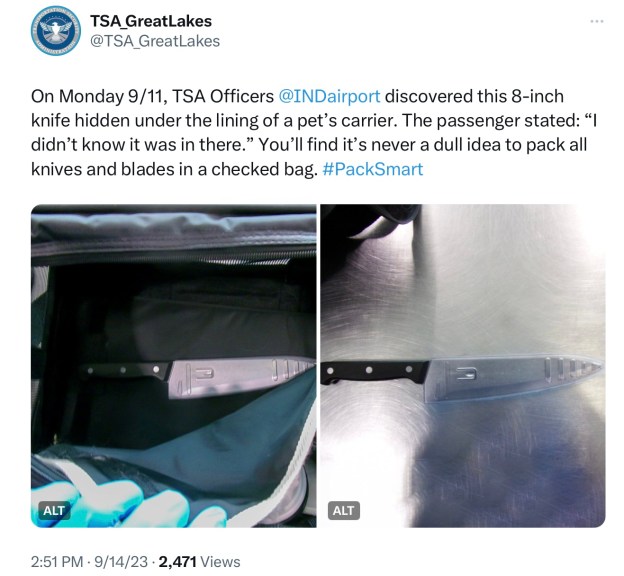
And I bring this up only because it is so stupid it begs to be included.
IMG_0781

At least it wasn’t a handgun.

I certainly hope my brain is empty now. It would be nice if my sinuses followed suit, but you know, seasons change and all that.


How about changing your mind set whenever you stop and question, “What if..” You know the What-Ifs. The questions that start with “what if” and end with tragedy. We say we have the right answer to any What-If that comes your way. Check out our latest Uplift! for how we do it!


Untitled design


Rewriting the dictionary

Most of you know I have a passion for old movies. I likewise enjoy old books, not old classics, but old popular fiction of another day. Although it didn’t start when I decided to make a quest of reading the source material for the movies I watched, it took a good, strong hold then. I’m currently working my way through the works of Erle Stanley Gardner, mostly those written under his name and most of them of  the famous “Perry Mason” series, and most of his “Cool and Lam” detective series published as by A. A. Fair. I’ve also read all of Raymond Chandler, and Dashiell Hammett, and good deal of S. S. Van Dine, and Michael Arlen, writers reaching from the 1950s back to the 1910s. Some recognizable, others not quite household names, most standing up well to the ravages of time.

Believe it or not, that was a tangent I got in. What I really want to talk about is how language changed. Or more appropriately, the words. Not how we have added words to our vocabulary, but of how we just quite willy-hilly change the meaning of a word for seemingly no good reason other than that’s what someone wants.

Quite a few changes have had to do with sex and sexuality and are well known. When Hammett wrote of visiting a gay night club, it was a place where people went for a fun night out, perhaps dining with dancing or a floor show. If Chandler wrote that something was queer, he meant Phillip Marlow was puzzled over something. When Arlen had a character make love (and it was always one as he made love to her, not they made love together) he had a male character lavish a woman with flowers, gifts, and nights out, perhaps holding hands or sneaking a goodbye kiss on the front porch. As people became more comfortable discussing sex and sexuality, they did not become more comfortable using the words to describe sex and sexuality so they borrowed these seemingly innocent words and gave them their more blushing, new meanings.

Some words changed meaning because they evolved into their new meanings, somewhat related to what they previously represented. Prior to World War II, when one retired, one stopped work for the day and went to bed. After the war it took to meaning leaving a room at any time of day, and eventually to the now most familiar term describing one who has quit their life’s work and entered their post-employment phase of life.

Many words changed because of the burgeoning computer age. These words did not change as much as they took on new meanings. Cloud, footprint, and firehouse are among words that have added to their definitions to include computing actions or activities. It is likely that 100 years from now, people will still refer to a visible mass of particles of condensed vapor suspended in the atmosphere as a cloud and by then maybe even still to a remote, digital storage system.

While I’m talking about changes, I’m proposing no word changes but I am considering changing the blog name. I am consolidating some personal projects under one umbrella site, iammichaelross.net. I expect that to be live within the next 10 days. My next blog post made be delivered to you as you are used to, The Real Reality Show Blog by WordPress or via the new site, also hosted by WordPress. (If you’re wondering, this change won’t affect ROAMcare.org which is an arm of a separate not for profit education foundation that I just happen to be partnered with.)


Speaking of ROAMcare, and talking about words, we mentioned a word not usually mentioned around the dinner table, propinquity, whose meaning also changed over time. We mention when we talk about why some people work so well together, seeming to mesh effortlessly as we talk about strange forces at work (and at home too) in the latest Uplift!


7045BBA1-037B-48F8-93E4-A54FF8A9E031


More words please

Once upon a time I wrote a post and I said, “The English language is said to have close to a million words in it. I’m not sure who counted that but the most complete, or as they would put it unabridged dictionary of the English language, the Oxford English Dictionary, has about 620,000 words. But language doesn’t equal vocabulary. And vocabulary doesn’t equal language. The average educated English speaking person knows around 20,000 words and uses but about 2,000 words in a week of talking and writing.” There are some things those 600,000+ words just aren’t up to task when it comes to describing them. As in them, the things that need describing, not the things that are described. See, right there, that’s where 620,000 words are just not enough. We need more words! And here are some examples.

Blog Art (24)Speaking of things that describe, we’ve been so busy lately so busy making up rules about pronouns to effectively represent people, that we’ve missed it completely that when it comes to things. When writing, or speaking or even texting (although I hesitate to include text message characters as representative of the English language), and reference is made to two objects introduced in the same sentence, in subsequent reference to one or both (or even more!) our current batch of pronouns is woefully inadequate. And we end up writing things like, “As in them, the things that need describing, not the things that are described.”  We need a good shorthand way to refer to thing one and thing two through the duration of the missive.

IMG_2448If I tell you to picture in your mind classic gray sweatpants, you know exactly what I mean. The picture in your mind is unambiguous. And you no doubt can fill in the rest of the catalog with several tops (long, short, and sans sleeves) and short versions of those pants. But what’s the stuff they are made of? We can describe it, but can we name it? Gray sweatsuit material is just too long. It’s usually cotton but to say, “it’s too warm today for long pants, I think I’ll exercise in my cotton shorts,” sounds like I’m headed to the gym in my underwear. Athletic wear is confused with athleisure which is just spandex you wear in the outside. Technically that gray stuff is a sort of flannel but if I say I plan to jog in my gray flannel suit, people will expect to see someone running down the street more formally attired than I’m comfortable running in. Nope, we need a new word for gray sweatsuit material and that’s that.
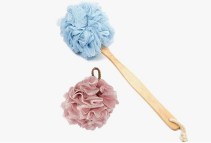
Body bathers, time for you to tell me what you call this: hmm, these:IMG_0027

While you’re wondering what kind of trick question this is, I’ll speak to the others for a moment. I figure there are three kind of showerers/bathers. There are those who use something like that picture, there are those who use a wash cloth, and there are those (usually very macho men who smell not much better apres shower) who stand under the water, make some squealing type sounds while lathering up with just the soap (usually bar soap) and slapping or rubbing it in with their bare hands. You’re going to say, “But what about loofah users? That makes 4 kinds.” I don’t think there are any loofah users left in the world. They’ve all died out from fungal skin infections from not properly washing their loofahs, which by the way, are not represented in that first picture. The things in that picture are puffs, body puffs or so they are called if you were to look for them on the internet. These are not to be confused with powder puffs, steel wool puffs, or crab puffs. Nor actual loofahs. The point is, there too many puffs. We can’t just call anything that is puffy a puff. We need at least 4 new words added to the army of 600,000.

Blog Art (23)

Actually, the real point is, I didn’t have anything to write about this week so I stretched things a bit. You might say, I published a piece of puff — but by no means, a puff piece!


Blog Art (22)Did you on June 29 Earth completed a full rotation on its axis 1.59 milliseconds ahead of schedule? Time flies! We talked about that last week at www.roamcare.org? Get over there now and read what we had to say.

While you’re there, check out the rest of our site, then share us with your friends and family!


Change of plans

Remember those best laid plans from a couple weeks ago? Earlier this week I saw a news blurb on one of the local stations about plans. It seems all the rage among the over 30 crowd is to not make plans. In fact, according a majority of 30-somethings interviewed, they are most happy when plans that have been made are cancelled. I know you may find this hard to believe, but I’m going to disagree with that. I remember life in my 30s. I was thrilled when something got cancelled because there was so much else going on, when something fell through, maybe I’d actually be able to do the things I had planned!

Perhaps we should better define “plan.” You likely “planned” to read my blog Thursday morning yet here you are, seeing it for the first time on Friday. Was that really a plan or more an anticipation or expectation (depending on how disappointed you were upon not finding it Thursday morning). I thought you would be reading this Thursday morning. Was that the plan? Or was that an intention? Likely you speak to someone early in the day and may be asked “So, do you have any plans for today?” And perhaps you do but more likely you have aspirations of doing things if other things don’t prevent that from happening. And lastly, if you have a desire to remove yourself from your day to day activities, take a break, perhaps two weeks in a tropical paradise you have never seen and may never see again and you don’t want to miss the plane or would like somewhere to stay besides in the open on the beach, you may request time off, purchase plane tickets, book a hotel room, maybe even make reservations for a local attraction or two for those weeks in the sometime future. This is a plan and one nobody will be “most happy” with if it is cancelled.

2 + 2 5 (1)

I think when the 30-somethings say they don’t make plans, they are speaking of the first three examples noted in the above paragraph. I am sure that somewhere, there is a 35 year old sitting with a couple tickets to Barbados, maybe pre-paid afternoon at the spa and reservations at the Salt Café in his (hers?, its?) phone’s wallet. It may think it a commitment (especially after the first few payments hit the Discover billing cycles) but it started out as a plan. Those other things like anticipating a blog post to hit your email or announcing a day’s probable agenda are possibly considered commitments by that unspecified 35 year old and it might not want to commit to lunch with the brother-in-law and then wash the car this Saturday afternoon and thus would prefer to “not make plans.”

I suppose it’s all in the words you use and even though the English  language gives us a bazillion from which to chose (over 600,000 per the Oxford English Dictionary, 39 for “plan”) we opt to use those that are most familiar to us and cause us to do the least amount of thinking to choose, while saying to everyone else “I know what I mean, figure it out yourself!”

I don’t know who decided that but I plan to look into it.

Speaking Coronese

It’s been six months in the US since the Corona Virus began making inroads into daily news reports. In early February, unless you were living in the Pacific Northwest, it was more a curiosity than a lifestyle. Some people weren’t certain of the difference between “corona” and “CoViD” and the really clever people were blaming the new virus on Mexican beer. By early March the news outlets were scrambling to count victims, interview experts, and pretend they knew what they meant when they spouted out the words of a language they hadn’t quite fully learned. Many sounded like parade commentators when they are reading the words on the teleprompter for the first time. By early April the cadence of the reports was smoother and the language of the virus, Coronese, was fast becoming the second language everybody wanted to speak. Today we toss around words and phrases like positivity, epidemiology, herd immunity, contact tracing, and the ever popular self-isolation and social distancing like we grew up with them. This is the language of the virus. The formal language if you will. But there’s another language of the virus the goes beyond the jargon. The language of the street (or social media depending where you spend your time), the slang, the language we speak when we take off our hat and coat and sit with friends. Friends we might still want to think hard about and consider if they are worth violating social distance guidelines for and end up self isolating with.
 
20200810_100908Every language devolves into its guttural form and Coronese is no different. Some words are lend words from legitimate language. We now “zoom” whenever we hold a video chat sessions and “mask up” regardless of what body part we are covering with whatever we are covering it with for protection from whatever. Some words are bastardized versions of the technical jargon or legitimate language. Such as “the ‘rona” when referring to anything virus related, “iso-” anything when done alone, or “blursday” for any unspecified or forgotten day of the week.
 
My favorite words of Coronese are the covomanteaus, itself a portmanteau of CoviD and portmanteau. In my mind, warped as it tends to be sometimes, I’ve not yet decided if CoViD itself is an acronym (thus CoViD) or a portmanteau (as the more popular and in my opinion lazier, covid) of Corona Virus Disease. These covomanteaus include covidiot (anyone ignoring specific virus protection recommendations or clueless of the disease in general), covideo (chatting by video or the video chat session itself), quaranteam (your colleagues also working from home performing as a single work unit), and quarantini (although there are actually specific recipes for a “quarantini” it can pretty much be any cocktail made with any ingredients readily available generally using whatever vodka remains after making your own hand sanitizer).
 
Still with all the technical jargon, legitimate language, and coronaslang,  Coronese is missing some important words and giving it due consideration, I’ve decided I am just the one to start filling those holes, or virogaps as any knowledge gap regarding the ‘rona will now be known. So far I’ve come up with covomanteau and virogap but I’ll be working on it day and night. I may put together a quaranteam and we can work together after a short ronamute to our homeworkstations and have a comprehensive ronapedia distributed before we covexit this virocrisis. Until then, keep washing your hands and remember to mask up!
 
20200810_095548


Singing the Goat Song

The other day I saw an old Peanuts cartoon. Its panels told the tale that if Charlie Brown catches the ball he’s the hero but if he misses it he will be the goat. Charlie “The Goat” Brown. Today Charlie Brown would never be the goat. Well, maybe the goat but he would never be the GOAT. Somehow we’ve managed to screw up the English language yet again.
 
Back in the days when Charles Schulz was drawing the Peanuts gang a goat was the worst thing you could be on the baseball field. In fact, to be a goat anywhere in life was the worst. The goat was the loser. Not only the loser, the goat was the reason for the loss regardless of the reason for the loss. It was always his fault, absolving all others from blame for the failure. He was the scapegoat and it was not a good thing to be the goat.
 
How did we ever work this into our vocabulary? Historically, the scapegoat was one of two goats religious leaders would sacrifice for atonement. One goat was offered as a blood sacrifice and the other, the scapegoat, was removed from the herd and set off into the desert carrying the sins of the people. Most often associate with ancient Judaism, similar rituals were performed by other religions and societies. Ancient Greeks actually used humans, often criminals or slaves, as scapegoats. It was not a good thing to be the goat back then either. 
 
Or was it? Sticking with those old Greeks, according to myth and legend the ancient Greeks’ ancient Greeks’ scapegoat was someone of importance who would be recognized and accepted by the gods, receiving him among them and honoring their request to grant favor upon the mortals. It was a honored role and one only those of the highest status in society could fill. In time when real people took the place of the legends, the people of importance were not so keen on being exiled and left to die to bring about drought relief or for whatever the townsfolk were currently praying. They would find one from the dregs of society and make him appear important by lavishing him with fine clothes and jewels before being driven into the wilderness. Often a tragedy was performed in recognition of the sacrifice. Not a play but more of an opera. The modern word tragedy comes from the ancient Greeks and literally means “Goat Song.” Was that a lament because they were sad that a person was being sacrificed or was it a celebration of the ritual and they were entertaining the gods? That’s the trouble with things that happened over 2500 years ago. Who can say for sure? There just aren’t any good records.
 
And now we have the newest goat, not a scapegoat, the antithesis of the hero, but the GOAT, even better than a hero. GOAT, The Greatest Of All Time. When I look at some of the people who have been declared the GOAT, often by themselves, I wonder if we might not be better off setting them loose in the wilds without their entourages and the fawning public celebrating one whose greatest claim to fame is playing a child’s game better than all the other kids who never grew up. To them the wilderness might be what the rest of us deal with every day in our real lives without entourages, carrying our own sins and asking atonement of our own accord.
 
Maybe the goat, the scapegoat goat is the real hero. Imagine the courage it must take to know you are leaving all alone, you won’t be coming back, and you won’t ever see anybody ever again, but on your shoulders you carry away all the bad of society and those left behind reap the benefit from your action. We need more goats. The goats are the heroes and thanks to Charlie Brown we know it is better to strive to be the hero than claim to be the GOAT.
 
DffxL3hX4AI-HEn


What Do You Think?

For the last two weeks I’ve been torturing myself. It started innocently enough with me making a shot of espresso. No, the espresso isn’t torturing me. I don’t make the best espresso but I’ve yet to poison myself or do permanent damage to my remaining insides. No that wasn’t it. What it was was the label. It taunted me into thinking in Italian. Or rather, trying to think in Italian.

I’ve heard the true mark of fluency is thinking the language you are speaking. Thinking in your native language, transposing to the interpreted language, then speaking (or hearing in the interpreted language, transposing, then understanding) works, but you miss the nuances that make any language magical. In its language of course. Now this is all theoretical because I haven’t thought in Italian in well over 50 years. And frankly, back then I wasn’t so good at it. Back then I wasn’t so good thinking in English!

So why the sudden thought to think in some language other than that in which over 100% of my conversations occur? (For the math wizards, I’m including those conversations in dreams.) It was that darn label. Medaglia d’Oro. All together now, Gold Medal. Even those without a non-food Italian word in their vocabulary can think that one through, with or without mental transpositioning. Clearly it’s all the general anesthesia I’ve been given lately that convinced me I could speak Italian again.

Okay, “again” is relative. The last time I really knew as sure as I could what people were saying when they were saying it in that language was 1963. ish. That’s when my grandma, my mother’s mother, the last of the nonne e nonni, passed away. And with her passed the custom of speaking Italian in the house but only English outside. Which was really good advice for even though the little town I grew up in was heavily populated with first generation Italians, the were from a variety of villages from 3 separate regions, each with its own dialect that could be almost as foreign as English. Thus English was the natural language to speak outside the home (imagine that) but Italian was fine for family conversations. As my generation entered school, English became the full time language taking a break only at large family gatherings on Sundays and holidays.

About 10 years ago I had a grand idea of refreshing my familial language and enrolled in “Italians for Tourists” at the local community college. It seemed to fit since there was also the possibility of a Mediterranean wine cruise and I thought it might be nice to be able to understand what was going on in at least one country’s vineyards. Well, that was a waste of $37!

With that failed experiment on my language resume it’s no wonder the last two weeks have been torture. I’ve finally come to realize that linguistic thinking, like playing nice with others, is learned easily in our youths but fades quickly when not in constant use. I think I’ll stop trying to think in Italian. And I’ll think it in English!

As for playing nice with others. That’s something I can keep working on in any language.

20190812_122423

No Bones About It

Last week at the deli I finally took the time to actually read the little tags in front of the rows of meats waiting to be sliced to your favorite thickness, or thinness, to your preferred weight. Actually to the weight you want the meat. Probably if you were looking to get to your preferred weight you wouldn’t be at the deli.

Anyway, I was reading the tags and I kept noticing a theme with the ham selections. They were all “off the bone.” I didn’t understand. Isn’t ham supposed to be off the bone? If I wanted ham on the bone I’d go buy the big chunk of pig leg and bake my own ham to ultimately slice as thick, or as thin, as I’d like. I know on those occasions I have done just that, step number one to slicing ham however thick, or thin, you like it is cut the ham off the bone.

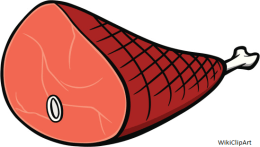
HamHam has always had something of an image problem. Years ago there were basically two kinds of ham you could get. Cooked or not cooked. You had to cook both but the not cooked took more steps and more hours than the cooked to cook. Then someone decided that was too confusing so they started calling them city hams and country hams. It only took a few times to the store to figure out which was the cooked ham that didn’t require as much cooking as the not cooked ham. That’s the one I wanted. Maybe because I was from the city. Or maybe it was because I liked the idea of someone starting the cooking for me. I don’t know. But I figured out which was which and which to take home and cook. Or finish cooking.

And then those same theys (I think it was the same theys but it could have been a new group of theys) started fooling around with the pig anatomy and came up with a semi boneless ham. I never knew which part of the bone, or the leg, was halved but the ones I got always still had a bone in them. But that was a good thing because how are you going to make the bean soup when you’re all done slicing the ham off the bone as thick, or as thin, as you want it if you don’t have the bone to start the soup with. I have read several recipes for bean soup and they all start with “put a ham bone in a big pot.” Not “put half a ham bone in a big pot.”

Now the latest thing they (the original theys, the second wave of theys if there was even was a second wave, or a whole new they group) came up with is the spiral sliced ham. Oh sure, you can say that’s not new, those have been around a long time. But in the past to get a spiral sliced ham you had to go to a special store and they were all the way cooked and they cost about as much as filet mignon instead of your basic pig leg. But now you can walk into any grocery store and pick up a spiral sliced ham as long as you want the cooked version and don’t mind relinquishing the how thick, or how thin, the slicing to an anonymous spiraler.

But to get back to the short story, no matter what kind, how cooked, in the city or out in the country, with or without half a bone, or presumed pre-sliced spirally speaking, you have to get the ham off the bone. So what’s the big deal with this “off the bone” label?

And don’t even get me started on the salami!


…making all his nowhere plans…

Recently a friend asked me what I think of when I go to bed. An odd question not quite in the same category as what’s your sign and certainly more thought provoking than what’s your favorite color.

Since I go to bed alone I most often think alone thoughts. You know, “sigh, another night alone.” Now alone isn’t necessarily alone in bed. I much more often think of being alone as being the only one in the apartment than of being the only one in the bed. Of course it’s nice to have somebody care so much that they share their whole body with you but it’s nicer when somebody shares their whole person. But that’s the philosophical me. It took a while to learn that and I’m ok with it even if the bodily me would like to feel another body next to it sometimes. But I think not having someone in the same house is a more profound kind of alone.

They say there’s a big difference between being alone and being lonely. I’m pretty sure those people were never really alone for any length of time. You can talk to someone every day, you can see people during all the waking hours, you can have someone nearby, but those will never take the place of sharing space. When you go through days of going to bed at night never having another person to check in on, never having someone to say goodnight to, knowing if something happened nobody is there to say “it’s going to be ok,” that’s being alone. And if you don’t think that’s also being lonely, you haven’t not had someone to say goodnight to on a regular basis.

I can’t imagine anybody who lives alone who hasn’t thought about what happens if something happens. Is that just part of being alone? Or lonely?

Oh well.