This is a long post. I hope you’ll stick around to read it all, maybe a bit at a time if you have to. I had fun researching and writing it. I’d like to think you’ll have at least as much fun reading it.
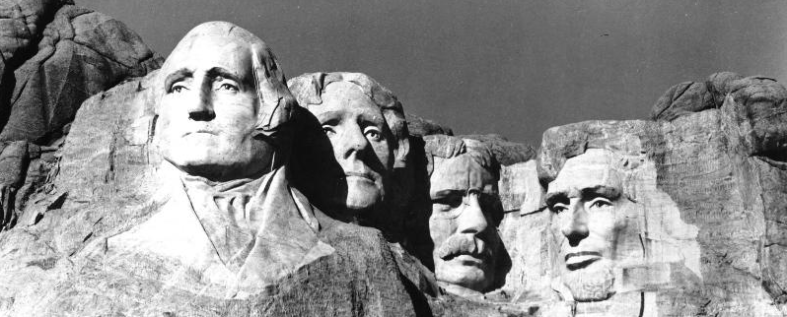
In the United States today is Presidents Day. Actually, it isn’t. Technically it is Washington’s Birthday. But actually it isn’t. That’s Wednesday. February 22. What is today is Washington’s Birthday by an Act of Congress. Actually, by Public Law 90-363 passed on June 28, 1968 Congress decreed that Washington’s Birthday, Memorial Day, Labor Day, Columbus Day, and Veterans Day to be celebrated on a specific Monday rather than whatever willy-nilly day the actual previously recognized date might fall on during the week. This same act, by the way, declared that New Year’s Day shall be celebrated on January 1, Independence Day (colloquially known as The Fourth of July) will be observed on July 4, and Christmas can be held on December 25. At least they were until that was amended that if those last three mentioned holidays might somehow fall on a Saturday or Sunday (which we know that almost all government employees and all Members of Congress already get off), the observation shall be shifted to either the preceding Friday or following Monday. And we question the dedication of today’s Congress.
Well, even though we might actually question the need to recognized 44 other questionable human beings who shared the American Presidency with Gorgeous George, most of us are taking today off to do just that. Questionable? Did I just say questionable? Yes, I did. It didn’t take much research to determine that every one of those 45 elected had something somewhat awkward in their background. Or foreground. Every. Single. One. Even George. Let me count the ways.
President, the First. George Washington. (1789-1797) Even though almost everyone who has ever petitioned his or her state assembly to legalize marijuana believes that Washington was the first to inhale in office, he didn’t. He liked wine and whiskey, and probably women and song. But not weed. He did grow hemp on his plantation. But that was turned into rope for the shipping business. What he did do in his spare time after leaving the Presidency was turn neighboring plantation owners’ cast-off grains into moonshine. And made a pretty good dollar (at that time without his face on it) at the venture.
John Adams. (1797-1801) Anybody who has seen “1776” on the screen or the stage might walk away with the feeling that our second President (and first Vice President) might have been the least liked of the Founding Fathers. They would be right. John Adams was unpleasant on his most pleasant days. He disliked almost everything that wasn’t his idea, and several of those. He was also brilliant. He graduated from Harvard at age 20 earned his law license a year later, yet another Harvard degree two years after that. He was a two term appointed member of the Continental Congress, authored the Massachusetts Constitution, drafted the Declaration of Independence with Thomas Jefferson Roger Sherman, Robert Livingston, and Benjamin Franklin, negotiated the peace treaty with England, served as Ambassador to France, Holland, and England, and became President. All the while (even the while while he was going to Harvard) (the first time) drunk by today’s standard. As a skunk. No wonder he was so mean.
Thomas Jefferson. (1801-1809) Jefferson may be best known as the primary author of the Declaration of Independence. That’s far from the only thing he ever wrote. And you can read all of them (or at least be in their presence) at one of the many libraries of Jefferson’s writings. That’s because he saved every single piece of correspondence that he ever wrote. Over 40,000 items. Obsessed? He owned slaves but they were never seen in the main living quarters of his mansion. He designed a series of dumb waiters and servers so his servants wouldn’t be able to eavesdrop on his conversations. Paranoid? Although credited with nine sustained inventions he never patented any so that everybody could use them. Putz!
James Madison. (1809-1817). Madison was the youngest member of the First Continental Congress. He is known as the Father of the Constitution as the primary author for the document and for the Bill of Rights. (You know, the first 12 amendments. Oh, you think there were only 10? Check your history.) He fostered the idea of the three branches of government and the separation of powers. Madison was a gifted and important man. He was also the proverbial stuffed shirt. But his wife, Dolly, was the life of the party. In fact, is was his Presidency that saw the first Inaugural Ball. He might have been a stuffed shirt but he was smart. His motto may indeed have been “Happy Wife, Happy Life.”
James Monroe. (1817-1825). If you check those dates closely you’ll see he became President shortly after the War of 1812 ended. One of the casualties of that war was the White House. It was during Monroe’s early years that the White House was being repaired and remodeled. Thus, he took the opportunity to visit the masses and spent two years on the road.
John Quincy Adams. (1825-1829). When Adams the Second took up residence of the newly remodeled executive mansion he found a room that had not yet been furnished. Since it looked the right size he had it outfitted with a billiard table, chess sets, and other games of chance of the nineteenth century. He also kept an alligator as a White House pet.
Andrew Jackson. (1829-1837). The first Washington outsider to be elected, Jackson, a general from the War of 1812, was considered the Peoples’ President. He brought his military temperament to his elected position, often intimidating staff, visitors, and reporters at the White House, and always carrying his service revolver on his person.
Martin Van Buren. (1837-1841). Van Buren was the ideological opposite of his predecessor Jackson. But one thing did not change. The 8th President had the same proclivity as the 7th for Presidential weaponry and often wore loaded pistols (2!) when addressing the Senate.
William Henry Harrison. (1841-1841). (Yes, he’s the one. Only 32 days in office, March 4 to April 4.) (Yes, March 4. They didn’t move the inauguration to January until 1937.) Harrison famously delivered his 8,400+ word address in the wind, rain and cold without hat or coat. Three weeks later he was diagnosed with pneumonia and died 10 days later, the first President to die in office.
John Tyler. (1841-1845). Dubbed “His Accidency.” Need more?
James K. Polk. (1845-1849). Polk’s weirdiosity was not as frivolous as some of the preceding chief executives. In fact, he was as anti-frivolous as you could imagine banning liquor and dancing at all Presidential functions. Definitely not foot loose.
Zachary Taylor. (1849-1850). Our twelfth President spent only 16 months in office before passing away. His party didn’t fare much better. After selecting Taylor, an inexperienced, unqualified, wealthy outsider to be its nominee, many party members questioned how their party could compromise its ideals, trading the path to victory over party principles. (Sound familiar?) The American Whig Party, known for its ideological principle of elevating Congress over the Presidency, fractured by internal arguments became irrelevant by 1854. Oh, what did in President Taylor? Maybe it was bad milk, it might have been spoiled vegetables, possibly it was heat stroke, or it could have been arsenic. The first three were considered in 1850 when he died. The last was proposed in 1991 when his body was exhumed and tested for poisoning. He wasn’t. Just unlucky.
Millard Fillmore. (1850-1853). Millard Fillmore very seldom gets his name printed on anything so I’ll use his full name at least twice here. Oh heck, how about three times. Millard Fillmore didn’t really do anything as President. He was actually called a secondhand president by one of his own staff.
Franklin Pierce. (1853-1857). The “Hero of many a well fought bottle,” Pierce was known to have a drink. Pretty much one long drink throughout the four years of his Presidency.
James Buchanan. (1857-1861). Buchanan, perhaps undeservedly, is considered the worst President to have served. His critics base this by saying he set the stage for the American Civil War. Indeed, it was the Supreme Court that ruled Congress had no power to deprive slaveholders of their property rights. That led the Democratic Party to push for the separation of northern and southern states and Buchanan argued, rather weakly, that although the states had no right to secede, the government couldn’t stop them.
Abraham Lincoln. (1861-1865). Although a member of the new Republican Party and a political conservative supporting many of the former Whig ideals including the censure of some individual states’ failure to decry the abuses of slaves even if not specifically supporting slavery itself, and a return to nationalism, Lincoln was also considered a classic liberal opposing artificial hierarchies and a champion of human liberties. His is considered by many to be the greatest American President and when many polls ranked the top three Presidents it was always Lincoln one and Washington, and Franklin Roosevelt trading two and three. Unfortunately his one escape from his arduous Presidency was the theater.
Andrew Johnson. (1865-1869). Johnson was an unusual successor to the Presidency. He was a Democrat serving as the Republican Lincoln’s Vice President. And he was a Southerner (from Tennessee) who did not join the Confederacy. In 1864 when Lincoln was preparing for his second election, he replaced his then Vice President, Hannibal Hamlin, with Johnson as his running mate considering Johnson as a unifying figure to the War Democrats. When Lincoln was assassinated just 6 weeks after his second inauguration Johnson got to practice his unifying skills. He used those to oversee the reconstruction of the Union though not always in concert with the plans of Congress for reconstruction. Did I mention he was the first President to be impeached?
Ulysses S. Grant. (1869-1877). U. S. Grant absolutely paints a picture of the U. S. in the west during the 1800’s. Rough, ready for anything, and raring to go! But…Ulysses Simpson Grant isn’t the name he was born with. That would be Hiram Ulysses Grant. It seems somewhere at the U. S. Military Academy at West Point a document ended up identifying him as Ulysses Simpson Grant. Rather than take a semester off to have the paperwork corrected, Cadet Grant adopted his new name and carried on.
Rutherford B. Hayes. (1877-1881). So you think some people were shocked when they woke up the day after the election in 2016? You should have been around in 1876. That was back when the state election committees really did use the popular vote to appoint electors and the electors who voted for the President were really considered the people to actual elect the President. And everybody was fine with that. It was also a time that state election committees often didn’t always consider the popular vote when appointing electors depending on who they wanted to see elected as President. To make a long story short, when three of the then 38 states appeared to have confirmed voter fraud and others had challenges made in their electoral appointments, Congress set up an electoral commission to resolve the conflicts. Still with challenges from both parties the commission, through a series of several votes and finally by March 2 just two days before the scheduled inauguration, Hayes was awarded the disputed states and won the election. He pledged not to run for reelection. Whew!
James A. Garfield. (March 1881-September 1881). Although President Tyler was called “His Accidency” following his rise to the office upon Harrison’s death forty years earlier, Garfield really got to the office (or at least the nomination) by accident. He was actually the campaign manager for then Secretary of the Treasury John Sherman. Through 35 ballots neither Sherman, nor rivals U. S. Grant and James Blaine could secure the nomination. On the 36th ballot Garfield was selected as a compromise candidate. He went on to defeat Winfield Scott Hancock (who at least had a sufficient number of last names to be President) and is noted for proposing the Civil Service Reform Act calling for federal jobs to be awarded based on merit not political ties. That could have been his demise. Just six months after taking office Garfield was assassinated by Charles Guiteau. Since there was little radio or television in the nineteenth century, politicians used professional speech makers to spread their platforms to the masses when and where they could not speak themselves. Guiteau was one of these, though not a very often used. He still felt his contribution to Garfield’s election win was enough to earn him an appointment in the American embassy in Paris, a position for which he clearly was not qualified. Although he spoke for Garfield he personally supported Chester A. Arthur and his opposition to civil service reform. Guiteau was convinced that he did not get the appointment because of this and that the only way to end the party internal conflicts was to see that Garfield was eliminated. On July 2, 1881, he shot Garfield twice, once in the back where the bullet was never able to be retrieved. After 78 days of partial paralysis, fevers, and finally pneumonia, Garfield died, the second President to be assassinated.
Chester A. Arthur. (1881-1885). A true accident, Chester A. Arthur gets my vote for worst President, but that’s a different post. A New York socialite, he managed to wrangle the nomination for Vice President through political cronyism, the antithesis of his President, James Garfield. Everyday dinners at the Arthur White House typically consisted of 14 course meals with up to eight different wines accompanying various courses. State dinners ballooned to 21 courses. He hired Louis Comfort Tiffany to redecorate the White House (he was quoted in the New York World “You have no idea how depressing and fatiguing it is to live in the same house where you work,”) and was the first President to hire a personal valet. Yet somehow he never got around to appointing a Vice President upon his ascendency to the number one job.
Grover Cleveland. (1885-1889 and 1893-1897). The only President to be elected to non-consecutive terms, Cleveland is best known for being the only President to be elected to non-consecutive terms.
Benjamin Harrison. (1889-1893). Finally a Harrison got to serve a full term. The grandson of William Henry Harrison (of the 32 day Presidency) won the electoral vote but not the popular vote (not the first and not the last to do that) and got to be sworn in 100 years to the day that George Washington took the first oath of office for that, um, office. Four year after defeating Grover Cleveland he lost to Grover Cleveland.
Grover Cleveland. (Again). Oh, yeah. See above.
William McKinley (1897-1901). William McKinley was a very popular President in his time. He won both his elections easily and had support of his major proposals from both Congress and the public. Like Lincoln he had one quirk though his was not an escape from the rigors of the office. McKinley’s quirk was his lucky carnation. He always sported a red carnation in his lapel. While attending the Pan-American Exposition on September 6, 1901, he took his carnation from his jacket and gave it to a little girl who met him in a receiving line. Seconds later, Leon Czolgosz reached the front of the line and shot the President in the abdomen twice. McKinley died eight days later. After his conviction of assassinating the President, Czolgosz said, “I killed the President because he was the enemy of the good people – the good working people. I am not sorry for my crime.”
Theodore Roosevelt. (1901-1909). A consummate alpha male, Teddy Roosevelt (TR to his friends and frenemies), climbed the Matterhorn in 1881, herded his own cattle on his North Dakota ranch, resigned as Assistant Secretary of the Navy to form the Rough Riders to fight in the Spanish American War, swam the Potomac almost daily during his Presidency, and tried to join the Navy six years after leaving office. But he had his softer side. In 1906 he received the Nobel Peace Prize for having negotiated peace in the Russo-Japanese War at the Treaty of Portsmouth in November 1905.
William Howard Taft. (1909-1913). A big name for a big man, Taft weighed in at 300 pounds on his inauguration, after losing 60 pounds for it. He holds the distinction of being the only President to continue to serve after leaving office, then as a Supreme Court Justice. After taking the oath of office himself he got to swear in two other Presidents, Coolidge and Hoover, while serving as Chief Justice.
Woodrow Wilson. (1913-1921). Wilson looked like the PhD professor that he was. Big ears, strong jaw, pointy nose, and a perpetual scowl gave him the appearance of a banker who would foreclose on a widow with 5 children on Christmas Eve. He was the second American President to receive the Nobel Peace Prize for his efforts in working out the World War I peace treaty and proposed League of Nations, the predecessor organization to the United Nations joined by 42 countries but not the United States.
Warren G. Harding. (1921-1923). Harding entered the Presidency during the first full year of American prohibition. But that didn’t stop him from celebrating his inauguration with whiskey, wine, and beer. The model of hypocrisy he voted for Prohibition while a Senator but kept a fully stocked bar in the Oval Office, partied publicly with his wife of 32 years but was known to have at least 7 mistresses and children by at least two of them, never made political enemies because he never took a firm stand on anything. Though not the worst President he is certainly right up there.
Calvin Coolidge. (1923-1929). Nicknamed Silent Cal, Coolidge’s sobriquet may have been not so appropriate. Although he wrote his own speeches and he kept them short, he delivered more speeches that any other President thus far in the twentieth century and his inauguration speech was the third longest in history missing out on the silver medal to Polk by only about 800 words. (Nobody came close to William Henry Harrison’s 8400+ word behemoth, better than doubling Coolidge’s comparatively modest 4055 word address.
Herbert Hoover. (1929-1933). Although he was active in politics and served as Commerce Secretary under Harding and Coolidge, the Presidency was Hoover’s first elected office. He won in a landslide on the platform of continued prosperity. Less than a year later the stock market crashed and the Great Depression ensued. His bid for reelection resulted in a landslide loss.
Franklin D. Roosevelt. (1933-1945). The only President to serve (though not the only to try) more than two terms, Franklin Roosevelt is considered by many to be one of the greatest Presidents. He reversed the depression, repealed prohibition, established the Social Security Administration and federal minimum wage, was instrumental in the formation of the United Nations, and partied like Julius Cesar at his toga themed 52nd birthday party at the White House. You can’t top that!
Harry S. Truman. (1945-1953). It’s hard to find anything quirky about America’s 33rd President. Except for his unique turns of phrase. We’re all familiar with “If you can’t stand the heat, get out of the kitchen,” and “It is amazing what you can accomplish if you do not care who gets the credit.” But he also made it known that “Everybody has the right to express what he thinks. That, of course, lets the crackpots in. But if you cannot tell a crackpot when you see one, then you ought to be taken in.” And “When the Liberals said they were going to create a million new jobs, I didn’t think they were all going to be tax collectors.” My favorite is, “Work Hard. Do your best. Keep your word. Never get too big for your britches. Trust in God. Have no fear; and Never forget a friend.”
Dwight D. Eisenhower. (1953-1961). The 1950s – the time of Father Knows Best, Make Room for Daddy, Ozzie and Harriet, and Leave It to Beaver. Suburbia at its finest. Although elected as a war hero, Ike’s contributions were very family oriented. He was responsible for the Interstate Highway Act, the Civil Rights Acts of 1957 and 1960, and was the first President to provide funding to education at all levels from the federal government. Just like their TV counterparts the Eisenhowers worked hard then he played golf and she made fudge and they both played bridge.
John F. Kennedy. (1961-1963). Nobody wants to hear a Kennedy quirk. It was the time of Camelot in America. Every woman wanted to be Jackie, Every man, Jack. On his 21st birthday Kennedy received $1 million from his father (that’s about $16,450,000 today). Now there’s something everybody can relate to. Kennedy’s problems basically amounted to too much money, too many friends, too many women, and too little time.
Lyndon B. Johnson. (1963-1969). At his ranch outside of Austin, Texas sits a pillow embroidered with, “This is my ranch and I do as I damn please.” And that’s how he ruled.
Richard M. Nixon. (1969-1974). “I am not a thief.” Ok.
Gerald R. Ford. (1974-1977). Probably the first President that American comics made fun of. Before that Presidents were laughed with. Gerry got laughed at. Senator Bob Doyle said in 1976, “He was a friend to everyone who met him. He has no enemies.” And with friends like the American public, who needed enemies. After five and a half years of Tricky Dicky, the media needed someone they could screw before they got screwed. And they picked on Ford, the only man to serve as President without being elected President or Vice President. He was appointed after Spiro Agnew resigned. A year later he was being sworn in as President after Nixon resigned. Talk about a tough act to follow. For a man who had no enemies he was the victim of two assassination attempts. With friends like those…
Jimmy Carter. (1977-1981). He lusted in his heart. Uh huh. But he did win a Nobel Peace Prize.
Ronald Reagan. (1981-1989). Elected to the Presidency at age 69 he had already had three other careers before adding chief executive to his resume. Everyone knew about his bowl of jelly beans on the desk in the Oval Office but one of his favorite mealtime foods was macaroni and cheese and he held a fondness for hamburger soup. He was also fond of earlobes and often held them too.
George H. W. Bush. (1989-1993). Daddy Bush, Vice President for both of Reagan’s terms and Director of the CIA before that and Ambassador to the United Nations before that was no stranger to the diplomatic world. So he probably was really embarrassed when he threw up at a Japanese state dinner. It was the flu, not the sushi.
William Jefferson Clinton. (1993-2001). He lusted with more than his heart. But he didn’t inhale. Wink, wink.
George W. Bush (2001-2009). For a President considered so horrible by his political enemies he was ranked mid-pack (20 out of 41 in 2000 (no word on the other three at the time)) by a poll of C-Span watchers, those intrepid folks who watch Congress on TV, and was elected twice by the intrepid folks who vote. Oh well, everyone has a bad day. Even Congressional TV viewers and voters.
Barack Obama. (2009-2017). Before he became the fourth President to become a Nobel Peace Prize winner, before he introduced his signature health care reform bill, before he became Senator from Illinois, before Michelle was his boss at a law firm in Chicago, before he was rejected as a model for a pin-up calendar at Harvard, before he owned a pet gorilla, before he came off Mount Tantulus, he was Barry of the “Choom Gang.” And he inhaled. And more. And still more. And more again.
Donald J. Trump. (2017-TBD). If nothing else he is responsible for more people being able to spell “xenophobe” than Scripps or Howard.
That’s a lot of quirks for a lot of people. Since 1789 forty five Presidents have occupied the White House. (Actually, forty-four, Washington’s official residence was in New York since Washington the city wasn’t done yet.) (Who else by Americans would build a new city for their leader? Now there’s a quirk!) In that same time, England who was bested for control of those famous colonies way back then, has had nine royal monarchs. Maybe their system is better. But then they’ve had 61 Prime Minister’s since 1789, so…maybe not.
Happy Weirdos Day!
That’s what I think. Really. How ‘bout you?
Photo: National Park Service, U. S. Department of the Interior

 the term had then expanded to include other surprises hidden in programs and apps, on DVDs, and even on Google.
 This weekend I opened my emailed during one of the intermissions in the hockey game I was engrossed with on TV (and you thought I was too old to multi-task) and found a survey opportunity on “social issues.” The notice claimed it would take about 15 minutes to complete the poll. Since I had 17 minutes of non-hockey time left I clicked the link. There I was presented with a survey on “social issues,” AKA what I think of my cable provider. Such burning “social issues” we should face every day.
 that actually fit I have clothes that are anywhere from too large on me to OH MY GOD WAS I REALLY THAT FAT BEFORE!!! So where does one start?
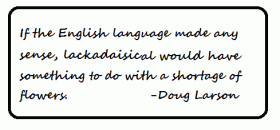 excerpt from I presume one of his favorite authors. I always read them. They often provide a glimpse into the authors mind at the time he or she was working on that piece. But it wasn’t until this time, this epigraph, that I really stopped to think about what I was reading. Not the metaphorical, the inside glimpse, etc., etc., etc. The actual. Why that the epigraph, those borrowed words, are indeed an epigraph.
 So that brings me back, do we need all those words? If they made sense I’d be happy to learn all 600,000 words. But so many of them don’t make any sense. Look at two of the ones that I mentioned: epigraph and paragraph. Both have “graph” and both are similar in that they are a group of words. But when I think of graph I think of a picture.
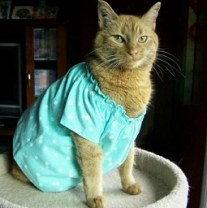 And if that’s not enough, then we have to use words that we know don’t fit a particular situation because that’s the in way to speak and Heaven forbid we aren’t trendy. For example good can’t be good. Since the time when I was torturing my parents with popular vocabulary “good” has been groovy, cool, bad, righteous, divine, outstanding (emphasis on the out), epic, excellent, rad, sick, and ridiculous. But what did they expect? They’re the generation that came up with cat’s pajamas and bee’s knees. Unfreakin’ believable.
 The Real Reality Show Blog