Rockets Loud Blare

Sunday afternoon I was having dinner with my daughter and her dog. Nature was putting on a fireworks display that rivaled what man made for the Fourth of July. The dog didn’t seem to mind the booming thunder. He would stop, tilt his head to one side, and lift an ear but then go right back to trying to get all the frozen fruit out of his treat. According to the daughter, he was not so calm with the artificial noise makers the previous week. Those he didn’t trust quite as much as these that he must have sensed were part of the natural scheme of things. I can’t say I blame him. If I could invent a firecracker that had the beauty of the modern displays without all that blasted noise, or noisy blasts, I may not end up a millionaire, but I’d like it a lot more.

That got us to talking about fireworks and the best backyards of the ones we collectively have had to be able to see the downtown display and from there, somehow, into stories about about hospitals. No it wasn’t a natural progression but most of our conversations follow no natural progression and we are quite proud of that. Or at least we tolerate it.

It happens to be that ten years ago, the Fourth of July 2013, was the last Fourth that I was out actually somewhere with the intent to see a fireworks display. Two days later, I had the first of the many major surgeries that changed my life forever. I don’t think that’s why I haven’t been out to see fireworks since, content to watch them from the relative comfort of a backyard deck chair, but that’s the sequence of events. Proof again that just because B follows A, A does not necessarily cause B. Anyway, that’s how we got from thunder to fireworks to hospitals and hospital stays. Somehow, I managed to have a story that wraps that all together, with a nice ribbon, and a big bow in top. Of course I do.

It was New Years Eve, I don’t recall what year and I don’t recall why I was there, but some year in the not too distant past, after 2013 but before 2023, I was admitted to a just barely suburban hospital. I say just barely suburban because on a good day, you can walk from the hospitals front door to the city boundary. Anyway…on this particular day, I walked no where except to the emergency room and there just from the parking lot or maybe from my doctor’s office located in the medical office building next door to the hospital, and to make a long story short (I know…too late), I was admitted for some reason or other. I was wheeled up to the room, looked out the window and had an unobstructed view of downtown. (I should mention that the hospital sits on a hill so I was also looking down into downtown.) (Quite appropriate, don’t you think?) (And now, back to our show.)

Later that evening, just after dusk, my visitors and I were treated to a front row seat to the first set of fireworks. (Yes, first set. At the time (I don’t know if they still do) the city sponsored two New Years Eve fireworks displays, the first dubbed “the family show” just after dusk, and the second, at midnight just as the countdown reached zero.) Later that evening I stayed up to watch the midnight fireworks too and then settled in for the night.

As I said, I don’t remember why I was there but it had nothing to do with my heart. I know that because the following morning, New Years Day, a nurse came in and asked why I was there, that was the cardiac floor and I didn’t seem to have any heart problems. I agreed I didn’t, and that all the work that had been down to me up till then was in the general area below the belt. I was transferred to the general surgery unit and never again saw the downtown fireworks so clearly as that night. Nor so quietly either.


Taking charge of your emotions is a good thing to do. Taking charge in moderation might be the best way you can do it. We explain why we think so in the latest Uplift! (Reading time 3 minutes)

A04FD42F-508F-45FF-ADF5-689FE6E25803


No Taboo On Tenderness

Once again I had a hard time deciding what thoughts to put out to the interworld. I had what I thought an absolutely timely and terrific piece and then all sorts of things came up from politically correcting toys that have no business being the subject of political correctness to speeches espousing incorrectness by people who have no business in politics. Wedged in between were musings on the Golden Globes, the Grammy Awards, and long wait for this year’s Oscars. Then if that wasn’t enough, I’ve been without a phone for the entire weekend which demonstrated how little difference it made in my life but also gave me a brief respite from the onslaught of what has become the extended car warranty spam/scam/abomination.

In the end I decided to go with my first thought even though I had to think so many times before I got there. That first thought was to join the world in celebrating March as Women in History month. There are so many women in history we can make note of, your location, profession, career, passion, and cultural background undoubtedly coloring your idea of the most significant women in history. Marie Curie, Marie Antoinette, Clara Barton, Clara Bow, Cleopatra, Cleo Wade, Sandra Day O’Connor, Doris Day, Sandra Oh; Eve, Sarah, Esther, and Mary. From Lucy to Siri women are history.

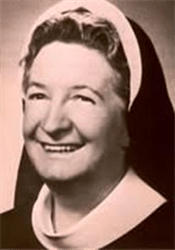
gonzales_duffyThe women in our own histories will always be the most important women in our lives. Our mothers and grandmothers, aunts and honorary aunts, teachers, coaches, students, and teammates. And for almost everybody, there is that one person you did not even realize would become a part of your history yet found a way to be part of much of your life without actually being there. For me that woman is Mary Gonzales Duffy, RSM.

Sister Gonzales was a Religious Sister of Mercy. She was already a force in hospital pharmacist when I opened the mail and dug out my pharmacy intern certificate in 1975. If you have ever been a patient in a hospital and received a drug while you were there you benefited from some contribution of Sister. Sister Gonzales was one of those women who did not contribute to the history of pharmacy, she is the history of pharmacy, particularly hospital pharmacy. In 1962 working with the Mercy Hospital of Pittsburgh and Duquesne University School of Pharmacy she established the first postgraduate, academic residency in Hospital Pharmacy. She formalized drug information services, unit dose distribution methods, and pharmacy consultation services. In 1978 she was elected the first woman president of the American Society of Hospital Pharmacists (now American Society of Health System Pharmacists). That same year she was honored by Duquesne University at their centennial celebration as one of the top 100 alumni.

More than just a collection of her accomplishments in hospital pharmacy, Sister’s legacy reflects her gentleness and respect for those she served, as a pharmacist, as a nun, as a complete person. Sister was still working during my undergraduate years at Duquesne. Even when she received the Harvey A. K. Whitney Award, what is considered hospital pharmacy’s most prestigious award, in 1971, she was just Sister in the pharmacy moving it from a “service of things to a service of people.” Important women in hospital pharmacy are not uncommon, nor is acknowledging them. By the time Sister received her honor in 1971 she was in a long list of women so recognized going to 1953 in an award established just 3 years earlier. Still, she is the one I remember, the one who taught at the school where I learned, who lead the first hospital pharmacy I saw from inside its walls, the one who encouraged me and other young white coated future pharmacists to serve from the outside those walls.

Sister Gonzales closed her Whitney lecture with, “There are some in our modern society who claim we live in an age of insensitivity. Perhaps we do, but I hope not. There should be no taboo on tenderness. … May we be mindful of the fact that our Creator, who has placed us here on earth to do a work, touches the world mainly through the ministration of human services. We labor in an atmosphere where frequently good must battle evil, where some must suffer and die. May it be our happy task to ease the ways of all those for whom we care. May we be brought to the realization that true happiness is found in the knowledge that a job assigned to us here and at this point in time has been a job well done.”

Hers was a job done well, her job as a pharmacist, as a teacher, as a religious, as a part of history.

SrGonzales

Lighten Up! (Hospital Style)

It’s high time to lighten things up around here. Just because I am still, yes still(!) in the hospital doesn’t mean there aren’t things to poke fun at. In fact, much of what goes on around here is worth poking fun at.

So far, nobody woke me to offer me a sleeping pill. Yes it has been done. However I have had the same person offer me a laxative literally (seriously I’m going to use literally as it literally is intended) right after helping me back from the bathroom with … well, you figure it out but Adrian Cronauer would have credited it to a cup of strong cappuccino.

Diets are an interesting phenomenon in hospitals particularly when one has abdominal surgery. You start out with nothing but sips of water. You progress through clear liquids to full liquids to soft and then regular food. All the while each step gets modified to meet your specific health needs like a cardiac or renal or diabetic diet. I have yet to figure out why. When you’re on clear liquids you barely have the strength to left spoon to mouth so that goes right back barely touched. By the time you can eat solid food you’re chowing down on the sandwiches and cookies your family is smuggling past the nurses station and you’re too full to bother with the hospital’s offerings. And their food always tastes bad. You know it’s bad but if you had to describe what is bad about it you find those words have yet to be invented. I’m on Day 17 of this hospitalization so I’ve had some time to think about this. I’ve decided it’s the taste equivalent of when you walk into an elevator and you know somebody was there wearing a cologne more suited to a Turkish whorehouse than anywhere else on earth. So I suspect.

20190610_185905-2You recall my rants regarding remote controls. Too many buttons, too little function! Back in the 70s (yes, I really am that old) nurse call bells were pretty much that. In fact, the first hospital I worked at kept actual bells to distribute to patients in the event of a power failure. Today’s call bell alert mechanisms control lights, television power channel and volume, bed position, sleeping alarms, and might actually summon assistance by way of a two-way radio communication with a disembodied voice from somewhere deep in the building. My particular remote control/Dick Tracy wrist radio gets a lot of abuse pulled across the room, dropped on the floor, and otherwise tortured. This is an absolute true story. All of them are but you are going to say “Oh come on now!” when you read this so just keep in mind, this is an absolute true story. Among other things, my call button controls the room light (button A), controls a reading lamp (button B), controls the TV (TV), and summons assistance (stick figure of some bald dude). I was ready to call it another unsuccessful day and pressed button B to turn the reading lamp off but instead the main room light came on. Checking that I was indeed pressing the right button I tried again and the main light went off. Then I pushed button A because why not and the TV came on. Pressing button A a second time yielded no results so I pressed the stick figure button to report my equipment malfunction but instead of lighting up indicating a call had been initiated, the TV went off and the reading lamp came on. At this point I was back to having the reading lamp on and everything else off. I figured I could fall asleep under those circumstances and left well enough alone. Eventually someone would be in to check my blood pressure and I would report the broken control then.

I could go on with other curiosities like footwear particularly among the anesthesia staff, status boards, and isolation procedures but I might need some lighter topics next week too.

By the way, if I follow you and you haven’t heard a peep from me and are concerned, some sites I can reach through the hospital guest WiFi, some I cannot, and some change day to day. I am better and just waiting for some labs to stabilizer before I can be set free on the world again. I’ll catch up with my required reading then.

Reduce, Reuse, Recycle

I had my transplant evaluation appointment today. This post won’t be about that. I’ll chronicle that next step of the journey in my next post. Today I want to talk about paper. Everywhere I went today, there was paper.

Years ago when I was working in the hospital we were promised that a paperless environment was on its way. In fact, I think they might have been planning that when I was in college. The first time. In the 1970s. They ain’t got there yet. They’re trying. Really, I do believe that. But I think they are fighting a really big uphill battle.

It’s an accountability thing. When I was still working, many of our suppliers used paperless invoicing. Anything you needed to know you could get from their partner sites on line. Yet whenever we would receive anything from a supplier, the contracted delivery service had their copy, in duplicate, and we had to make 3 copies of each invoice for our records. Corporate, hospital, and department each got its own copy. Everyone looked out for himself.

That extends to patient records. Today I electronically reviewed then signed the authorization to treat, release of records, and informed consent forms. After the ceremonial signing, they printed off two copies of each form. One for me, one for the paper file to go along with that electronic copy. Each department that I visited, which had received an advanced electronic order of whatever test was to be performed, printed a copy for me to pass on to the technician who would perform the test who then scanned the order that was previously printed from the computer system back into the computer system upon completion of the test verifying the test had been completed.

Receipt

Yes, that is a 16 inch ruler. No, I don’t remember where I got it.

This paper hanging is not peculiar just to health care. Stop for a late lunch on the way home and count on the waiter, who would enter the order on an electronic tablet, to bring two copies of the check at the end of meal just in case you want to pay by card, and then two more if you actually do.

My final stop was at the supermarket for a handful of items. It’s a store I regularly use and my email address is on file there. I randomly receive electronic coupons and when I check out I am offered the choice of a printed or emailed receipt. I always go for the email version because stores receipts have become the length of War and Peace. They include the purchased items, any discount on those items by way of weekly sales, deductions made due to coupons or loyalty rewards, progress towards those rewards, surveys, upcoming specials, and of course the store name, address, phone and hours. Just in case you forgot where you were shopping I suppose. Whether you elect paper or e-receipt you get printed versions of the coupons that had recently been emailed. Today, the clerk failed to ask how I wanted my receipt and just printed it off. All 21 inches, 3-1/4 inches which actually reflected my purchases. (Yes, in fact, I did measure it.) (Because I have that kind of time, that’s why.) (I’ve told you that before.)

So, the next time somebody mentions the paperless office, you know what the real score is. But please, feel free to print this missive for later reading if you want. You’ll be in good company.


First Steps

I did something last week I have never ever done in my life that may well change my life. Yes, even this old life. And even though it put things into play that will someday move very quickly, these first steps are going to plod along. I’m going to take you on this journey with me mostly because I don’t want to go and I think those here in my immediate world might need some help keeping me moving along.

Warning, this post actually has some personal information about me that I’ve never shared before. It is not recommended for the squeamish. (Or for those who might have developed any kind of respect for me especially when I reveal what a fraidy-cat I am.)

Last week my nephrologist put in referral paperwork for me to be evaluated for a kidney transplant. And I am terrified.

I’ve worked my entire adult life in health care, mostly in hospitals. I am the most rational human being when somebody asks me for an opinion, a clarification, or some information. But when it comes to me, I’m the biggest wimp in Fraidytown. I hate doctors and nurses and hospitals and medicine and machines whenever I am the focus of their attention. The only good people I see from a hospital bed are the ones who bring me food. Everybody else is an unwelcome visitor. 《Shudder!!!》Now I’m going to have to go through examinations and tests and (arrgghhhh!!!) needles to see if I get to be cut open and have more of my insides swapped out or get sent back to live a life of dialysis with its sharp objects and scary machines.

I hate dialysis. Let me see if I convey how I really feel about dialysis. I hate hate hate hate hate hate hate hate hate hate hate hate hate dialysis. And if one more person tells me “but it’s just a few hours a week” I will stab them with the needles that are thrust into me at each session.

Unlike other long term invasive procedures where an access port might be implanted under the skin to accept the needle used (say for chemotherapy), in dialysis the preferred method of access is your own vein. A surgeon cuts into your arm and brings the vessel from deep within the arm to immediately underneath the skin. Yes it is weird seeing your vein basically sitting on top of your arm and feeling it pulse with your, well, your pulse. Into this vein a dialysis nurse or technician inserts two needles about the diameter of a ball point pen, connects those to a pair of plastic tubes, and attaches those to a machine about the size, and with similar function, of a gasoline pump.

For the next three and a half hours I get to watch my blood zip around the room while it is rid of the crud we ask our kidneys to shed that mine decided to stop shedding. Add in the before and after procedures and repeat a few times a week and that’s why I hate dialysis.

But I also hate surgeries. Let me see if I can convey how much I hate surgeries. You get the idea. I won’t put you through that again. For the first 55 years of my life I had never been in a hospital as a patient. Never a broken bone, never a needed stitch, never even a false alarm brought me close to wearing a hospital gown. Then in less than four years I spent 18 months with my back end uncovered and endured four surgeries, only one of which I didn’t almost die during or shortly after. (True stuff there.) In the last couple years I’ve been back for numerous outpatient procedures and one additional full blown surgery (not death defying (whew!)). Familiarity doesn’t really breed contempt but it sure breeds a hell of a lot of fear.

Every surgery I’ve had has been complicated by a condition I live with that makes decisions for me every day. Seventeen years ago I was diagnosed with Wegener’s Granulomatosis, now known as Granulomatosis with Polyangiitis. We’re not allowed to use the W-word anymore because he was a Nazi. GPA is a rare type of vasculitis that affects less than 3 out of 100,000 people and is fatal without treatment. There is no cure but with various medications the inflammation can be abated. So we have a fatal, rare disease, without a cure, and after years of research somebody figured out the doctor who discovered it was on the wrong side in a war and shouldn’t be “honored” by having a rare, fatal disease, still without a cure, named after him.

GPA primarily affects two major organs, the lungs and (drum roll please) the kidneys. Yes, my kidney disease is not a result of the trauma of the surgeries or the cancer or hard living. It is from the Wegen– oops, from GPA. So in addition to the rest of the pending evaluation, I have to somehow demostrate that my chronic condition will not adversely affect a new (actually a used) kidney. I do that by taking my medicine and having regularly seduced blood work to measure the inflammation markers in my blood. More needles!

So, to make a long story short (I know … too late), I am about to embark on a process that will determine whether I undergo major surgery followed by a lifetime of drugs and tests, or continue with dialysis and a lifetime of big thick needles and multiple times a week treatments and general life interruptus.

And I want you to come along! Now don’t you just feel special?


Shower Power

Yesterday I had more fun naked than I’ve had in years. I took a shower. Talk about good, clean fun!

To many of us, pretending to be the recipient of an automatic car wash might not seem to be epitome of carnal satisfaction. But I had just been released from an 8 day stay at one of the cleanest places on Earth, a hospital. And boy did I feel grungy.

I am not at all unfamiliar with America’s health care system. For almost 40 years it provided me my pocket change as I toiled on the provider side and for almost 4 years it provided me a place to hang out and spend said hard-earn pockrt change on the patient side. I am very aware, and very appreciated of the advances it has made. Technically, that is. Humanly, maybe not so much. Consider the following.

With modern imaging they can see tiny slivers of our insides down to the 32nd of an inch in detail almost better than lifelike. They can see with sound. My surgeon worked to delicately open my abdominal cavity, clean and repair the offending parts, and then put me back together using a camera through a couple of holes not much bigger than one made by a flu shot needle. Yet when all of that was done I was left to recover in a room with a TV the quality almost as good as a 1960 portable set with rabbit ears wrapped in aluminum foil. (Ask your granfather. He’ll explain.)

I was attached with the necessary wiring so my pulse, heart beat, breathing, and temperature could be monitored from a station 80 feet away. But the aforementioned television was controlled by a remote that contained only Power, Volume Up/Down, and Channel Up/Down buttons. This in a housing that also held the Nurse Call button and, for some reason, a button to set the room lights to three different brightness levels. All that looked much too alike.

And of course, unlike even the smallest movement towards improvement the silly remote has provided to the patient since I started my career those years ago, the one thing that hasn’t changed at all is the hospital gown. The famous see-through garment with non-sleeves that nobody can get their arms into, a neck fastener reminiscent of a backward bow tie, and all in an indecent package that only makes it 80% of the way around your body. And of course the remaining 20% is not on the side.

Yet given all this, on my return I was not overcome with the urge to finger my high tech remote, triggering the high def TV and the surround sound, grateful for work done to keep me going for another 4 to 40 years. It was to strip off those clothes that completely covered me and bask in joy of hundreds of gallon of hot water pouring over me, drenching every pore, soaking every personal nook and cranny. Thank all that is holy that one imorovement we’ve never had to endure is the restorative power of water.

It was enough to make me want a cigarette.

That’s what I think. Really. How ’bout you?

Keeping On Keeping On

The Urban Dictionary defines Keep on Keeping On as “The act of doing what you have been doing but an encouragement to do it more.” I get to keep on-ing tomorrow as I get to undergo yet another surgery.

It won’t be so bad. At least this time isn’t a matter of life or death but rather one of comfort and convenience. And with any luck once we’re all done it will be more convenient for me to be comfortable.

I’m sure I’ve said this before but before I began to have this current round of medical issues I had made it through some 55 odd years without ever having to be in the hospital other than while I was at work. Then as suddenly as all that I was on the other side of the bedsheets. Now, four years and as many surgeries later and I’m still around to write about it. Is that great or what?

I’ll spend the rest of today brushing up on the patient version of improving my bedside manner, eat as much as I can until that famous “nothing by mouth after midnight,” and spend this evening at the hockey game while I keep telling myself how fortunate I am to be able to well enough to go to a hockey game.

Wish me luck, please say an extra prayer, and I’ll be sure to tell you all about it sometime next week. While I keep telling myself how fortunate I’ll be to be well enough to tell you all about it.

That’s what I think. Really. How ‘bout you?


A Healthy Rant

You know how much I hate fine print. It’s right up there with insurance companies, banks, ads for prescription drugs, car sales and lease restrictions, cable TV and cell phone service disclaimers, and lawyers. Most of those I can all sort of let go. If somebody wants to really believe he or she can save $500 switching insurance, will actually pay only $49 for phone service, or can qualify for that $99 lease that’s on them for taking tooth fairy believability to life. Well, caveat emptor and all that. Except for lawyers. I still haven’t figured out if they actually serve any sort of redeeming purpose. But that’s a post for a different time. This post is all about a new line of fine print I saw on an ad and I could have died when I saw it. Actually I could have wished death on the person who came up with it and the other ones who willingly went along with it.

I had the television on the other afternoon. It’s annoying as hell to watch television during the afternoon but not because of the programming, because of the ads. All three of them. No matter what the show or what the channel, if it’s between 11am and 4pm you will get a steady diet of commercials touting credit repair, Medicare supplement insurances, and denture adhesives.  And every now and then something completely different.

The something different I saw was an ad for a hospital. Not a donation request asking for $19 a month but an ad designed to make you want to go to a particular hospital.  Not a local hospital for your general hospital needs. This was an ad for a national specialty hospital where cancer is all they treat. There were patients and patients’ families, doctors, and professional voice-over actors all promoting their brand of care resulting in their kind of success. As a cancer survivor and a health care professional I took interest in that ad for as much as I can take interest in any ad between 11am and 4pm. But my interest waned when they got to the end and those teeny words crawled across the bottom on the screen. “You should not expect a similar outcome.”

Beneath the large, bold list of their few locations across the country, their phone number and web address, and the insurance plans they accept, after spending 60 seconds telling you how they understand, how much they care, and how they are different, they slipped in at the bottom of the screen at the end of the ad, in a print sized to make an optometrist cringe, “You should not expect a similar outcome.” You should not expect the same result as the patient whose testimonial was presented during the ad. You should not expect to be relieved of your pain and suffering, you should not expect to be returned to your family and loved ones, you should not expect to return to a fulfilling life, you should not expect to be happy and upbeat when your treatment is complete. But please, be sure to break your neck to set off across the country to not get what the ad encourages you to believe in.

Can you imagine if every ad ended with “you should not expect a similar outcome?” Would you ever spend money again on reducing the chance of cavities, removing unsightly grass stains, or eliminating underwear creep? What do you think would happen to you when you pay your rent or mortgage, your utilities and credit cards, and you include the note “don’t expect this every month” with each check?

You know what I think? I think it’s time to forget buyer beware and it’s time for seller be truthful. Quid a conceptu!

That’s what I think. Really. How ‘bout you?

Who Paid You Today?

I was reading about the top employers in each state – because I have that kind of time. A pattern showed up and to be honest, I’m not sure if it’s a disturbing pattern or patently disturbing.

Two are two business types that are the dominant employers in these United States. Those are universities and their affiliated healthcare systems, and Wal-Mart. You say you’re sick of hearing about Wal-Mart. That’s ok because there are plenty of hospitals out there to take care of that for you.

Where are the entrepreneurs who are not relying on your health insurance or your paycheck from those relying on your health insurance?  There are in the far reaches of the country. In Alaska, the Anchorage Airport ranks number one. It is also number one in the world for floatplanes. Pratt and Whitney dominates employment in Connecticut. That’s where they make airplane jet engines that all of the Boeing employees use to make it the top employer in Washington. Maine’s biggest human resourcer is the Hannaford supermarket chain. Food is also big in New Jersey where the ShopRite subsidiary Wakefern Food Corp. hires more Jersey boys and girls than any other in the state. Nevada has the country’s biggest share of gambling revenue and the MGM Grand hires the most employees in that state.

In a few states health care manages to lead employment figures without a university feeding their researchers. Those are Delaware, Rhode Island, Minnesota, North Dakota, South Dakota, Colorado, and Utah.  Kansas, Hawaii, Wisconsin, Nebraska, and New York have university systems without affiliated hospitals.  Those guys should get together or risk going through the record books with asterisks next to them.

Clearly I have too much time on my hands.

That’s what I think. Really. How ‘bout you?

If Only Restaurants Did Outpatient Surgery

Regular readers noted that there was nothing to read on Monday. Unfortunately, I spent Monday at the hospital and hadn’t had time to schedule a post for then. Nothing horrible, just a little procedure. The last time I wandered into a hospital it was five months before I wandered back home. Thus I can be a little skittish about returning there.

While I was waiting there my mind wandered. It almost always does. I got to thinking about a post we did more than three years ago, “If Only the ER Served Margaritas,” a tale of an adventure we had at a local restaurant comparing the level of activity to that of the local emergency room. While I was thinking of that, I started noticing how much the hospital resembles one’s regular eatery. Stay with me here.

You know how at a restaurant or tavern where you might be a regular there will always be a place for you. And when you get that place you will always be handed your menus, served your usuals, or surprised with an appetizer. Well, when I got to the hospital I was greeted by name by the surgery gatekeeper, bypassed the waiting room, and led directly to the first prep room inside the pre-op area. There my doctor was already waiting for me and went over the procedure like I had never had it done before.

Back at dinner where they know you, all of the wait staff will drop by, say hello, and give you their opinion of the best entrée of the evening. Your waitperson knows if you want ice or not in your water, will make certain that you haven’t changed your favorite beverage, and knows just how long you’ll chat over the starter before bringing your main courses. Back at the hospital where they know you, the phlebotomist knows what vein to use when you’re normally a “hard stick” for anybody else, the pre-op nurse just has to fill in anything new to your history, and the anesthesiologist knows exactly how much is enough. Those not directly involved in your care that day will still stop, say hello, and see how you’re doing as they walk by your area.

After the main course at the restaurant you don’t even get a dessert menu, those taking care of you will tell you the best available and all you have to decide is one portion or two. After the main event at the hospital you wake up to a can of ginger ale and some saltines without ever having to ask.

Ok, so it’s not as much fun as dinner and a margarita but coming off a five month hospital tour I had to make it some fun!

Now, that’s what I think. Really. How ‘bout you?
(Read the original, it’s a lot better if I say so myself.)