Tell Me a Tale

Finally! Yesterday they finally awarded this year’s Oscars. Sorry, Oscars®. You’ve read me long enough to know I like movies. Old movies. Not so much old as good movies, so yeah, old movies. I don’t particularly care who won yesterday. See me in 24 or 25 years about the 2021 awards. We’ll see then which ones stood the test of time. I’ll tell you right now, it won’t be the ones that told a story. It will be the ones with a story worth telling.

Quite coincidentally this year, tomorrow is National Tell a Story Day. When one thinks of “a story” the first thought is usually a tall tale, perhaps inspirational, perhaps traditional, maybe something fictional with just enough truth in it to keep it interesting. Few stories hit all the notes although through the years you will find one or two each generation that live on through many generations. They are the ones with a story worth telling and telling again.

Today, everyone can tell a story. All you need is a connection to the Internet. Thirty years ago I would have said all you need is a typewriter, a fresh ribbon, a ream of paper, and a willing audience. Twenty years ago I would have said, all you need is a word processor, access to email, and a willing audience. Ten years ago I would have said, all you need is a keyboard and a connection to the Internet. Today you don’t even need a keyboard. A phone, a camera, a screen and access to your favorite social site, and the modern day storyteller has all the tools needed to tell the tale. You will note that the willing audience has dropped from the list of needs. With the internet comes an audience. Willing or not, there are people there. When we accepted losing the typewriter or keyboard as tools of the storyteller, we may also have lost the criterion that a story, a good story, be one worth telling. Another loss in many stories we hear today is the presence of truth.

Of course truth is not necessary for a good story. Any successful novelist knows the truth is incidental to a good story. Any successful novelist also knows nobody expects fiction to be truthful or accurate. That’s pretty much the point of fiction. But just to be on the safe side the successful novelist also…well, go pull your favorite novel off the bookshelf. I’ll wait. {Dah di dum di dah di dum dum dum} Oh good, you’re back. Okay, now turn to the copyright page. There, do you see it? It says something like:

[Name of Book] is a work of fiction. Names, places, and incidents are the product of the imagination of the author or are used fictitiously. Any resemblance to any person, living or dead, or any event, company, country, or location is entirely coincidental.”  

Disclaimers have long been used on fictional works, written and filmed. They aren’t on computer, tablet, or phone screens even though it is more likely that fiction will be taken for fact there than on the pages of that book you pulled off the shelf or in the movie theater. The social media storyteller specializes in sharing and forwarding unconfirmed material in the guise of news or pertinent information is as guilty as spreading lies and fabrications as the one who intentionally misleads or deceives, and the one who intentionally misleads or deceives is no more than a common liar who isn’t worth the electricity needed to post a rebuttal. But rebut we must. The charlatans foisting untruths, fact-sounding fallacies, misinterpretations of scholarly works, and ugly harassment must not be allowed to spread misinformation without challenge. If the social network platforms will not police their lines of distribution themselves then the professionals must remain vigilant to the lies circulating, whether about health, policy, government, or safety and security. Those who use the internet for news and information must recall the social networks are entertainment and any “information” gleaned from a social post should be taken with the consideration afforded to the “news” heard over the backyard fence or while standing in line at the supermarket deli counter. Consider any story heard on line as just that, a story, no more factual than Snow White and the Three Big Bad Wolves.

Hopefully your only encounter with storytellers will be with those with a story to tell that is perhaps inspirational, perhaps traditional, or maybe something fictional with just enough truth in it to keep it interesting – and with a story worth telling and worth telling again. No disclaimers necessary but there – just in case.

Once upon a time they lived happily ever after

Truthfully?

A tossed in, not given a second thought aside in my post from a couple posts ago provided the inspiration for this post with a little encouragement from Christi at Feeding On Folly, confirmed by a comment from WD Fyfe – do, or how regularly do, or why don’t people do lie on the security questions that accompanied passwords in “password controlled” sites? You know the ones, first pet’s name, first car, paternal great grandmother’s shoe size. All the things anybody with a little observation prowess can deduce from your Facebook profile.
 
My actual thought was “By the way, those security questions – does anybody lie about them? Wouldn’t that make more sense? I mean if they are the last line of defense and somebody has already cracked your 23 character upper and lower case, number and special character containing password that you change every 4 days, surely they know what street you grew up on. But I digress.” Well, the time has come to, um, er, do the opposite of digress.
 
It does seem silly when you think about it. These are the questions they ask if you have to confirm who you are if you’ve mis-entered or forgotten your password or the super secure second level site protection. Password requirements get more complex – 8 to 20 characters long, cannot be your user name, cannot be your email, cannot have been used for the last six passwords, include upper and lower case alpha characters, 2 numbers, and a special character or two, and must be changed every 60 days. But if you forget that password they will let you in if you can correctly answer the name of the city your high school is located. 
 
Christi (you remember her from the opening paragraph) suggested it would be fun making up answers and WD (he’s in that same paragraph if you’re wondering) intimated he had lied on them, so I (you remember me from, well, from here) thought, “Let’s do this!” Let’s consider the most common of these questions, Grandma’s shoe size not among them.
 
City where you were born: Obviously I can’t use the city where I was actually born. To begin with it’s too pedestrian. There are some good ritzy cities out in the world, Tokyo, Abu Dhabi, Manhattan (never New York), but the fictional ones are better. Would I want to have grown up in Emerald City? What kind of childhood would Port Charles provide? Oh, I know the perfect city to be born and raised in. Bedrock!
 
First pet: Considering I spent my childhood in Bedrock my first pet could have been Dino but he seemed loyal to Fred and Wilma and I couldn’t deprive them of that. Unless Fred and Wilma were my parents. That would be a whole different story. Pebbles could have been an older sister and I came along much later. Or perhaps she was the much younger one and I was already out of the house and/or cave by the time was playing Frisbee Rock with Bam Bam Rubble. Either would clear the way for Dino to be my first pet except that seems just too obvious. If I am to stick with Bedrock as home and the long lost child of Fred and Wilma a more secure pet answer would be the other animal living at Cobblestone Way, Baby Puss
 
Maternal grandmother’s name: This is taking over the spot formerly held by mother’s maiden name I guess because that was too easy to figure out. But because everybody knows Wilma’s mother is Pearl Slaghoople (you did know that, didn’t you?) I think it’s time to fast forward from prehistory. Think of all the famous women that have graced the world. So many choices. But there is only one that is the most secure. Anna. More specifically Anna McNeill. Most specifically Anna McNeill Whistler famously appearing in Arrangement in Grey and Black, No. 1.
 
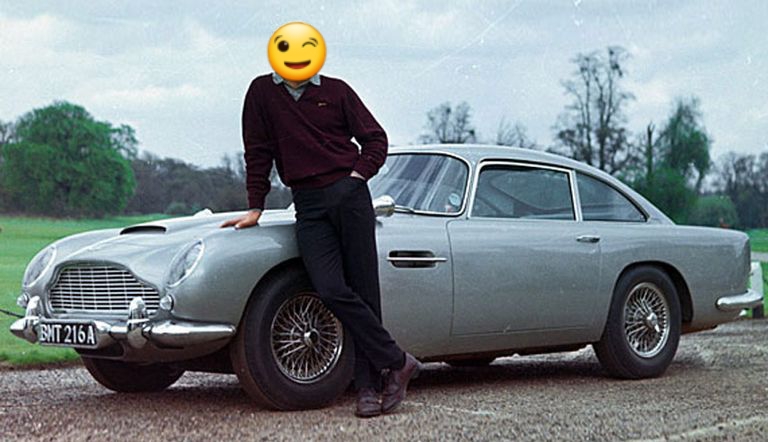
First car: if we’re going to be making things up we might as well make one up with flair. Perhaps my first car would be a Bugatti or Alfa Romeo, a Corvette split window coupe, or maybe a Mustang like the 1968 390 GT Steve McQueen drove to fame in Bullitt. This might be my weak link, the one somebody might be able to puzzle out, the 1964 Aston Martin DB5. If they ask about a chauffeur it would have to be Bo…. But I digress. Again.
 
There are so many other questions and they keep changing them just ever so slightly but well take a stab at one more. High School Mascot: This could be the easiest answer for a hacker to hack. It wouldn’t take much personal history delving to uncover a connection to the Merry Mountainmen or the Fighting Firefighters.  So we have to be particularly suspect in our choice, one no hacker could imagine. Clearly it must be the Hapless Hackers.
 
So these are my “truthful” answers to some of the more common security questions. What would yours be?  And please, please, don’t go blabbing my answers around!
.
20200817_202633

Disbelievable!

The suspension of disbelief, so Aristotle says, is that theatrical principle which allows the audience to accept fiction as reality and fully experience the moments. I’ve always thought it should be the suspension of belief because what’s so hard about not not believing. Fiction by definition is that which is not real (though not necessarily unreal, at least as of the mid-1960s), or as Lawrence Block so well put it, “telling lies for fun and profit.” But I guess if you’re willing to shell out the money to have someone lie to you, whether at a play or through a novel, you’ve already surrendered at least some of your beliefs. To give up disbelief is the willingness not to stand up in the middle of Act III shouting “Oh come on now!”

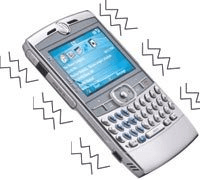
Of course the author has some responsibility to make it not absurdly unbelievable except perhaps in a good farce. I thought of this while watching television the other night. It was a new age television drama that is supposed to reflect life itself. But I’ve seen this particular problem is lesser dramas, comedies, and even movies of the theatrical release type. That is the vibrating cell phone.

I am willing to disbelieve when our hero shoots it out with 5 or 6 bad guys all outfitter with automatic weapons against his pistol compact enough to slip into his tuxedo breast pocket. I can disbelieve with the best of them that someday man will fly faster than the speed of light. It even doesn’t stretch my discredibility that a fresh faced girl from Kansas can move to New York and beat out the actresses who have trained since they were 4 for the lead in the new Broadway musical winning a recording contract, and a Tony, in the process.

CellPhoneBuzzingBut I cannot disbelieve close to enough that everybody on TV and in the movies can hear their phones on vibrate from 2 rooms away. Seriously.

Seriously, is it only the programs I watch and the movies I go to that even the actors take the notice when we are instructed to mute our pagers, phones, and other electronic devices?

Maybe in the movies I can see the director being paranoid that if he or she were to call for a real ringtone too many audience members would reach for their phones and miss whatever nuance is playing out in the screen as we watch the character carefully traverse the rooms to the buzzing handset. I guess on the television shows a ringing phone would distract us to the point of missing the next commercial. Although I might be tempted to go looking for my phone thinking a) nobody in the show has a phone on them and b) holy crap, where did my phone get to?!

So I’m willing to not disbelieve in ghosts that run roughshod over New York, to take on non-unfaith that mild mannered bartenders double as CIA operatives, and to really buy that a computer can inhabit the body and soul of a foreign exchange student. But…

If anybody out there is working on a screenplay, please keep in mind that the suspension of disbelief goes only so far. And it stops at the end of my cell phone.

Bzzzzz bzzzzz


Three on a Match

I just finished rereading a Phillip Marlowe mystery. Philip Marlowe is the hard boiled detective invented by Raymond Chandler in 1939 in the novel The Big Sleep. You might have seen Humphrey Bogart play Marlowe in the movie version. If you did, you saw a man do some serious detecting. And some serious smoking. Well, it was the time. Between the wars. A manly man. In a manly field. Doing a manly job. Smoking like a man.

Last week one of the movie channels replayed the 1985 film, St. Elmo’s Fire. A bunch of kids just out of college, working their entry level jobs, drinking their every level cocktails, loving and hating their entry level lives. And smoking. Wow, they smoked a lot in that picture. When they drank they smoked. When they partied, they smoked. When they drove, they smoked. When they danced, they smoked. When they attempted suicide, they smoked. When they thwarted suicide, they smoked. When they broke up they smoked. When they made up, they smoked. I don’t remember if they ever ate.

I mentioned a couple of posts ago that I had been watching Bond, James Bond movies during a month long marathon of the classic spy stories. One of the things about the early 1960s offerings that you might notice is how much they smoked. Everybody smoked. The spy, the counter spy, the henchmen, the femme fatale. Bond, James Bond. Everybody smoked. Some of Bond, James Bond’s best secret weapons were built into cigarette lighters. Others into cigarette cases. Some even into cigarettes.

NoSmokingFrom the 40s through the 60s to the 80s, everybody smoked. By the time we got to the 2000s people just stopped smoking. Movies today even have disclaimers at the end of the credits stating nobody, but nobody involved in the production of the just viewed movie got any financial, moral, or athletic support knowingly, unknowingly, or even accidentally from anybody, any corporation, or any organization supporting or even involved with the tobacco industry. Often the disclaimer is more prominent than the notice of what type of camera used to shoot the film and the union local responsible for driving the caterer from location site to location site.  In the most recent Bond, James Bond volumes nobody smokes. Not in the bars, not in the casinos, not on the stakeouts. Not just the spy and the supporting spy people. No body. No where. No Smoking. They must have all gone cold turkey.

Amazing the strides they made in 20 years. The Surgeon General would be proud of Mr. Bond, James Bond. Now if we could just get him to drive a little safer.