Where were you when…

The last couple of weeks have had some interesting stories in the news, and I don’t mean articles detailing the machinations of a chainsaw wielding immigrant or an orange skinned man-child. I’m talking about interesting stories, real life stuff.

Although I suppose there was a specific date when the world decided to shut down, the media, social and mainstream, must have gotten together and declared it was early March 2020 and have been busily writing up every 5 year COVID anniversary story they can imagine. How healthcare has changed, how cooking has changed, how exercise has changed, how travel has changed, notable moments in the history of, or the lingering effects on life after COVID. It’s a good thing we had that pandemic or else people would be filling up their column inches (and the pixelated equivalent) with really far-fetched stuff like Presidential executive orders banning skinny jeans or renaming established geographic entities. But I digress.

As much as I enjoyed reading the timeline of recent history almost as much as I enjoyed living through the timeline of recent history, the most interesting articles addressed food. If you were to say that makes sense to you because you know I like food a lot more than I like history, you are right! Even though I did get an A in history throughout my junior high school career or whenever we learn about history because those who do not learn their history are doomed to repeat it.

Apparently, something we aren’t doomed to repeat, or aren’t privileged to repeat, is more home cooking. A U.S. Department of Agriculture survey conducting in 2024 indicated people are spending 55.7% of their food budget on dining out. But…there’s always a but when you start talking statistics…but, according to a national association of restaurants and restaurateurs, more people are ordering take-out and enjoying their dining out dollars at home, including double digit increases in people purchasing complete major holiday meals (think Thanksgiving, Christmas, Easter). All this while inflation supposedly had been escalating more rapidly than Dingy Donald’s golf scores. (To be fair (yes,I can be), according to the National Restaurant Association, restaurant prices increased 27.2% from February 2020 to June 2024.)

As I read some of the articles, I discovered new to me 5 year old information. For example, did you know there was a yeast shortage during the pandemic? Now, I am a bread maker. Bread, pizza, rolls. All things yeasty. (Not beer. I’m not crazy about beer and every “home-brew” I have ever tasted seemed to want to challenge rhubarb as the most bitter stuff you can put in your mouth.) Like the rest of the world, I was baking bread nearly every Saturday during the pandemic. But I also was baking bread nearly every Saturday before and since the pandemic, and because I was/am a constant baker (not to be confused with a constant gardener), I buy yeast in 2 pound blocks.  Guess I sailed right through the “shortage” with the couple packs I always have in the freezer. Who knew?

What changes from 2020 are you still living with, or without, or would like to again? Maybe next week we should talk about how exercise has changed. Gotta work off all those bread calories. See you then!

IMG_4782

An old fashion shoot ‘em up

I have to be honest at with you. This post was to be a critique of the debate. There was just so much ammunition. Enough to fill a year’s worth of blog posts. From hidden communication devices (Trumpican: She was wearing magic earrings to help her. Normal Person: How did her earrings make him say stupid shit?) to dinner menu choices (Trumpican: They are eating dogs and cats. All high and mighty one says so. Normal Person: He would know. He is a dirty dog who never skip a chance to grab some pus…..) …umm, but all that’s been done and it’s way too easy anyway.

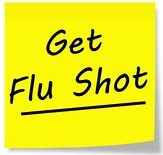
So instead, I’m doing a normal person version of a public service announcement just in time for a real potential disaster. Cold and flu season and a return of covid.

It’s been a long time since I’ve encouraged people to get their flu shots. It’s pretty much not been necessary. Since 2016, flu vaccine rates have increased with some stagnation in 2020 and 2021 when a good chunk of the population was getting its medical information and recommendations from politicians and future billionaire social media platform owners. Even with those idiots attempting to sabotage the then new covid vaccine, flu vaccination rates remained stable.

Unfortunately, the actual flu vaccination rate has never reached the Office of Disease Prevention (of the Department of Health and Human Services) goal of 70% of the population. Most years, the actual percent of population receiving the seasonal flu vaccine is in the 50-56% range. Not good enough!

The flu vaccine repeatedly prevents 67% of potential hospitalizations. Extrapolating for the number of people who go unvaccinated, 44% of those hospitalized for flu do so unnecessarily. According to CDC data, over 18,000 patients were admitted to hospitals during the 2023-2024 flu season. This was the highest rate since 2010-2011. It may not seem like a lot of people, but these are those admitted admitted for flu, not those admitted for other conditions like pneumonia exacerbated by the flu virus.

Why are people still reluctant to get a flu shot? Not understanding the severity of the disease has always been a factor in noncompliance with available, effective vaccines. The emergence of antiviral medications to treat flu symptoms also gives people false confidence in being able to treat the flu if they get it. These are effective but only in a very specific window of virus activity, within 48 hours of infection which may leave only hours after symptoms appear.

If you’re older than 6 years old, there is a flu vaccine for you. Go get one.

Flu shots aside, there are other vaccines this season to seriously consider. The first is covid. Yes, since the pandemic has cooled, little has been heard of covid and only those most susceptible have routinely availed themselves to the annually updated vaccine. Although a large percentage of the population has some immunity to covid, that immunity is likely effective against earlier variants, no later than the delta variants. New strains of the omicron variant have been noticed with increasing frequency in at-risk patients, the young, the old, the immunocompromised. If you don’t know if you are in one if those groups, you probably are.

How bad is the new covid strain. Over 10 million Americans over 65 were treated in hospitable emergency rooms in June. That’s twice as many as last June. Over 60% of those presenting to an ER with covid symptoms are hospitalized and of those 10% die within 24 hours. But those who survive experience few immediate complications. The current most significant risk is developing long-covid and experiencing long-term respiratory problems, GI symptoms, and mental and cognition disturbances.

Regardless of how convincing the charts posted to social media seem to be in differentiating between flu and covid, in life, the differences are not so obvious. The best predictor of infection, and which infection, are home tests. If you are achy, tired, and running a fever, take a test. If you can’t tell if you have a fever, don’t go by the “if it’s not over 100°, it’s not a fever.” If you feel good right now, take your temperature. Do that a couple times a day for a couple days. That is your average normal temperature. If you take your temperature and it is 2° higher than your average normal temperature, you have a fever.

Now there is one more risk for my at-risk friends. RSV (Respiratory Syncytial Virus). RSV has been with us a long time. When I was a young pharmacy resident (yeah, that was a long time ago), we started seeing RSV in pediatric ICUs. Now it is responsible for the hospitalization of 240,000 Americans of all ages. Many  of those are still under 5 years old but now the highest demographic are those over 60. The CDC calls those most at risk are children under 6, adults over 75, adults with immunologic conditions or pulmonary disease over 65, and those routinely in contact with at-risk populations. Finally, a vaccine is out there. Let’s use it.

Those closes this year’s public service announcement. I now return you to your regularly scheduled routine.


flu


You want to improve how you get through the day? We know how. You need your rests – all four of them! Yeah, four. We talk about them in Get Your Rests, the latest Uplift blog at ROAMcare.