From the title of this post you might think I’m taking another shot at advertisers, or politicians, or horror or all horrors, political ads, but no, not at all. Today’s potshots are aimed at us and starting with me. (That would be the collective us not necessary an us that could contain you because you might indeed be the only truthful person in earth. Hey, it has to be somebody!)
Once a time up the worse you could do was lie, cheat, or steal. Or perhaps lie, cheat, and steal. A subtle but important difference. But today if it wasn’t for cheating many of the recent sports championship teams members wouldn’t be sporting their championship rings, thievery accounts for 4 of the top 5 reported crimes in the United States (per the FBI the top five in 2020 are larceny, burglary, motor vehicle theft aggravated assault, robbery) and lies are getting so popular politicians may revert to the truth telling just to differentiate themselves from the common crowd (okay, so I had to get at least one political dig in). And yes, you are in that ground too. You might be so good at social lying that you even fool yourself. Pull up a chair and listen to my tale. (Or read it if that’s easier for you.)
It dawned on me that not only do we spend a good chunk of each day lying to each other, each other of us actually expects it because we, in the words of a certain fictionalized Navy JAG officer, can’t handle the truth. Apparently I am one of the very few persons in the television watching world who did not sign up for a free 30 day trial of Disney+ this month, almost all specifically to be able to watch Hamilton. In order to correct the “obvious” oversight on my part my sister asked me if I wanted to pop over and watch it with them before their trial expired. (It just now dawned on me that signing up for a free trial with the foreknowledge that you are so signing up only to watch a specific movie free and then cancelling before getting charge for month #2 could be either or both cheating and stealing but that is (those are?) post(s) for a different day.) “No thank you,” I answered, “I really don’t have any great desire to see it.” You would have thought I said I didn’t want to go to Heaven when I die (or before if that could be arranged). I supposed I could have said, perhaps should have said, “I’d love to!” but I wouldn’t so I didn’t. It’s the truth. I really don’t have a burning desire to see Hamilton. Sorry. Actually no, not sorry.
Yes, yes, you’re going to say but those lies we tell in those times aren’t lies, they are niceties, polite nothings, harmless fibs. When did it become necessary to lie to be polite. When you are standing in line at the 12 items or less express lane with your melting half gallon of rocky road ice cream waiting for the clerk to bag the last of the 6 bags of groceries for the guy in front of you and your answer to her “I’m sorry you had to wait,” is “that’s okay, I don’t mind,” that’s a lie! You know you want to say “if you’re so sorry take this portable puddle of chocolate back to the ice cream freezer and bring back back a container I don’t have to eat with a straw! And while I’m waiting I’m going to tell your boss that you lack the counting skills to figure out when you’re being played for a fool!” But no, you want to be nice, it’s more polite that way, so you lie.
You explained 3 times to the auto mechanic that “it goes ‘ker-plunk’ when I turn the steering wheel to the left,” but when he comes back from the test drive he says “I didn’t hear a ‘clunk’ when I stepped on the brakes. When was the last time you heard that?” So you try again, “no, I didn’t say it goes ‘clunk” when I step on the brakes, it’s making a ‘ker-plunk’ing when I turn the steering wheel left.” That sets the tone for a day spent in the service lounge with the 128 cup coffee urn that was fresh three days ago, the magazines with scantily clad muscle cars and girls with big air filters on the covers that were fresh 3 years ago, and the TV in the corner than is permanently tuned to “The Real Housewives of Possum County.” Four hours and 27 cups of coffee later the service manager sticks his head in to tell you you’re all done and he’s sorry it took a little longer than they thought but they had to go to their warehouse to get the part. “It’s okay,” you sort of mumble while mentally visualizing the most recent statement “total outstanding” boxes for your credit cards. Well it’s not okay. You just lied! Four hours earlier you wanted to say “maybe I should try a repair shop that knows the difference between a ker-plunk in the stering wheel and a clunk in the brakes” but then all you said was “uh huh’ and now you lied that it was okay because it’s the polite thing to do.
And now we have even more opportunities to politely lie in our daily lives. You know, “of course I’m still washing my hands,” “I love that the whole family Zooms every Friday for Happy Hour!” and “oh yes I wear my mask every time I go out and I’m happy to do it and protect my fellow world citizens!” Yeah, right. You’re probably washing your hands but Happy Birthday, twice, has morphed into the opening line of White Curtain which causing you to pause 9 seconds in to ponder the second line, consider it for another 4, and then dry your hands and walk. What you really want to say is ‘who are all these people, I’d kill myself if I had to do this in person every week.” Finally, you do wear you mask everywhere you go (don’t you?) but be honest, you really want to say “I wear my mask but I’d rather not but because it’s the right thing to do I will so you better too! or “freaking pansies won’t let me in to buy my freaking beer without a freaking mask on but this is freaking America and I have to right to pursue beer so give me a freaking mask.”
So, there you go. Tell me you haven’t done the same especially now, during these trying times. But don’t worry – “it’s going to be okay.”

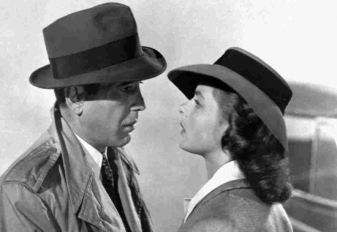 I think hats are fine. Yes it could be construed as shallow and unduly concentrating on appearances, but in my opinion there aren’t many people whose looks couldn’t be improved by covering parts of their heads.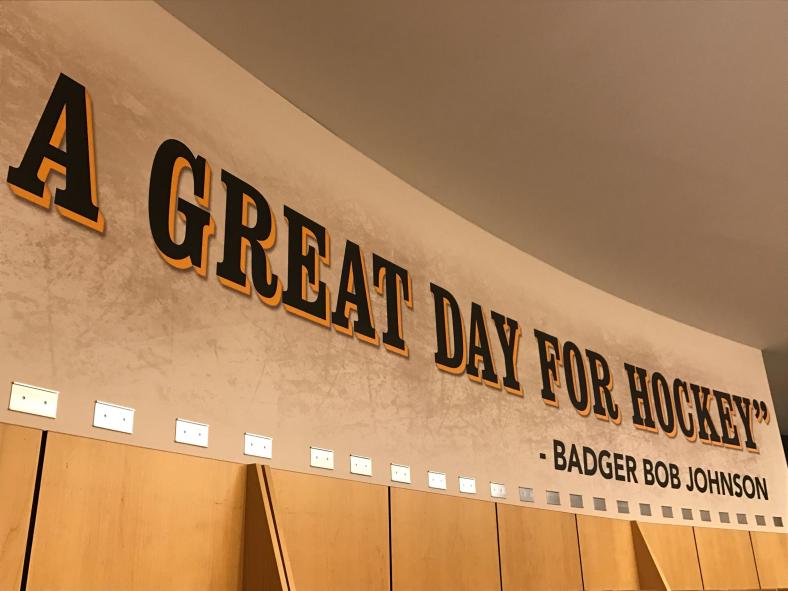
 The ultimate good job is winning the championship. The NHL hockey championship tournament is a grueling event. After an 82 game regular season, the top 16 teams (8 from each conference) play a four round best of seven elimination tournament. It takes twenty winning games to win the championship. That’s nearly 25% as long as the regular season. It could take as long as 28 games to play to the finish. That’s like playing another third of a season. After each round only one team moves on. And for each round, every year, for as many years as the tournament has ever been played, and for as many years as the tournament will ever be played, when that one team wins that fourth game and is ready to move on, they and the team whose season has ended meet at center ice and every player on each team shakes the hand of his opponent player and coach, wishing them well as they move on and thanking them for a game well played. No gloating. No whining. No whimpering. Only accepting.
 The last time I went to a Bond, James Bond movie at a theater it cost me $9.50 and when I passed over my $20 bill I got a ticket, the wrong change, and a “there ya go.” When I pointed out the error I was rewarded with the insipid “my bad.” At the concession stand I spent $7.50 for a soft drink, the required purchase to redeem my FREE POPCORN! coupon, during a wordless transaction other than my “small popcorn and Sprite” at its beginning and my “thank you” at its conclusion. (I’m still not sure why I thank the seller when I purchase something. Please tell me I’m not the only one.)
 The Real Reality Show Blog