Several of those days

Now that the day is half over (in my time zone), it’s probably time to do something with it. Heaven knows I have a lot I can be doing. But do I really want to? Clearly, the world doesn’t want me to.  And why, you may ask??

I’ve tried several times to get to work on a writing project and Word does not want to cooperate. Odd thing that is. I use a machine based version and every time I open it, it lets me type a sentence or two and then it disappears, just like Scotty beamed it up. Or down. Or somewhere. But not on my screen any more. And of course the autosave doesn’t seem to be doing any better than the native program so I can’t even retrieve the sentence or two.

Pre-orders for Bad Impressions opens today and naturally there’s a glitch, specifically with the hardback version. Fortunately it doesn’t look like any hardcover orders were rejected. Unfortunately it doesn’t look like any hardcover orders were rejected.

I have a conference all later today for an upcoming Toastmasters conference and I’m not looking forward to it primarily because in order to accommodate various people’s schedules, it’s right in the middle of the evening, interrupting my usual dinner hour which seems to be trending later and later because lunch has been trending later and later because my day starting hour has been trending later and later. I said I’m not looking forward to the call primarily for that reason but there really are not secondary or tertiary reasons so I guess I not looking forward to it solely for that reason.

I should be cleaning the deck and putting away things that are put-away-able and covering things that are not so easily put away but because of the brief deluge from yesterday, it will be a good 2 or 3 days before everything is dry enough to consider covering up or storing away.

And those are just the things that I woke up knowing I’d have to/want to/should consider to do. It looks like it’s going to be one of those days several times over. Oh well, tomorrow will be another day. Hopefully not another one of them.

What I Did Last Week

What a week. I’ve been so busy I barely noticed the tangerine tyrant threatening to drop 82nd airborne troops into Portland Oregon, the Notsoproudboys, aka immigration enforcement not-officers-and-gentlemen rappelling out of attack helicopters to storm an apartment building in America’s heartland, or Speaker Whatshisname sending the RINOs home then complaining that the Democrats don’t want to meet. All that good stuff all in one week.  Barely seems like it was just a week ago that I was concerned if there was intelligent life on this side of the planet.

Instead, I finally got around to doing some Christmas shopping. I know. I’m just so late this year. Usually by the back-to-school sale days I’m down to just needing stocking stuffers. Where did I go wrong?

Now I have rush through the remains of the list so I can get back on track and start shopping for next year’s May and June anniversaries and birthdays. Do you know how hard it’s going to be to find something June-worthy in December? That clearly should have been August activity.

The good news is, I have Halloween candy on this week’s shopping list.

Okay, maybe that was just a bit hyperbolic, but I really am behind the holiday shopping curve, and I know why. I’m not a “let’s go out with a big holiday shopping list on Black Friday and see how much we get in one day” shopper. I tend to pick things up all through the year as I see them and see that those things would be perfect for someone. I’ll squirrel them away, then during the week before Christmas I’ll scour the house trying to remember I hid it all. Which is still better than just starting to shop then like half of all the other men in America. Mind you now, I’ll likely still go out and shop during that week, but I’ll be calmer than the rest of the shopping crowd because I won’t have to go out and buy.

So that’s why I missed so much of last week’s news. I was out shopping. And I didn’t shop for any televisions or radios so, there’s that too.

Another thing I did was get out the ‘thank you for joining and here are some directions’ letters to the ARC team for Bad Impressions. (Those of you who did send emails expressing interest, if you didn’t get an email from me over the weekend check your spam folders. Anyone still interested in joining, there are a couple spaces left. Get back to me this week. Details and a request form are on the new website, www.michaelrossmedia.com, something else I did last week.)

Okay all, have a good week. I have a few more people to serendipitously come across things for.

Hear ye, hear ye!

At the end of August, I promised you an announcement “sometime in September.” It’s September. Sit back and allow me to announce.

The announcement is there will be an announcement next week. That announcement will be the cover reveal for my first piece of fiction, Bad Impressions, the first in the series following Marc and Aimee as they investigate the disappearances, and sometimes over appearances, of “art, sculptures, precious gems, and the types of doodads that the rich and famous tend to collect.” And what would a good investigation be without a murder or two.

But not to have an announcement-less announcement post I am also announcing the formation of my ARC reader team, the Advance Review Copy reader team for Bad Impressions. Technically the pre-announcement for that as the official invitations won’t go out until next Monday when the new website and social sites go live. But you, dear bloggers, get first crack at submitting your desire if you have a desire of joining. Spaces are limited so if you desire, I suggest you act on that soon.

Here is how the ARC program works. I will send you a free e-book copy of Bad Impressions in exchange for an honest review on Goodreads. Details including dates and method of submitting your reviews will be sent by email to those chosen for the ARC team.

Some details about Bad Impressions. The book is a cozy mystery with some overlap with romantic comedy. Think of Marc and Aimee as the twenty-first century equivalent of Nick and Nora Charles. Or so they think.

Date to know:

  • October 5: “Official” ARC Invitations released.
  • October 6: Cover reveal, website,and social media sites go live. Subscriptions to newsletter opens.
  • October 20: Pre-order period open for ebook, paperback, and hard cover
  • November 3: Bad Impressions released to all major distributors!

Care for a taste:

       They, those who are learned enough in this world to qualify as ‘they,’ say it should be a goal of every investigator that a murder is solved within 48 hours. I take exception to that. I don’t want to get ahead of things here, but I am an investigator of sorts, and I never strove (hmm, I never have striven?) . . . I have never challenged myself to solve a murder within 24 hours. That I am not an investigator of murders may have something to do with that. I am, as I said, an investigator of sorts, and without giving too much away this early in the telling, the sort I was investigating was the sudden appearance of too many originals. Originals as in paintings that is. Impressionist paintings to be as specific as I can be, again, without giving too much away.

What can you do now?

So yes, if that’s just the first paragraph you want to read more and you can want until November! If you want your free ebook version of Bad Impressions impressions in exchange for an honest review, send your name and email address to my personal email, mrossrph@msn.com and I’ll see you are sent an invitation to join the ARC team.

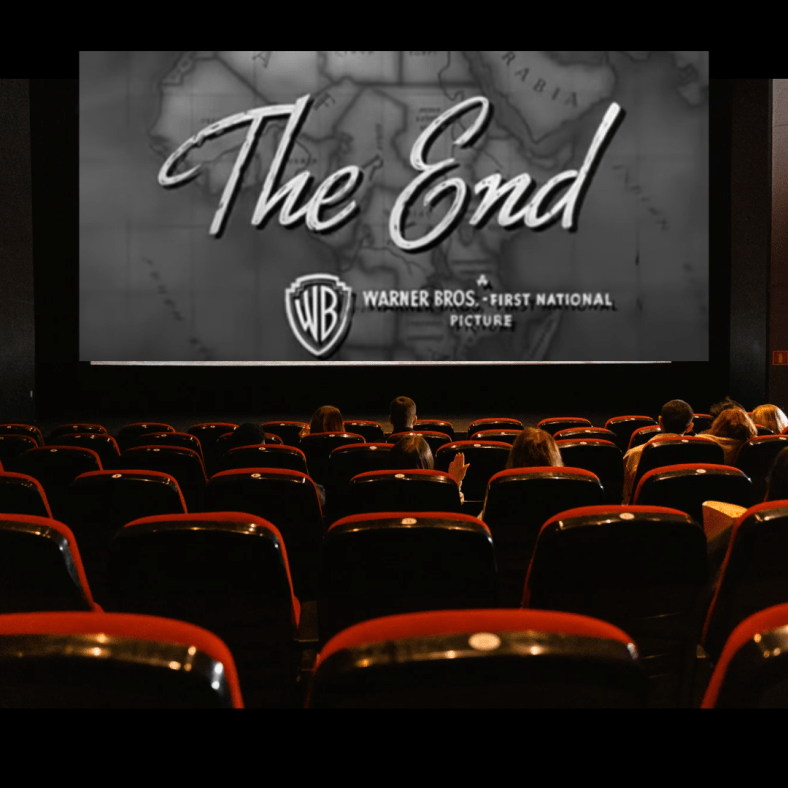
“The End” is not as near as it once was

I’ve noticed a disturbing trend that’s been going on for years, and it’s mostly most disturbing (mostly) because I’ve not noticed is before, yet it’s really mostly out there, like more than it isn’t. What you asked? Go ahead and ask, I’ll wait. What? Oh I’m glad you asked. “The End” is missing. That practice that once was a staple on movie end title cards, and in books on their end pages of declaring the end as “The End” is ending, in fact, seems to have indeed ended, and nobody is in a hurry to bring it back.

It may seem a silly thing, in fact it most probably is a silly thing, but that “The End” wrapped things up neater than solving a locked room murder. It closed the book, as it was. It put the stamp of a job well done on a job well done. There was no mistaking when you got to the end that it was the end. Any cliffhangers, unanswered questions, or unresolved loose ends, were more often the result of your not having paid attention to some seemingly unimportant detail than it was to the author’s or screenwriter’s lack of imagination or meticulous care to continuity.

It seems to me, the disappearance of “The End” occurred quite simultaneously to both print and film media, not unlike the unexplained (although welcomed by me), change of printing copyright dates in Arabic numerals rather than Roman numerals. (If you’re intrigue by that, check out my post here. It doesn’t explain it but I do have fun talking about it!) (But back to “The End” which I’m sure you’re now hoping we are getting close to as far as this post is concerned.) I noticed, or I think I noticed, “The End”’s demise in books and at movies because I’ve been on an odd quest (yes, odd even for me) of attempting to read the source material of all the old movies I am so addicted to. I want to see if the observations I made last year about movies based in books in the early days of the Hayes Code were more universal than just those handful of stories i mentioned

Even the most casual of casual readers knows that I much prefer movies of the 1930s, 40, 50s, and in a pinch, very early 60s to any other dreck put out since, but that’s just my opinion. Why do I say “attempting to read” the sources of the screenplays of those early movies? Because the source material is not always 1)known, 2)published, or 3) available even if it is both 1) and 2). But in those cases I have found a source that 1), 2), and 3) and the material ended in “The End” (or the more exotic “Finis”), so did the film. Those that did not, neither did they, and they did not about the same time as movie credits expanded to included everybody who happened to be in Hollywood at the time of filming, perhaps to make up for the lost screen time and then some by not including “The End.”

And so I suppose I’m going to have to watch more and more 60s and maybe even 70s vintage films to see exactly when movie producers decided it was more important for us to know who drove the catering trucks than that the movie is over, now please go back to your real lives.

And now, please go back to your real lives.

-The End-

Bonus points if you can identify the movie from the end title card below.


Do you plan so much you never get around to doing? When you do, are you overly concerned about what others think about what you’ve done? The most recent Uplift! explores why it is better to just do, and then do some more! Approximate reading time – 2 minutes.


8B543F91-85DD-4DF1-91D6-319398C44780


Read the book

Not too many posts ago I wrote one about the changes that a story goes through on its way from printed page to silver screen. That got something stirring in me and I set out to read or reread as many of the books that have been the inspiration to some of my favorite movies. Along the way I noticed something curious. Many modern movies hold themselves much closer to the original stories than movies from the golden age, and while I think that’s a good thing for the high school football star who has little time for such nonsense as reading, the older movies are typical of a higher quality, story telling wise and even production wise. (Yes, I know, but that’s my opinion. It’s also my blog. Get over it.)

We likely have Will H. Hays to thank for the creative license taken by screen writers in the 1940s and 50s. Although the so-called Hays Code “governed” film propriety until 1968 when the now familiar 4 tiered Motion Picture Association of America rating system was adopted, it was during the golden age of moviemaking (1936-1962) that the classic movies differed much from their classic written beginnings – but often in a good way.

Reading the book versions of some film classics revealed three major changes. Most movies were targeted to run from 105 to 115 minutes. Provocative talk was okay, action was not. The bad guy not only never wins, he always gets more than his due.  Although I the past two weeks I’ve read The Thin Man, The Maltese Falcon, The Big Sleep, and To Have and Have Not, I’m going to use Farewell, My Lovely, adapted to “Murder, My Sweet” as the film/book comparison. I’m case you want to read, watch, or do both with this story and have not yet done either, I will not reveal any plot information in this discussion.  

Raymond Chandler’s Farewell, My Lovely, released in 1944 as “Murder, My Sweet”* has enough character exposés and plot twists to fill 3 hours of screen time. Even “Gone With the Wind” couldn’t keep audience members who were honest entertained for 180 minutes. To keep it to a reasonable length, some sub-plots were completely eliminated and characters combined to make transactions flow through the deleted scenes less awkwardly. Of thirteen main characters from the novel, eight made the transition to the screen version and three of them were significantly altered.

Before we discuss plot changes it is worth noting the Chandler was not a stickler for plot details. Rather than relying on formula and a certainty that everything wraps up neatly at the end, he said he was more interested in the message conveyed by his stories. During the adaptation of another of his novels, The Big Sleep, screen writer William Faulkner, a pretty good novelist himself, was unable to reconcile one of the murders. It is said that after many hours of trying to successfully reveal, or at least hint at the culprit responsible for the character’s demise, the screenwriting team decided to call Chandler and ask who did it. His response? He didn’t know either!

In both book and movie, a missing necklace and a missing woman are central to the story. While the compactness of the plot and some subplot elements that were victims of time are obvious if you read the book before watching the movie, but if your first exposure to the tale is at the movies, there are no unresolved issues.  How the woman and necklace become missing and found, and what happened in between were victim to the censors and may leave your wondering if the suspension of disbelief might be stretched just a little. Illegal drug use, questionable social couplings, racial and economic disparities, and police corruption were tempered or cast aside. The resulting screenplay, although missing many of the stops along the way to the conclusion, does not suffer for these details. In most cases, the viewers can replace with their imaginations what was handed to them in writing. This is not always a bad thing. Often your imagination can make a better story than the one first considered and when the inferences are made deftly, the conclusions can be fairly consistent. In a different movie/book tandem, The Thin Man by Dashiell Hammett, although Nick and Nora sleep in separate beds in full pajamas with dressing robe and gown, there is no question that they are giddyingly in love with each other and present as a passionate couple.

The conclusion of “Murder, My Sweet,” although satisfying, takes a major departure from the novelist’s vision. Again, needing to satisfy the censors of the time, the character wrap up are quite different. Some “bad guys” in the novel are still walking around when the last page is turned. The Hays Code wanted audiences to see that crime not only doesn’t pay, but exacts a price. We never see the bullets fly (too violent) but we see the results. And who does the “cleaning up” and how they are manipulated so nobody gets an easy way out are somewhat vague. A final twist is the movie’s version of a happy ending, although working well for the movie, may not have been exactly as Chandler would have written it.

The is no question that if you watched “Murder, My Sweet” you know you are watching the story behind Farewell, My Lovely. It is faster paced, you might think you missed something when you went to re-butter the popcorn, and at the end you could be saying, “oh, yeah, I can see that,” but it’s clearly the same story. It’s just not the same.

Is it a bad thing that movie adaptations deviate from their source materials? Not always. When nothing but the title and a character name are all that are recognizable you get the sense the studio or production company know they have a dog of a story and the only way they stand a chance to make money is to buy a popular title. But a good story in the hands of talented screen writers, especially if they are source writers themselves, will show through regardless of constraints placed by the questionable morals police or to the keep it short so they don’t get bored police.

To quite somebody from some book or movie, “It’s all good!” (But it wouldn’t kill you to read the book.)

Blog Art 2 3


* Murder, My Sweet was not the first screen adaptation, nor the last, nor was the screen the only adapted medium of Farewell, My Lovely. Although the latest adaptation was made in 1975, it still was subject to significant changes for time and cultural references.


You affect everyone you meet, whether with words, actions, or just a smile. Read why we say you brighten everybody’s day with your presence at http://www.roamcare.org.


Based on a story by…

I don’t know why but last weekend I was thinking about Raymond Chandler, Ernest Hemingway, William Faulkner, F. Scott Fitzgerald, and Alfred Hitchcock. Not necessarily in that order. As I’ve written before, I don’t know why I think the things I do, but I do and that is enough to make me think, and then think that I’d rather not want to think about it.

It all started with me re-reading The Curious Case of Benjamin Button which got me thinking about how a movie and a book can be so different. A movie and a 600 page novel, an epic, the proverbial tome may differ because who could get all that detail into a movie people would be willing to sit through, except perhaps Gone With the Wind, but that has its own problems. But with Ben, or BB as I like to call him, that’s a short story, and still Eric Roth managed to write a 2-1/2 hour movie based on a tale that took me a fifth of that time to read, with a bathroom break thrown in. How did he do that! The answer is, he didn’t. Roth and story writing partner Robin Swicord wrote a different story with a title and a character of the same name. It’s a good movie. It’s a good short story. They just aren’t the same. And that’s been going on pretty much since we’ve had movies.

William Faulkner’s 1944 treatment of Hemingway’s To Have and Have Not does the same thing. A character or two are mentioned in both book and movie, and those plus the title are the total of what remains of the story the movie was based on. Now the 1950 adaption, “The Breaking Point,” by screenwriter Ranald MacDougall is much closer to the Hemingway classic. It’s on a different ocean and there’s an extra couple of characters, but it’s recognizable as being a story based on. But does that make it better than the 1944 classic or just different?

You can’t say that Faulkner, who was no slouch in the book writing department, was flexing his writing muscles, because he quite faithfully followed Chandler’s The Big Sleep, changing only what needed changed to make the movie acceptable to those who moderated the 1946 version of the production code (and to make it acceptable to those who wanted to see Bogart and Bacall become Bogart and Bacall). Perhaps that is why when Chandler took to the task of writing the screenplay to Patricia Highsmith’s Strangers on a Train, he stayed as close as he could to the original story. Oh wait, you’re going to say, they aren’t close at all. You might even say in the movie, the strangers are on an entirely different track than the one the train chugs along on in the psychologically thrilling novel. The “Strangers” presented by Alfred Hitchcock that we see is not the version Chandler wrote. That script ran afoul of the censors (and to a large extent, of Alfred) and was almost entirely rewritten by Czenzi Ormomde. 

When Chandler and co-screenwriter Billy Wilder adapted James M. Cain’s Double Indemnity, they took much liberty with the original story, changing names and timelines, and most radically, they added a new character, the insurance investigator, which created a completely different story.  

“Double Indemnity” and “Strangers on a Train,” a double dose of two books, two movies, four stories, none of them bad but none of them based on any other. So maybe when you have great writers adapting great works of writing, you will get great results, just not always recognizable as the story they are based on. 

Now let’s talk about what Leon Uris and Dalton Trumbo did with “The Exodus.”

Blog Art (26)


Blog Art (25)Everybody is more engaged and more fun to be around when they feel valued, and they feel most valued when they are treated like people. Read why we say good manners never go out of style at www.roamcare.org. While you’re there, check out the rest of our site, then share us with your friends and family!


Read any good books lately?

There have been a lot of stories this year regarding book banning in America’s schools. Legislature has been presented in seven states and parents have approached dozens of school districts specifically to remove specific volumes or entire categories of books from school libraries. Legislation was introduced in Florida to not limit challenges to school library holdings to parents but allowing any individual to challenge any holding. In Texas, Llano County Commissioners Court forced the closure of the local public library (public library!) so librarians could review all reading material for their younger readers to make sure books are age appropriate. That’s just this year. And it’s only March. That’s following up on a flurry of year end interest around books and children. According to NPR, Texas State Representative Matt Krause put more than 850 books on a watch list, targeting materials he feels “might make students feel discomfort, guilt, anguish, or any other form of psychological distress because of their race or sex.” (npr.org, “A Texas lawmaker is targeting 850 books that he says could make students feel uneasy,” Oct. 28, 2021.) No word on whether he read those books.

Questioning whether the Honorable (Ha!) Krause read all 800+ books on his list isn’t me being ornery as usual. It’s a legitimate question. Not just by me but legitimized by those in the know. Deborah Caldwell-Stone, director for the American Library Association’s Office for Intellectual Freedom said in a recent interview, “We’re now seeing challenges pop up based solely on social media posts. A video gets posted of a parent complaining at a school board meeting, and within days, we see challenges across the country using the same reasons. People are complaining because they saw it on social media, not because they actually engaged with the book.” (Triblive.com, “Book challenges are becoming more frequent, driven in part by social media,” March 14, 2022.)

My concern isn’t about the books being challenged. Book challenges and banning have been going on basically since there were books. It’s the way these challenges are being conducted. Small numbers of individuals uneducated in the library sciences making noisy demands of schools to conform to their (the uneducated small number of individuals’) idea of decorum based on what other uneducated small number of individuals are writing on Facebook, et.al.. In a recent CNN poll, only 12% of Americans believed parents “should have the most sway over which library books are on the shelves” and twice as many felt teachers and school personnel should have more control over library content. (cnn.com, “CNN Poll: Economy and education could shape how Americans vote in 2022,” Feb. 11, 2022.) In the past, challenges were based on the challenger’s personal experience with the book (that means he/she/it actually read the book) and may have actually been able to intelligently debate the content of the book and verbalize why he/she/it felt it (the book) was inappropriate. Now, the majority of challenges are opposing titles simply because they are on some list of ‘controversial’ books. I pointedly use “title” in that sentence because so often the title is all the “concerned” parent knows about the book.

There is no evidence that the current wave of book banning is accomplishing what I think the challengers to the titles are intending, that is a purge of all material contrary to their mores. I’m just not sure they know what their intentions are. Or possibly what mores are. And if anything, the publicity for these books, the classic titles and those barely known to anybody but the most dedicated librarians, has generated increased sales for the books.

We’ve seen when we let anybody with a computer and the ability to cut and paste how America responds to a global pandemic resulting in a death rate twice the rest of the worlds, how we’ve graciously accepted the transfer of power, and how we are politely carrying on primary election campaigns as we run up to the mid-term elections this fall. Perhaps the proposed bans shouldn’t be of books whose only intent is to encourage thought and generate intelligent discussion, we should instead be banning social media whose intent increasingly seems to be to pass off incomprehensible opinion as fact among those who never spent time in their school library back in the day when it was their school library.

Once upon a time they lived happily ever after (3)

Tell Me a Tale

Finally! Yesterday they finally awarded this year’s Oscars. Sorry, Oscars®. You’ve read me long enough to know I like movies. Old movies. Not so much old as good movies, so yeah, old movies. I don’t particularly care who won yesterday. See me in 24 or 25 years about the 2021 awards. We’ll see then which ones stood the test of time. I’ll tell you right now, it won’t be the ones that told a story. It will be the ones with a story worth telling.

Quite coincidentally this year, tomorrow is National Tell a Story Day. When one thinks of “a story” the first thought is usually a tall tale, perhaps inspirational, perhaps traditional, maybe something fictional with just enough truth in it to keep it interesting. Few stories hit all the notes although through the years you will find one or two each generation that live on through many generations. They are the ones with a story worth telling and telling again.

Today, everyone can tell a story. All you need is a connection to the Internet. Thirty years ago I would have said all you need is a typewriter, a fresh ribbon, a ream of paper, and a willing audience. Twenty years ago I would have said, all you need is a word processor, access to email, and a willing audience. Ten years ago I would have said, all you need is a keyboard and a connection to the Internet. Today you don’t even need a keyboard. A phone, a camera, a screen and access to your favorite social site, and the modern day storyteller has all the tools needed to tell the tale. You will note that the willing audience has dropped from the list of needs. With the internet comes an audience. Willing or not, there are people there. When we accepted losing the typewriter or keyboard as tools of the storyteller, we may also have lost the criterion that a story, a good story, be one worth telling. Another loss in many stories we hear today is the presence of truth.

Of course truth is not necessary for a good story. Any successful novelist knows the truth is incidental to a good story. Any successful novelist also knows nobody expects fiction to be truthful or accurate. That’s pretty much the point of fiction. But just to be on the safe side the successful novelist also…well, go pull your favorite novel off the bookshelf. I’ll wait. {Dah di dum di dah di dum dum dum} Oh good, you’re back. Okay, now turn to the copyright page. There, do you see it? It says something like:

[Name of Book] is a work of fiction. Names, places, and incidents are the product of the imagination of the author or are used fictitiously. Any resemblance to any person, living or dead, or any event, company, country, or location is entirely coincidental.”  

Disclaimers have long been used on fictional works, written and filmed. They aren’t on computer, tablet, or phone screens even though it is more likely that fiction will be taken for fact there than on the pages of that book you pulled off the shelf or in the movie theater. The social media storyteller specializes in sharing and forwarding unconfirmed material in the guise of news or pertinent information is as guilty as spreading lies and fabrications as the one who intentionally misleads or deceives, and the one who intentionally misleads or deceives is no more than a common liar who isn’t worth the electricity needed to post a rebuttal. But rebut we must. The charlatans foisting untruths, fact-sounding fallacies, misinterpretations of scholarly works, and ugly harassment must not be allowed to spread misinformation without challenge. If the social network platforms will not police their lines of distribution themselves then the professionals must remain vigilant to the lies circulating, whether about health, policy, government, or safety and security. Those who use the internet for news and information must recall the social networks are entertainment and any “information” gleaned from a social post should be taken with the consideration afforded to the “news” heard over the backyard fence or while standing in line at the supermarket deli counter. Consider any story heard on line as just that, a story, no more factual than Snow White and the Three Big Bad Wolves.

Hopefully your only encounter with storytellers will be with those with a story to tell that is perhaps inspirational, perhaps traditional, or maybe something fictional with just enough truth in it to keep it interesting – and with a story worth telling and worth telling again. No disclaimers necessary but there – just in case.

Once upon a time they lived happily ever after

Read All About It

Today is Read Across America Day, and to celebrate I’m going to write less and read more. So listen up! This will be short and hopefully sweet.
 
Read Across America Day was first celebrated in 1998 to call attention to … are you ready? maybe you should be sitting down … reading in America! It is to be celebrated on the school day closest to Dr. Seuss’s birthday (Theodor Geisel, March 2).
 
Here’s the thing about Read Across America Day. You don’t have to be in school, you don’t have to be American, you don’t even have to read in rhymes. I guess that’s three things. Well, here’s a fourth. You can keep reading even after today!
 
Read to your kids, grandkids, nieces and nephews, parents, pets, or even yourself. Reading is fun and educational, and books look good on the shelf. But they look better propped open, the words shared with a friend. So go read something now that this post’s reached its end.
 
.

FB_IMG_1583157751066

Not my library. Wish it was.


Next One Up

Sometime last week a friend mentioned she was going to pick up a copy of the new book by the the author of her favorite book. She was pretty sure of this favorite book because the memory cells in my brain perked up at the title and recognized it as one she has previously named as her favorite book. Of course in the conversation she had to ask what is my favorite book. Umm.

For as many books as I’ve read I couldn’t come up with a favorite then. I said I’d have to think about that. I’m still thinking about that. Can I single out a favorite or are books like children? All are my favorites. My own of course. Which is easy because I have only one. Children, that is. Err, child, that is. I really have given this some thought. Every time I think of one book that I like more than another, another comes to mind that I like more than that one.

I thought some more. Some books have a personal connection. I love Bill Bryson’s A Walk in the Woods maybe because I’ve been on the Appalachian Trail. Not all if it though so maybe that’s why I like it because I can see the parts I’ve part and the parts I haven’t. Yet it doesn’t resonate with me as much as his Neither Here Nor There and I’ve never been to Europe. Any parts of it. I just finished Larry’s Kidney: Being the True Story of How I Found Myself in China With my Black Sheep Cousin and His Mail-Order Bride, Skirting the Law to Get Him a Transplant … and Save His Life by Daniel Asa Rose, a topic clearly near my heart (but lower and more toward the back and sides) and thought it was the most enjoyable memoir I ever read until I thought about Neil Simon’s Rewrites, and Tuesdays with Morrie by Mitch Albom, and Twelve Years a Slave by Solomon Northup, and Ernest Hemingway’s  A Move able Feast, and … you get the idea.

Then I said to myself I don’t know why I’m going nonfiction. Maybe because I just finished Larry’s Kidney I had life on my mind (in more ways than one), but I’m more apt to read fiction than anything else. That’s such a broad category. Not a category really. More a phylum. Maybe even a kingdom. And that shifted my thinking so fast I almost got mental whiplash. I’m not a liberal arts guy, I’m a scientist! Shouldn’t my favorite book be scientific? Can a scientific book even be read like a book or aren’t they all just references. I checked out my bookcase and found indeed lots of references. And among them a slim volume, Laughter: The Drug of Choice by Nicholas Hoesl, given and inscribed to me by the author. I hadn’t thought of that book in years and although seeing on the shelf didn’t jog many memories of the content it did of sitting with the author and trading manic medical memories. Does that make a favorite book, a personal copy being a very personal copy?

I thought of another slim volume, recently directly received from and inscribed by the author, The Woman in the Window by W D Fyfe. If that name is familiar you may have read his blog. You should also read his book. It’s a wonderful collection of short stories, none that end like you thought they would. And that set me off in another direction. Modern fiction.

LibraryTruth be told my most enjoyable reading comes from modern fiction. Not “literature.” Mystery, murder, intrigue, spying. My favorites authors are people like Sue Grafton, Lawrence Block, Lawrence Sanders, and Jonathan Kellerman who write books that never ended like you first (and sometimes second and third) thought they would. Could I find my favorite book amount those? Or do I go back a generation and consider a book famous for not ending as even the author thought, The Big Sleep? True. While working on the screenplay for the movie version, William Faulkner and Leigh Brackett couldn’t figure who murdered a particular character. They phoned Raymond Chandler, who said the answer was right there in his book. Later he returned their call to say he couldn’t figure out who killed that character either. Now there’s a whodunit!

Speaking of Faulkner, the Nobel, Pulitzer, and National Book Awards winner who I better know for his screenplays than his novels although his short story “A Rose for Emily” is a favorite. But is it the favorite?

Since we’re into more classics what about some of the classical classics? I have actually read the Divine Comedy (probably taking longer than Dante took to write it) and Don Quixote (definitely taking longer than Cervantes took to write it). I am glad I did but I wouldn’t go back and reread them. Still… Closer to our time I also can put Victor Hugo’s Les Misérables in my “have read and enjoyed” list although I more enjoyed Alexander Dumas’ The Three Musketeers and The Count of Monte Cristo. I suppose even in the 19th century my tastes run more to adventure. How adventurous does a favorite book have to be?

What about the works too long to be a short story but too short to be a novel. When I was working these were often my go to readers. A full shelf is devoted to the novella from Capote’s Breakfast at Tiffany’s to Grisham’s Playing for Pizza. So is there a favorite among these? I really just don’t know.

What about the books I didn’t read but we’re read to me before I even knew that if enough words are put together in a particular order, they can hold such a power over me as to make me wonder some day what particular set of them might be my favorite. I’m sure I once counted Pat the Bunny by Dorothy Kunhardt as my favorite book, way back before I could count. Should it not be at least a favorite now?

I just don’t think I can come up with a favorite book. If I did I’d just be in danger of having it replaced by a new favorite whenever I read, reread, or remember something at a newer given time. I think instead my favorite book might be whatever one I’m reading now. Or maybe the one I just finished. Or better still, the next one up.