Bee Present

Do you ever do something and surprise yourself at how profound you are? Me neither, but I did something that really had me thinking for a few days. I kept saying to myself “Yeah, that’s me, damn it. I can do better!”

Many of you know that in an alternate universe I am co-founder of an education foundation, more life and self-preservation than education but you have to slot these things somewhere. One of our routines is a weekly social media fixture, A Moment of Motivation, in our words, “small doses of positivity.” (I came up with that!)

Motivation Posts (50)Let me tell you, it’s hard work to build up to a single motivating moment. In preparation for this morning’s release, I drafted the first iteration of image and theme: Be Kind, Be Present, Be Grateful.

Then started the series of texts back and forth. (You want motivation? You have to be motivated to work together when you’re separated by 2100 miles and three time-zones. But that’s a different story.) After discussion, major changes, minor refinements, lots word-smithing, my partner and I settled on: Don’t Be a Busy Bee – Bee in the Present. Now with an image and theme it was up to me to come up with a motivating message to accompany it. Here is the final form:

Motivation Posts (52)“Life is a busy place. We come here every morning and start the day with a mental list of things to do.
Meetings meals, classes, jobs, tests, housework, work work…stop! 
Stop doing and start being!
Sit, pray, meditate, experience nature, see the people around you. Be part of the world.
Stop making a living. Start making a life.
Be present!”

Now if you ask me, I say that’s excellent advice. Boy I wish I had thought of that forty years ago! Even without “work” I start each day asking myself, “What am I going to do today?” Did I learn anything from my experiences? Maybe from the experience of getting it wrong. How often as a young professional did I tell my young family, “See you later, I have a meeting. No nothing to do with work but the right people will be there and I have to make myself seen.” Or not thinking twice about taking on the extra project at work because it will look good on the resume. “So what if it means staying home and not joining everyone for a week at the shore? When will a chance like this come again?” What seemed like a justification for doing the work are the very same words I wish I had use to talk myself out of that work. Even today I tend to skew everything in terms of “what may be” rather than in the “what am I,” always looking at what could happen if I do or don’t do something, say or don’t say something, go or not go somewhere. Yes, we need to plan, we need to set goals and we need to be certain we do the things that will keep us around for a long time for those who love and need us. But we need to also see that the most important thing is why we are, not the who or what we are.   

We cannot simply concentrate on the task, like the bees setting out to gather nectar. Nor can we sit on the outside waiting for something to happen. We have to immerse ourselves in everything around us. We are part of the beauty of the world, and we are loved for that. Not for the work we accomplish or the words we write. We are loved because we are us. We belong because of who we are. When you wake tomorrow and ask yourself, “What am I going to do today?” make the first item on the to do list, “sit, pray, meditate, and experience,” and then repeat as necessary.

Stop making a living. Start making a life. Don’t be so busy. Be present!

(If you have the urge please follow us on Twitter, Instagram, Facebook and LinkedIn at @roamcare or visit our website http://www.roamcare.org)

Spring cleaning

I did some electronic spring cleaning tis morning. I fear this is a battle I’m doomed to lose. Of course by electronic spring cleaning I don’t mean deep cleaning my living space with robotic assistance. A robot vacuum might be fun to have around, but until they come up with one who can wash down the cabinets, keep the appliances sparkly, daily clean the bathroom, and tidy the bedroom – like Rosey on the Jetsons! – I’ll do the physical cleaning on my own for as long as I can. No, the spring cleaning was going through apps on the phone and tablets, reviewing bookmarks on the browsers, moving image and document files to cards or cloud storage or deleting them outright, and getting rid of those nasty cookies (which unfortunately eliminates the helpful ones also which is why I so rarely take that on).

2 + 2 5 (8)

It went relatively smoothly except for one tablet which makes me wonder if I take things too literally.  The tablet in question is an older Samsung that I’ve threatened to put out to pasture at least once a month for the last several years. But I’m used to its quirks, it fits me and my expectations, and I guess I like it enough to poo-poo my attempts to use the newer but still not completely set up tab sitting on my desk (which is now certainly itself hopelessly outdated).

The odd thing about this particular, older unit is the help that it wants to provide, particularly at clean-up time. It knows its storage limits and can clue me in on where I can reclaim valuable storage space. What it has a hard time with is knowing what’s stored where. Let me explain. As an older tablet it has limited storage, only 16 GB, so each little chunk of that is valuable. It wants to be a helpful little thing so this morning it told me that 970 MB was holding onto pictures and videos. No need to have them there but also no need to use up space on the cloud account with them when I have plenty of room and can move them to the SD card. Except when I tap the icon to show me the detail of what makes up those 970 MB of treasured photos, it gets confused and shows me all the files the tablet can access – internal, card, and cloud storage. It very graciously tells me how much each destination holds but not which files are at which destinations. So I go through file by file to find what goes where Sigh.

Another thing the poor old piece wants to help with is shedding itself of unused or rarely used apps. Every handheld device has a means of displaying all its resident applications by frequency of access. Except this one hasn’t learned the English definitions for always, sometimes, rarely, and never. I’m just certain that it would get so confused trying to complete a survey it would give up after the first few questions. Anyway, it listed all my apps by often used, sometimes used, and rarely used. Except that they aren’t. My crossword app that I use daily was in the sometimes used pile while Facebook that I haven’t accessed in the last several months was among those often used.

After hours more than I wanted to devote to the project I feel good that all my electronic, connected devices are as trim as can be and for a short while I should be able to enjoy efficient downloads, speedy uploads, and generally smooth, glitch free surfing on the Internet on my own little intranet.

I just really hope I didn’t delete my WordPress account.  Well, here goes nothing! (Hmm, let me know if you didn’t get this.) (Thanks!)

opensesame

I had to change a password on one of the many password protected sites we access what seems hourly! I didn’t have to change it because it was that time whether that time is every month, every 6 months, or any time like the site feels like messing with you. I didn’t have to change it because I forgot my password. I had to change it because I kept mis-typing it. I am the king of typos! I’m lucky I can get through an entire sentence when I can actually see the letters taking shape on the screen in front of me. Hid everything behind ******************** and it’s a crapshoot if I got +#^ or +@&. Even if I see them I may not be able to tell if I have it right. But that’s a story for later – later in this post.

When I entered the “select your password” phase of reestablishing my password, the site provided me with their rules. Oddly, not all sites do that. This site, in addition to the upper and lower case letters, numbers, and special characters (why do they call them special, aren’t they the same symbols that have appeared on keyboards since the time keyboards were attached to typewriters? Can’t we just call them “symbols” or is that too symbolic?), this set of rules featured – for the first time ever, live on our stage! (sorry I got carried away – this set of rules included the querulous instruction to not end with a number. Naturally I can’t take an instruction like that and not dig deeper so I dug deeper.

Yes, it appears somebody who studies these sorts of things has determined that passwords ending in numbers are more likely to be hacked. I think maybe it has to do with something about some people’s predilection to serializing their passwords so like maybe they don’t forget them. You may have done it, or perhaps are doing it yourself. OpenSesame1, OpenSesame2, OpenSesame3, etc.  I also discovered that once very popular, opensesame has fallen way down the list of people’s password choices. Now this brings up a couple of questions. First of all, if passwords are supposed to be such closely guarded secrets, often under penalty of on-line death if revealed, how does anyone know what once was and what is no longer popular. (Many of the same sources even noted people are still out there using “password” for their passwords. -Same question fellas!) The other question I have about opensesame is why didn’t I ever think about that? What a great password! And so versatile. The user who selects opensesame or one of its variants (perhaps OpenSesame1, OpenSesame2, OpenSesame3, etc) might be an Antoine Galland fan, a lover of the Three Stooges, or trapped in the seventies singing their way to internet access with Kool and the Gang. Opportunity lost.

Anyway, back to the point of this post (yes, yes, go ahead and smirk), I can live with the odd rules, making my passwords at least 8 characters and not more than 20, using upper and lower cases, tossing in a few numbers as long as one isn’t at the end, even the inclusion of “special characters,” but can I at least see what I’m typing? It appears that the two most common methods of breaking the password code are guessing and “entry intercept” whereby a program, bug, virus, or some malevolent genie captures the keystrokes made to enter the password characters (special and otherwise) and shares them with the head virus writer, bug-programmer, or Ali Baba. So, while we’re struggling with trying to accurately enter jkwp9y%Roa&&fmMqrs!! the virus may see what we’re typing, but all we see is   ********************.

Now I ask you, is that fair?

Blog Art

One Hundred Days

If you are “lucky” enough to live in a city, county, state, country, homeowners’ association, etc., that elected a new representative, mayor, commissioner, dog catcher, etc. last fall who was installed in office in January, you are likely seeing stories here and about regarding so-and-so’s first 100 days. That seems to be a fun activity among pundits who have nothing much better to do in mid-April. I’ve never cared much for those types of stories. What can you do in 100 days?

Since the dawn of the Internet Era, hundred day projects although not all the rage, are no longer the sole purview of political hacks and the hacks who follow politics. Everybody can get in on the action. In fact, there is an on-line, on-going, on point 100 Day Project site that claims “thousands of people all around the world commit to 100 days of creating” every year. The ninth annual project period started Feb. 13, but according to their FAQs, any day is a good day to start.

I was glad to hear that because I started a 100 day project on January 9, which means my hundredth day is here! I didn’t put much planning into my activity. To be honest, it wasn’t planned at all! And it certainly began before January 9 but that’s the day I’m going with because that’s the day the official word came to me – I had COVID. I already wrote about the first 30 days I got to participate in this project and I will say the more recent 70 days have been much more fun. Let me tell you what I’ve been doing.

As I said then, I was and am still working the exercises given me to strengthen the muscles that help the lungs do what lungs do, and to increase my stamina and balance. Because the weather has been typical Western Pennsylvania Spring (temperatures ranging from 16⁰F to 72⁰F over 3 days, with wind, rain, sleet and snow often in the same day), I didn’t mind staying inside, far away from the maskless horde. I really needed something to do besides the official physician ordered activity. I tried other exercises, and I can attest that riding a bike to nowhere really is as dull as it sounds. On the occasional day of sun and warmth (at the same time!) I would venture outside to saunter on paved surfaces (of those 100 days, only 4 of them were completely precipitation free making a walk through the woods more like a slog through a bog), but it seemed if I was going to amuse myself, it would be an indoor activity.

They say with 100 days you can reinvent yourself.  I’m not sure who they are and what they started with, but I didn’t think I would be reinventing anything, not even a better mousetrap, in the time I had before “Real Spring” would roll around. So … I decided to revive an old hobby. Art. Actually I revised an old hobby. Once upon a time I was a sketcher. Yes, one of those pretentious twerps who would sit outside with a pad and a soft lead pencil and do more than doodle but less than draw. After I confirmed to myself that I still understood light, shadow, perspective, and representation, I took the plunge and added color. I went full-on painting. With the not quite miraculous miracle of overnight shipping, I had all the supplies I needed to transform a 20 year old drawer into Grandpa Moses.

I’ll never be confused with an old master, and the Tate won’t be keeping a wing open for my work, but I have to say I have enjoyed the last 70 days of my 100 day project and will be continuing it even if the weather ever turns to spring. (It is snowing as I write this. Just FYI. Ugh.)

Don’t think you can develop a talent in a short amount of time in the later years of your life? Please, don’t tell me that. I’m having too much fun. I just really wish I didn’t have to get COVID to figure this out!

66085821713__28E72589-3E88-4A64-8EE8-529861CAAE10    My first piece: “Young woman among trees”

The polarizing of America

At a time when most everybody in America is lining up, taking sides for the next us versus them battle, I read an interesting article last week that posits America is not as divided as some who may be benefiting from division would have you think. Joseph Ratliff, an editor at Allsides.com opened with a critique of a Washington Post article reviewing a recent survey of American priorities for education. (“How Media Bias Makes Polarization Appear Worse Than It Actually Is,” allsides.com, Apr 6, 2022) The gist of Mr. Ratliff’s commentary was although the Post headline “Democrats want to teach kids sex education. Republicans want to teach them patriotism” and lede highlighted significant differences on two education initiatives noted in the survey, it buried the striking agreement on 10 other initiatives, including respect for people of different races, languages besides English, and independent thinking.

Why is the division between the two controversial initiatives emphasized rather than the 10 that the ideological groups agree on? Because conflict sales. It may be healthier for the country and its populace that to note there is more consensus and commonality than discord and disagreement among Americans, but it is healthier for a new outlet’s bottom line to focus on the disparities, People pay more attention to news that can adversely affect them than positive reports. But people also want to know that others are even more adversely affected. This is reinforced in the “us versus them” manner of reporting, establishing clear lines between us and them so the outlet can rely on a consistent audience to present to its advertisers, sponsors, and contributors. By manipulating the importance of datasets and presenting what they feel is of importance to its consumers. outlets can honestly say they are not manipulating the data, only reporting it, although not necessarily all of it or not all of it until after the average reader/listening/surfer has reached his or her attention span limit.

The media has been able to take advantage of the average American to be unaware of much outside his or her own social network. An unawareness that has also been exploited by social media’s algorithms. This unawareness was described in detail in a report of a pair of surveys conducting in January of this year by YouGovAmerica. (“From millionaires to Muslims, small subgroups of the population seem much larger to many Americans,” yougov.com, Mar 15, 2022) When people’s average perceptions of group sizes are compared to actual population estimates, Americans tend to vastly overestimate the size of minority groups, but underestimate the size of majority groups. For example, people surveyed estimated that 19% of Americans make more than $500,000 per year when the actual is 1%, that 24% of Americans are gay, lesbian or bisexual when the actual percentage are 3, 3, and 4% respectively, that 37% of Americans are military veterans and the actual is 6%, and that 52% of Americans own a gun and the actual is 32%. Similar findings were noted for ethnic and religious minorities. However, when groups are clearly in the majority, Americans underestimate. Those surveyed estimated 49% of Americans own their house and the actual is 65%, that 61% of Americans have flown on a plane and the actual is 88%, and they estimated that 68% of Americans have a high school diploma or equivalent when the actual is 89%. It is important to recognize that Americans by and large cannot determine what is and is not prevalent because if the public cannot make that determination, the media can more easily skew reporting and maintain the polarization that benefits them.

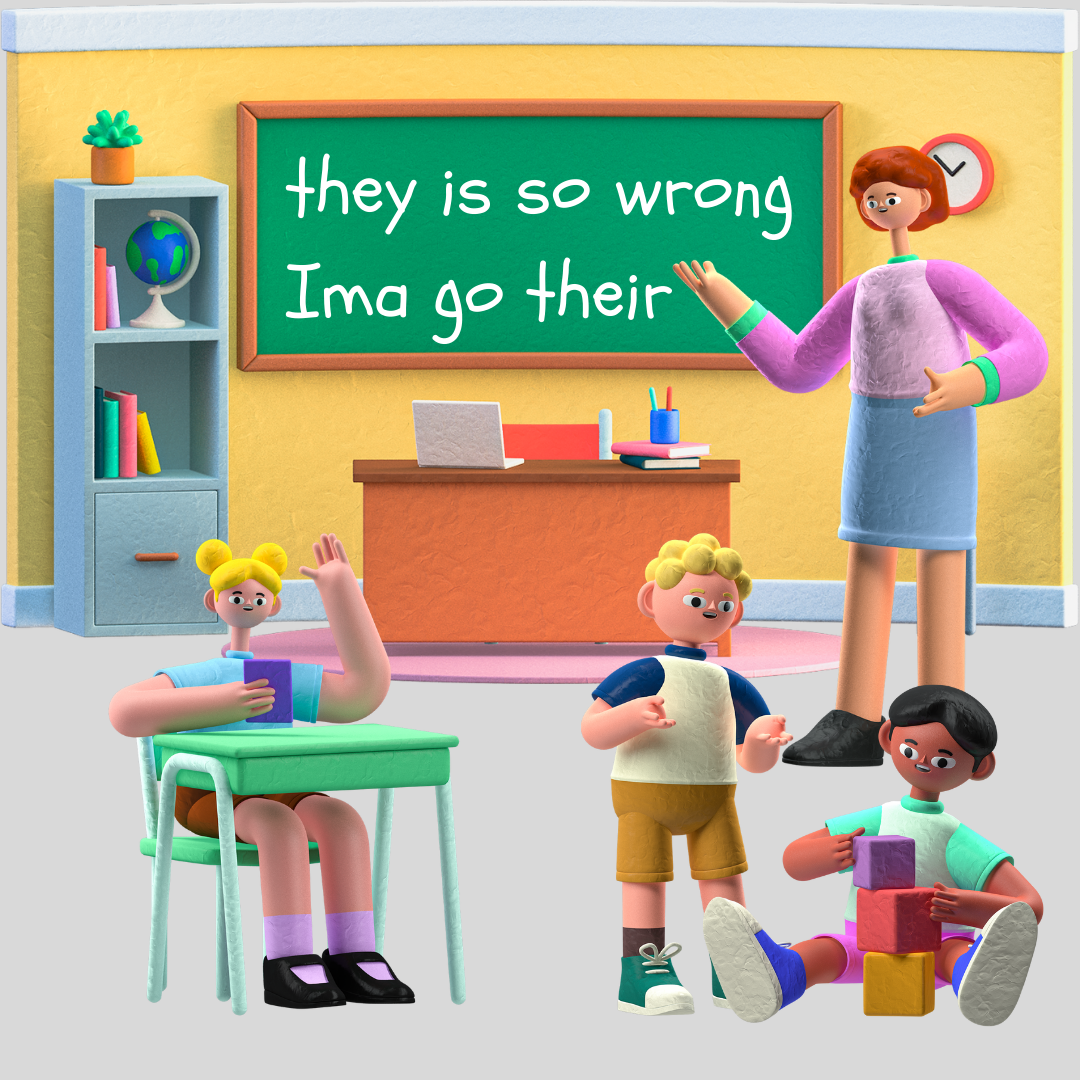
they is so wrong (1)

How do we avoid becoming pigeonholed by media influencers. Always read complete articles rather than just the headline or highlight. If you see a blurb on social media, go to the full article cited in the post and if a full article is not cited, consider the information suspect. And know your own susceptibility to misunderstanding. I recommend you review the YouGov survey results and see how you estimate common standards). The survey explored how people estimated groups in family, religion, ethnicity, sexual orientation, politics, income, and education.  Actual percentages were determined based on information from the U.S. Census Bureau, the Bureau of Labor Statistics, and the results of well-established polling firms.

Don’t be stuck on one side of “us versus them” when the middle group is actually where you will likely find most of your neighbors.

They isn’t right

I wish I could find in online so you know I didn’t make this up, but it doesn’t seem to be there. Last week on the local news they had a little throw-away story to fill up 15 seconds. The big news? Grammar mistakes. The line that stuck with me, and a couple of those in the studio also, was that of those surveyed, questioned, interviewed, or whatevered, the most common mistake they encounter is “when to use there, their, and they’re.” Well ain’t no wonder nobody can talk good English no more – that’s not grammar at all. That be spelling, you fools! And while we’re ranting over these three, you really need to be dumber than rocks to not know when to use witch, err, which.

Is it so bad that we now must include the misuse of grammar in our newscasts? Actually, [cue the groans] back when I was in school it would have been news to commit an error in grammar. What happened to the 3-Rs in grammar school. Oops, it’s elementary school now. No grammar required. If you ask me, and I know you didn’t just as well as you know I’m going to tell you anyway, 2+2=4, and you have to be dumber than a rock to not know when to use there, their, or they’re.

I wonder… Do you suppose this started when phones began to automatically correct and/or complete misspelled and partially entered words and phrases? We no longer need to know how to spell there. If we enter t-h-e-e-r, the computer in the phone, which one would think is smarter than your average rock, will correct it. Maybe. It can kind of go either way there. Their? Hmm. More significantly, if you enter t-h-e-r and stop right there, it might even think “hey, this here feller is wanting to type “there” so let me just put in the rest of it in there for you.” There now.

Or maybe… Do you suppose this started when Twitter popped on the scene with its original 140 character limit? (A limit which technically wasn’t a Twitter limit but was the most SMS could transmit which was how the initial Twitter messages were delivered which back then you might have known as twttr which also was an SMS limitation.) (But I digress.) Folks then were busy tryna make everything short. It was like reading vanity license plates. RU w me ther Spelling, grammar, and punctuation were superfluous to the message. Who knew that someday someone would be picky about word choice, spelling, and usage on say, a job application for a company other than twttr or Google.

(By the way, you should see what Word’s spell check and grammar checker are doing to this document. There are more red and blue lines than outside a polling place at election time!) (It was a struggle but I got politics into the discussion.)

Whatever is was to prompt people into thinking a spelling error is their most serious grammar error, it begs the question, how bad is their grammar – their real, actual grammar. How often are their nouns and verbs in agreement? (I’m going with “nouns” and “verbs” here because I’m not sure how they would react to “subject” and “predicate.”)  Have they ever met an infinitive they could not split? Do they know where they misplaced their modifiers? See, these are what I would cite if asked for the most common grammatical errors. Not a spelling issue! (Okay, so every now and then I don’t use a technically complete sentence when I write. Sue me.) And while I’m still thinking about those out there who are as dumb as rocks to be so concerned that they are misusing there, their, and they’re, why did nobody mention its and it’s? If they can grasp its versus it’s, what’s the big deal with there, their, and they’re? Too many to choose? Oh, or should that be two many, or maybe to many?

Rocks, I tell you. Dumb as gravel.

they is so wrong

The envelope please…

And the envelope please…

Ah, Major Movie Award time. The Academy is cracking down in unauthorized used of the gold statuettes’ nickname but you know what Major Movie Award I mean. The Major Movie Award ceremony was last night and I missed it – again. Intentionally. I love movies and this year I actually saw most of the nominees for the Major Movie Award best picture award. But I love old movies a whole lot better and I dislike awards shows even more. Awards shows, awards banquets, recognition ceremonies, even graduations, but especially awards show when anybody who ever got lucky enough to be cast in a good movie demonstrates how valuable screenwriters are. Anyway, I didn’t watch the ceremonies but instead, as is my custom, I watched a couple Major Movie Award winners from 60 years ago.

In general, forty years is my cut off.  If a movie is still entertaining (and relevant, if possible), 40 years after it first hit the theaters, then that’s a good movie. I would say I’ll be re-watching this year’s winner in 40 years but in 40 years I’ll be well ensconced in the centenarian camp, so…that’s a maybe.

So with all this experience of watching long-lasting, significant award winning movies from 40, 50, 60, 100 years ago, you’d  think I could pick out this years winner effortlessly. Yeah, no. A hundred, 90, 60, 50 years ago, significant was defined differently. Right around 40 years ago, it started to be more important to have the right message than to have the right stuff. But that’s okay. That only holds true for the “big” awards.  The true magic in movies, the costumes, sets, music, and cinematography are still awarded on merit so there will always be good old movies to watch. Even forty years from now.

moviefilm

It so happens that I am writing this before the Major Movie Awards ceremony and the announcement of best picture. So, given that I’ve seen them, what movie would I vote for if I were a member of the Major Movie Award voting bloc?  I will say I don’t think the one I would vote for will win, but it should.  I think several of the best picture nominees are definite possibilities for cinematography and costume and would be worthy of those honors. But those same movies have no story, no coherence, or are just not good enough to be “best.” And there are so many this year (10 nominees for best picture), the field is clearly watered down.  But I digress.

What movie would I vote for if I were a member of the Major Movie Award voting bloc? West Side Story. It will have a hard time getting to the podium.  Although remakes dominate moviedom, rarely do remakes get nominated for the best picture award. To win the award, the odds are greater than finder teeth in a hen, but just barely. Only twice has a best picture been a remake. (Ben-Hur in 1959 and The Departed in 2006). To make it an even higher mountain to climb, West Side Story is the first time a remake of a previous best picture winner (1961) has even been nominated for best picture.

So … if I don’t think the. Ivies I would vote for will win for best picture, where would I put my money? Although almost all of the rest of the world thinks, The Power of the Dog will be so honored, I think last night’s winner was CODA. But wouldn’t it be a hoot if Licorice Pizza walk away with it?

We could do this for the other 23 categories too but I have to get dinner on the table.

How did I do?

Change of plans

Remember those best laid plans from a couple weeks ago? Earlier this week I saw a news blurb on one of the local stations about plans. It seems all the rage among the over 30 crowd is to not make plans. In fact, according a majority of 30-somethings interviewed, they are most happy when plans that have been made are cancelled. I know you may find this hard to believe, but I’m going to disagree with that. I remember life in my 30s. I was thrilled when something got cancelled because there was so much else going on, when something fell through, maybe I’d actually be able to do the things I had planned!

Perhaps we should better define “plan.” You likely “planned” to read my blog Thursday morning yet here you are, seeing it for the first time on Friday. Was that really a plan or more an anticipation or expectation (depending on how disappointed you were upon not finding it Thursday morning). I thought you would be reading this Thursday morning. Was that the plan? Or was that an intention? Likely you speak to someone early in the day and may be asked “So, do you have any plans for today?” And perhaps you do but more likely you have aspirations of doing things if other things don’t prevent that from happening. And lastly, if you have a desire to remove yourself from your day to day activities, take a break, perhaps two weeks in a tropical paradise you have never seen and may never see again and you don’t want to miss the plane or would like somewhere to stay besides in the open on the beach, you may request time off, purchase plane tickets, book a hotel room, maybe even make reservations for a local attraction or two for those weeks in the sometime future. This is a plan and one nobody will be “most happy” with if it is cancelled.

2 + 2 5 (1)

I think when the 30-somethings say they don’t make plans, they are speaking of the first three examples noted in the above paragraph. I am sure that somewhere, there is a 35 year old sitting with a couple tickets to Barbados, maybe pre-paid afternoon at the spa and reservations at the Salt Café in his (hers?, its?) phone’s wallet. It may think it a commitment (especially after the first few payments hit the Discover billing cycles) but it started out as a plan. Those other things like anticipating a blog post to hit your email or announcing a day’s probable agenda are possibly considered commitments by that unspecified 35 year old and it might not want to commit to lunch with the brother-in-law and then wash the car this Saturday afternoon and thus would prefer to “not make plans.”

I suppose it’s all in the words you use and even though the English  language gives us a bazillion from which to chose (over 600,000 per the Oxford English Dictionary, 39 for “plan”) we opt to use those that are most familiar to us and cause us to do the least amount of thinking to choose, while saying to everyone else “I know what I mean, figure it out yourself!”

I don’t know who decided that but I plan to look into it.

Wake me in an hour please

You’re in for a treat this week. I am going to share the secret of happy, healthy living. And it has nothing to do with eliminating politicians but that’s always a good fall back. The secret that does not require physical violence is…are you ready…you should be laying down for … is naps!

The greatest cultures on earth embrace naps. I know, because I said so. Not the United States of America but we could hardly be called a one of the world’s greatest culture. But I digress.

This is not a new revelation for me, and likely not for you. Each time I’ve come out of the hospital I’ve succumbed to napping as part of my convalescence. Succumbed is the right word because the first few discharges had me fighting it all the way.  Americans don’t nap, we work in the afternoon – in the morning and late at night also. On rare, very rare occasions an executive may close his/her/its eyes for a short time after skipping lunch for a Power Nap. See, no great culture here. We can’t even nap restfully.

After the last hospitalization I felt so much more alive and in tune with my surroundings after a decent nap and I carried them over into my post recovery self life. Sort of. It didn’t last long. After a few months I was back to cramming as much activity as I could into those waking hours, even if the activity was just walking around looking for something to do. This time I altered things a little, I feel even better, and I think I can keep this routine going and invite you to join me. See, it’s not really a nap, not like the stereotypical afternoon siesta. It’s more of an intentional downtime, a short version or a riposo.  The riposo is the Italian version of a midday break. Many countries along the Mediterranean rim enjoy a multi-hour midday break. But it’s not a 3 hour nap. It is a time that work is set aside and family, friends, and self are the focus for a while. On my mini-riposo I used the time to call friends, to luxuriate in an extra long shower, to sort through my paints and make a list of what needs replaced, to make a fresh brewed iced tea, and to stretch out in the bed and close my eyes so I could really listen to the wind outside, and maybe even nod off for a short while. I shifted my priorities from “things I need to do today” to “I’ll get to them in a little while.”

2 + 2 5

Napping goes back to the source of just about everything, the ancient Romans. Boy those guys were busy. When they weren’t persecuting Christian’s, invading the Middle East, building aqueducts, or developing goofy numbers, they ate, and after they ate, they napped. I’ll skip the few thousand years in between them and me and note that today’s Romans don’t sleep as much during the day as the ancient counterparts and may devote only 10 or 20 minutes to actual sleep. The key to a happy afternoon is that riposo time spent not sleeping but simply resting.

There are actual studies (people will study anything if you throw enough grant money at them) that track sleep patterns and most nappers are more emotionally balanced, better learners and communicators, have better memory, and are generally more relaxed while also being more energetic. (The Sleep Foundation, January, 2023)

So I’m going to (try to) do what comes natural to about half the world, turn things down for a short while every afternoon.   Maybe I’ll fall asleep or maybe I’ll just rest and recover from the morning. Somebody check up in me in an hour so. I don’t want to get too relaxed and happy. Somebody might use me as an example of a great culture!

Best Laid Plans and All That

Ah, the best laid plans of men and morons. Get your vaccines, get your booster, have your supply of masks for the rare moments when you allow yourself time out of your own hovel, do NOT plan on entertaining a crowd bigger than maybe two. Still, you get covid.

Still, I got covid. And I got it bad. Yes that’s why it’s been over a month since you’ve seen a post from me, I got it bad, bad. Now before we continue, who ARE these people who get covid and are back at work in 2 days, smiling and grinning and passing ridiculous legislation like they had nothing more serious than a nose job adjustment. And just who ARE their second cousins who can’t go into the office but will work from home. I am not kidding when I tell you that I couldn’t remember how to turn on my computer one morning. Maybe it is because I have so many serious health issues to start, including being immunocompromised, that my body figured anything nonessential was really not essential!

Let me take you through what really happens when you breathe masklessly in the same space as some poor soul like me, from the first “hmm, I’m tired,” through hospitalization and a variety of transfers, to making follow-up appointments with all the medical community where more morons lurk in elevators and parking lots “defending their freedom” from the inhumanity of 40 square inches of material across their faces.

For weeks I’ve been trying to figure out how I became infected. I do as much on line, by delivery, or curbside pickup as I possible can for my shopping. Although sometimes it just isn’t possible and a quick trip into a store to the counter and back to the car is called for.  I wish I could but I can’t say I have ever, ever, ever been anywhere where masking was 100% (and/or 100% properly) executed. So since the beginning of the year there have been a place or two where I could have been exposed. I really should have known better and continued to Zoom or stream religious services but I went into the building where loving neighbors as themselves seemed to be a foreign concept and after two weeks I redirected myself to on-line religion again. That was also 1 week before the first sign of something in the body not functioning the way the anatomy books indicated.

The date was January 8, a Saturday, and a day I had spent most of it putting away Christmas decorations. I attributed the new cough to the dust and detritus generated from wrapping and packing. January 9, I woke to chills and shaking and a fever that would have made a dandy show and tell for an infectious diseases lecture.  A Sunday trip to the local urgent care center resulted in confirmation that my blood pressure and pulse were up, my coordination was down, that was a dandy looking sweater I was wearing and yes, you could fry an egg on my forehead. A swab was sent on mission up one nostril and out the other (actually it just felt that way but both nostrils were attacked from below), and I was given instructions to drink “literally gallons of water,” and check the electronic chart for results the following morning. January 10, shortly after the pair of acetaminophen tablets seemed to be kicking in, the phone beeped its “Message from My Chart” beep and I fumbled my way through the facial recognition security (apparently I looked enough like me even that early in the morning) to get to the results  – positive.  Crap. Calls to everybody in my family who may have been around me from January 1 (seemed like a good date to pick to me and all 3 other people (I told you you I don’t entertain big crowds!) agreed) and to my primary care doctor, who as fate would have, was recovering from his own battle with SARS-COV-2. Thanks to my weakened immune system, he managed to get me scheduled for a monoclonal antibody infusion, but unfortunately scheduled 3 days in the future. That’s okay, it’s the stuff politicians and former presidents got, I could wait.

Not Vaccinated SectionOn Thursday January 13, I drove myself across town to one of 3 clinics administering the more precious than gold elixir. About an hour later I actually felt better. The fever was low-grade rather than raging, the shaking and chills were reduced to a mild tremor, the squeezing headache relented, and the sore throat, eyes, sinuses, nose, in short everything north of the neck stopped hurting.  I figure in 2 days I’ll probably be breathing again. Ha!

For the next 18 days I woke each morning to take my blood pressure, pulse, temperature, and oxygen levels, always the same (good, good, low grade, good) then I pretended I was Howard Hughes, sitting alone in a darkened room watching movies, one after another. As long as I sat I was comfortable. Whenever I moved, I would become physically tired. Doing two things at once like standing and cooking, took as much out of me as a quick 5k around the neighborhood. I could do my own cooking but I often had to rest between cooking and eating, in the process, discovering that lukewarm eggs really do taste as nasty as reported even though I never had reason to question it before. I got neither better nor worse, but never “bad.”

That changed on Sunday January 30, my 3 week anniversary of the nostril invasion and subsequent positive test result. I woke up to my usual unchanging vital signs, made my breakfast, rested, ate my breakfast, rested, cleaned from breakfast, rested, then considered a nap. And for a few hours it was yet another day in the endless line of days that I was told would be always tiring and be slow to recover from. And then it hit me. Exhaustion like I’d never felt it. I could not walk across the room, the 14 foot room, without stopping partway and resting. Deep breathing was absolutely impossible, as was standing up straight. Shallow breathing was almost as impossible. In fact, breathing suddenly seemed a nee and elusive concept nit yet learned. Fortunately, my sisters had just stopped by to see how things were going and we commissioned their car as a civilian ambulance. The question was asked which hospital and answered without my input, one about 15 minutes north. No, I gasped, turn here. A mere 2 miles away was a new neighborhood hospital with full ER services.

I’ll spare you the details of the hospitalization, the tests the scans, the multiple IV attempts before hitting vein, the ultimate transfer to “the big hospital” because the current site couldn’t comfortably deal with the multiple problems I have and felt it was safer for me there. More test, more scans, more questions (yes I do know I have only one kidney, duh), more doctors!

To make a long story short (yes, yes, I know it’s much too late for that), all the days in and tests reviewed indicate my oxygen is fine and my lungs quite clear, I just cant breathe. With lots of exercise and home based therapy, I can strengthen the muscles that work the lungs which is where the virus decided to attack me and be back to my baseline by summer, maybe? (Everybody else gets pneumonia, I have to be different!)

So I leave you with this. If you’re going out, please wear your masks. Maybe you feel they infringe on your right to who knows what and who really cares, but when you don’t wear it, you are infringing on my right to live. Sorry but – I win. Wear your f-ing mask!

A serious send off – seriously, wear your mask, wash your hands, don’t breathe my air. If we were in the midst of some sort of global automotive crisis you know  darn well you wouldn’t take mechanical advice from (shudder) politicians, so don’t get your medical advice from your mechanic. If you’re really feeling the need to protest, don’t get vaccinated and put only yourself at risk for a cruel and unusual death. Leave the innocent bystanders standing please.