Fourth (million) and ten

I can’t help it. It’s been too long. I am going there. I have to do it. It’s time to fuel the fire. So let’s open the controversy right now. I don’t like football.

There, I said it. I don’t like football.

I don’t see the point. There’s no real skill involved, no sort of strategy, and it’s so boring! They budget 3-1/2 hours of TV time to play a 60 minute game, that has a total of maybe 8-10 minutes of action. Bowling has more action. Even golf has more action and I think that’s a waste masquerading as sport also.

But boy people go nuts for that “game.” Billions of dollars change hands every year because of it. According the BetMGM the average team salary of just the players is over $188 million. The minimum salary per player for 2022 is $705,000.  Let than sink in. Everybody out there who will make that much this year, please raise your hand. Anybody? No? Okay, how about this.  That $705,000 is $45,000 more than last year’s minimum salary. Who out there got a $45,000 raise this year for being the lowest paid employee? Hmm. How about, how many of you make $45,000 a year. Ah, finally, I see some hands.  NFL practice squad players earn a minimum of $11,500 per week, which comes to $207,000 for 18 weeks of work. These are the guys the teams use to play act as the opposing team during practices and possibly develop into “full time” team members. Think of them as football interns.

Of course, players aren’t the only ones on the field during a game. Also roaming around between the goal posts are the 8 referees officiating each game (technically 1 referee, 1 umpire, 5 judges and 1 replay official). They make an average of $205,000 per year. And we won’t even talk about the coaches. (But the lowest paid NFL head coach will make $3 million, but I don’t want to talk about it.)   

Enough about what people make playing the game. What about what people make playing on the game. ESPN estimates over 45.5 million people will bet more than $12 billion this year. The teams will split about $270 million of that.

And then there are some people who actually go to the games. They will spend about $10 million for tickets which represent only 1.25% of a team’s revenue. Three billion dollars will be spent on NFL merchandise, 2/3 of that on jerseys. It seems you aren’t allowed into a stadium without wearing a replica jersey. In case the team needs an emergency fill in? 

You might think I am bitter about how much money is generated by a group of people who were not finalists in their high schools “most likely to succeed” voting nor had to worry about which way to flip their mortarboard tassels. (If you understood that reference you probably aren’t an NFL football player.) No, I just can’t figure out how football became the American National Religion. Twenty-two men squat across from each other over a not round ball, officially a “prolate spheroid” (seriously – look it up), and after a series of grunts, they hurl themselves into each other with much banging and clanging of protective equipment. After everyone falls down, they pick themselves up, congratulate themselves on a fine display of testosterone, mill about for a while, then line up and do it again.

Twenty-one million TV viewers tuned into the NFL opener between Buffalo and Los Angeles last Thursday. That’s down from the 25 million who watched last year’s opening game. Hmm. I wonder. Maybe those 4 million people who have seen the light.

Blog Art 4


What we do today is because of the encouragement of those who came before us. The generations following us are built on what we share with them – facts and visions. Where will your visions of today fit into the world of tomorrow? Read a tale of encouraging visions at http://www.ROAMcare.org. It will be worth the few minutes.  


No, not yet

Across the USA and Canada, billions of people are celebrating Labor and or Labour Day. So there are probably millions of bloggers publishing the collective histories of the holidays. (Do you suppose there was some collusion that two countries came up with the same holiday within months of each other? It couldn’t have been coincidence, could it?) The few who don’t believe in organized labor but are more than happy to take the extra day off – with pay even – are celebrating the last day of summer. Now you see, that’s the one I don’t believe in.

Blog ArtFor as long as I can remember, which stretches back almost to halfway through the last century, Memorial Day has always been the “unofficial start of summer” and Labor Day its “unofficial ” end. Even the meteorologists get in on it, calling September 1 the start of Meteorologic Fall. According to my calendar, Fall doesn’t happen until the 22d day of this month and September 1 was National Tofu Day.

Yes I firmly believe Labor Day is NOT the end of summer. We might have furniture sales, we may frown on wearing white, and the pools might be closed, but the sun is still high in the sky, leaves are still high in the trees, and daytime temperatures are high enough to threaten heat stroke. That last point will be made several times, no, several thousand times over as high school and college athletes fall to the ground under the stifling weight and closeness of helmets and other protective gear in heat related injuries requiring no opponent contact, and marching band musicians and performers will do likewise in their often plumage featured uniforms designed for the coolness of autumn and the coldness of winter, football being a fall sport that often stretches into the still next season. We may not wear white but delivery and parcel service drivers everywhere will still be wearing short pants, and female TV news anchors won’t be giving up their sleeveless tops just yet. The pools and water parks might close but the lakes and swimming holes are still in business.

No, Labor Day is NOT the end of summer. We might be inundated with pumpkin spice everything and the food magazines may be featuring desserts with the classic fall warming spices, but in the backyard gardens the pumpkins are still only softball size on their vines next to the ripening tomato plants, loaded pepper plants, and never ending zucchini vines. Yard care still requires a lawn mower while the leaf rake and blowers stay hung on their hooks in the backyard garden sheds. Apple cider flavored donut holes may be featured in bakeries but cider presses are still idle waiting for the featured ingredient to ripen naturally.

So…Labor Day is the end of summer? Uh, no, not yet. Once again man makes up some oddball “rule”and then wonders why nature won’t follow suit. Well for me, I’m sticking with Mother Nature. Labor Day is NOT the end of summer. Stay tuned though. In a little less than a month you can consider having that tune up done on your snow blower. 


The grass in your side of the fence can be green too. The grass is reality, water is the motivation. Put enough motivation into a plan and you can accomplish anything. Let your motivation flow like water at www.roamcare.org. While you’re there, check out the rest of our site, then share us with your friends and family!


Based on a story by…

I don’t know why but last weekend I was thinking about Raymond Chandler, Ernest Hemingway, William Faulkner, F. Scott Fitzgerald, and Alfred Hitchcock. Not necessarily in that order. As I’ve written before, I don’t know why I think the things I do, but I do and that is enough to make me think, and then think that I’d rather not want to think about it.

It all started with me re-reading The Curious Case of Benjamin Button which got me thinking about how a movie and a book can be so different. A movie and a 600 page novel, an epic, the proverbial tome may differ because who could get all that detail into a movie people would be willing to sit through, except perhaps Gone With the Wind, but that has its own problems. But with Ben, or BB as I like to call him, that’s a short story, and still Eric Roth managed to write a 2-1/2 hour movie based on a tale that took me a fifth of that time to read, with a bathroom break thrown in. How did he do that! The answer is, he didn’t. Roth and story writing partner Robin Swicord wrote a different story with a title and a character of the same name. It’s a good movie. It’s a good short story. They just aren’t the same. And that’s been going on pretty much since we’ve had movies.

William Faulkner’s 1944 treatment of Hemingway’s To Have and Have Not does the same thing. A character or two are mentioned in both book and movie, and those plus the title are the total of what remains of the story the movie was based on. Now the 1950 adaption, “The Breaking Point,” by screenwriter Ranald MacDougall is much closer to the Hemingway classic. It’s on a different ocean and there’s an extra couple of characters, but it’s recognizable as being a story based on. But does that make it better than the 1944 classic or just different?

You can’t say that Faulkner, who was no slouch in the book writing department, was flexing his writing muscles, because he quite faithfully followed Chandler’s The Big Sleep, changing only what needed changed to make the movie acceptable to those who moderated the 1946 version of the production code (and to make it acceptable to those who wanted to see Bogart and Bacall become Bogart and Bacall). Perhaps that is why when Chandler took to the task of writing the screenplay to Patricia Highsmith’s Strangers on a Train, he stayed as close as he could to the original story. Oh wait, you’re going to say, they aren’t close at all. You might even say in the movie, the strangers are on an entirely different track than the one the train chugs along on in the psychologically thrilling novel. The “Strangers” presented by Alfred Hitchcock that we see is not the version Chandler wrote. That script ran afoul of the censors (and to a large extent, of Alfred) and was almost entirely rewritten by Czenzi Ormomde. 

When Chandler and co-screenwriter Billy Wilder adapted James M. Cain’s Double Indemnity, they took much liberty with the original story, changing names and timelines, and most radically, they added a new character, the insurance investigator, which created a completely different story.  

“Double Indemnity” and “Strangers on a Train,” a double dose of two books, two movies, four stories, none of them bad but none of them based on any other. So maybe when you have great writers adapting great works of writing, you will get great results, just not always recognizable as the story they are based on. 

Now let’s talk about what Leon Uris and Dalton Trumbo did with “The Exodus.”

Blog Art (26)


Blog Art (25)Everybody is more engaged and more fun to be around when they feel valued, and they feel most valued when they are treated like people. Read why we say good manners never go out of style at www.roamcare.org. While you’re there, check out the rest of our site, then share us with your friends and family!


More words please

Once upon a time I wrote a post and I said, “The English language is said to have close to a million words in it. I’m not sure who counted that but the most complete, or as they would put it unabridged dictionary of the English language, the Oxford English Dictionary, has about 620,000 words. But language doesn’t equal vocabulary. And vocabulary doesn’t equal language. The average educated English speaking person knows around 20,000 words and uses but about 2,000 words in a week of talking and writing.” There are some things those 600,000+ words just aren’t up to task when it comes to describing them. As in them, the things that need describing, not the things that are described. See, right there, that’s where 620,000 words are just not enough. We need more words! And here are some examples.

Blog Art (24)Speaking of things that describe, we’ve been so busy lately so busy making up rules about pronouns to effectively represent people, that we’ve missed it completely that when it comes to things. When writing, or speaking or even texting (although I hesitate to include text message characters as representative of the English language), and reference is made to two objects introduced in the same sentence, in subsequent reference to one or both (or even more!) our current batch of pronouns is woefully inadequate. And we end up writing things like, “As in them, the things that need describing, not the things that are described.”  We need a good shorthand way to refer to thing one and thing two through the duration of the missive.

IMG_2448If I tell you to picture in your mind classic gray sweatpants, you know exactly what I mean. The picture in your mind is unambiguous. And you no doubt can fill in the rest of the catalog with several tops (long, short, and sans sleeves) and short versions of those pants. But what’s the stuff they are made of? We can describe it, but can we name it? Gray sweatsuit material is just too long. It’s usually cotton but to say, “it’s too warm today for long pants, I think I’ll exercise in my cotton shorts,” sounds like I’m headed to the gym in my underwear. Athletic wear is confused with athleisure which is just spandex you wear in the outside. Technically that gray stuff is a sort of flannel but if I say I plan to jog in my gray flannel suit, people will expect to see someone running down the street more formally attired than I’m comfortable running in. Nope, we need a new word for gray sweatsuit material and that’s that.

Body bathers, time for you to tell me what you call this: hmm, these:IMG_0027

While you’re wondering what kind of trick question this is, I’ll speak to the others for a moment. I figure there are three kind of showerers/bathers. There are those who use something like that picture, there are those who use a wash cloth, and there are those (usually very macho men who smell not much better apres shower) who stand under the water, make some squealing type sounds while lathering up with just the soap (usually bar soap) and slapping or rubbing it in with their bare hands. You’re going to say, “But what about loofah users? That makes 4 kinds.” I don’t think there are any loofah users left in the world. They’ve all died out from fungal skin infections from not properly washing their loofahs, which by the way, are not represented in that first picture. The things in that picture are puffs, body puffs or so they are called if you were to look for them on the internet. These are not to be confused with powder puffs, steel wool puffs, or crab puffs. Nor actual loofahs. The point is, there too many puffs. We can’t just call anything that is puffy a puff. We need at least 4 new words added to the army of 600,000.

Blog Art (23)

Actually, the real point is, I didn’t have anything to write about this week so I stretched things a bit. You might say, I published a piece of puff — but by no means, a puff piece!


Blog Art (22)Did you on June 29 Earth completed a full rotation on its axis 1.59 milliseconds ahead of schedule? Time flies! We talked about that last week at www.roamcare.org? Get over there now and read what we had to say.

While you’re there, check out the rest of our site, then share us with your friends and family!


More things I think I think, I think

Sometimes I think those things that I think and I think what the heck am I thinking? For example for instance like:

We all have had red towels or blue jeans or black shirts that we will not under any circumstances wash with anything else the first maybe 3 or 4 times until the color stops bleeding because we don’t want to pull pink, or robin’s egg blue, or gray clothes from the washer. But we don’t do that with white. Most white textiles don’t start out that white. That’s a dye that makes them white but we happily toss them in the wash right from the get go. Every now and then as we are we sorting and folding and hanging and doing whatever in order to out away those freshly laundered clothes we will look at a load and say, darn, these shirts/jeans/towels/socks and underwear are fading.  Has anybody out there ever considered that maybe they aren’t fading but those new white jeans you tossed in the load had bled white dye? Just wondering.

Or make this for like example:

Remember when I talked about my microwave being a real nag. It still is and it still beeps periodically whenever I’m not in a hurry to take out whatever it was that I put in there. And I asked, who forgets they put food in the microwave? And then I answered myself. Stoners man. Well, I’ve been so intent on making sure I get stuff out of the microwave in a timely manner before it beeps at me, that I never noticed when I open the door, it beeps at me. Why? I know I’m opening the door. Do I have to be warned that I’m opening the microwave door? Who else would care that the microwave is being opened? And then it dawned on me…stoners, man! Those same guys who would stick a bag of popcorn in the microwave and in 90 seconds completely forget about it, are the ones who would want to know if somebody else is making off with their popcorn!

Or sometimes like this:

Regular readers, or even irregular readings if they read the right posts, know I like old movies. Old like 1930s, 1940s, in a pinch maybe early 1950s movies. As far as I’m concerned, and as far as anybody else with half a brain knows, they were just better back then. Really long term readers know I like to read movie credits. They were better back then too. They were certainly easier to read. A casual movie goer has no idea who did the accounting or catering or painted the scenery for Casablanca. As it should be. It seemed sometime in the 60s, when movie making took a decisive down turn in quality, they also wanted the viewer to know everybody who came close to the camera, even the guy who drove the truck that pulled the trailers the movie stars hung out in when they weren’t in front of the camera. It was sometime then they also made a monumental change in the credits besides just crediting everybody and their proverbial brothers. And this one made sense. The copyright date. Sometime in the 60s or maybe 70s, they started publishing the copyright date in Arabic numerals. Those are the numbers like 1,2, 3 (which is weird because they were “invented” in 6th century India) rather than I, II, III (you know, Roman numerals, which oddly really were invented around Rome, or roughly the area that modern day Tuscany occupies). You can read the entire credit crawl of In a Lonely Place and never lose your place until you get to the copyright. Then it’s “hmm, let’s see, MCM, that’s easy 1900. Okay now, XLI… dammit, come back! I almost had it…wait, that’s too many characters anyway. It came out in ’50, that’s just L. Or did it. Oh H-E-double hockey sticks, now I have to go look it up.” Even old books published copyright dates in Roman Numerals. Why couldn’t they have used real numbers then? Was there a law? We got a bunch of other crazy laws, so maybe so.

And then that started me thinking about crazy laws but we’ll let them pass for now.

If you’re curious…In a Lonely Place indeed was released in 1950 (MCML) but the screenplay was copyrighted in 1949 (MCMXLIX).

2 + 2 5


0A79A615-12D6-4721-B5A3-2771503E058CWhat’s the most significant day in your life? Did we answer that question last week at www.roamcare.org? Get over there now and read what we said about that!

Check out the rest of our site too, then share us with your friends and family!


The Ignoble Experiment

From 1920 to 1933, America conducted its “Noble Experiment.” I’ve never been able to dig up a good reason for that moniker, yet every written piece on Prohibition in the United States makes that reference. It took over 2 years for the required number of states to approve the 18th Amendment banning the “manufacture, sale and transportation of intoxicating liquors” but conspicuously not their consumption. On the back end, 10 months and 10 days were all that was needed to adopt the 21st Amendment, repealing Prohibition. (Fun facts, the two amendments in between both involve elections – sort of. The 19th Amendment granted women the right to vote (1933), and the 20th Amendment moved the inauguration of elected federal officials from March to January, and limited the President’s term in office to a maximum of 10 years (1935). Funner Fact, the 20th Amendment is the only amendment to the Constitution that has not be challenged in front of the Supreme Court of the United States.)

So why this history lesson? I’ve been struck by the similarities of what went on with alcohol then to what goes on with marijuana now. Although you may not realize it, and movies depicting life in the wild west might suggest otherwise, America wasn’t a drunken wasteland prior to Prohibition. Alcohol was a part of daily life and contributed to life’s problems, but not to the extent temperance supporters had suggested. The final push for Prohibition came not as a result on the revivalists activities but ostensibly to shift the use of grains to the manufacture of food verses drink during the first world war.  In fact, twelve states had already adopted prohibition laws before the 18th Amendment was out before Americans for ratification.

That doesn’t mean Prohibition was universally accepted. For a while, ten states refused to enforce prohibition laws after ratification, and Prohibition never did result in a total ban on alcohol. Sacramental and ritual wines were excluded and any individual could, on a physician’s order, buy up to 10 ounces of alcohol as often as every 10 days at a licensed pharmacy. (It is probably just coincidental that the Walgreen pharmacy chain grew from twenty stores to over 500 in the 1920s.  Breweries were permitted to manufacture and distribute “near beer” that contained less than 0.5% alcohol. Distilleries sold malt syrup and wineries grape concentrates with instructions for home dilution and fermentation. If the westerns depicting bawdy saloons were overly fanciful, movies featuring Prohibition era speakeasies may be have overly kind. Black market alcohol was estimated to be a $100 million business (equal to about $1.5 billion today).

The repeat of prohibition was strictly economic. Prohibition had cost the federal government $11 billion in tax revenue ($191 billion today). But the repeal was also not universally accepted. Several states maintain prohibition laws, the last, Mississippi, finally reversed its prohibition status in 1966. There are still to this day various counties in ten separate states that continue to ban the manufacture, sale, and distribution of alcohol.

Where are the comparisons to marijuana? There aren’t many except for a few million people clamoring for its legalization, states unevenly enforcing federal prohibition against it, local jurisdictions “decriminalizing” it, shyster shamans touting it as a medicinal, unregulated relative compounds sneaking their way into the marketplace, and states drooling over lost tax revenue that they never lost because they never had it in the first place.

You might assume from that last paragraph that I’m not a fan of legalizing marijuana. Yes and no. Are there medicinal benefits. There are indeed benefits of cannabinoids but not of the whole plant. And there are means to extract these cannabinoids, refine them, and compound them into consistently reproducible absorbable forms. And they are in fact already on the market and no I don’t mean CBD (although that has some limited use). For the rest of it. No. Alcohol and marijuana other are both addictive hallucinogens and any purported medicinal benefit from either is related to that. There is nothing that a bowl of marijuana will do that a shot of whiskey can’t. Except for one thing. I’ll explain it to you very simply.

Let’s say the two of us are sitting on my porch. I want a beer and you don’t. I drink the beer. Nothing happens to you.  You might have to listen to me sing the entire ABBA canon a cappella, but once we finish that you can get up and walk or drive home unimpaired. Let’s swap out a joint or a bowl for that can or bottle. Given enough time imbibing in your marijuana and I will be just as likely to test positive at the next random drug test on the job.

Don’t believe in passive absorption? Go ask a flight attendant with lung cancer who never smoked. But you better find one quick. There are a great many of them who will be among the 7,300 will die from passive smoke related lung cancer this year. Next year too. And so on and so on and so on.

Do we need another Noble Experiment? That’s not for me to decide. I’m not a legislator. Sort of like it shouldn’t be for a legislator to decide what makes for good medicine. Cheers.

Untitled1


Your wealth is in your well-being

Someone finally hit it. The billion dollar plus Mega Millions lottery prize has been won. By one person. Or by one ticket. It could have been a pool of a couple dozen people each throwing $10 into a hat to maximize their odds. Or I suppose that technically would be to minimize their odds. I wasn’t one of them. Although my odds were just as good. I’ve written about it more than once. Everything in life is fifty-fifty. No long odds there. Either it will or it won’t. Either it doesn’t or it don’t. Pass or fail. True or false. That’s life.

But somebody’s coin did fall heads up, or tails down if you’d rather and they woke up Saturday morning at least $350 million richer. That’s about what they would get out of a billion dollar prize after taxes if they took the cash option. Of course from that they would have the fees they will undoubtedly incur when they hire the some bodies to advise them if they should take the cash or wait out the annuity payments, to rewrite their wills, trusts, and all the other legal things suddenly mega-rich people need, to find them suitable new houses (at least 3), cars (5), boats (2, maybe 3) and a plane (just one), to ghost write their book on how to become a billionaire and to represent their book and the movie rights, someone to see them “professionally” to deal with the psychological trauma of saying no to so many people who will be asking for money, and finally, the private security firms to keep people away so they can’t ask them for money. After all those expenses they will have at least a quarter billion left and will complain that everybody has a piece of their good fortune except them!

Since those earliest hours of Saturday morning when the announcement went out that there was a winner, pundits, professional and thems like me, have been churning out “ah, but the real wealth isn’t in dollars and diamonds, it is deep within you” articles. And you know what? They’re right! Oh I’ve been rich and I’ve been poor and believe me poor is a lot better. No, that’s not original. That line has been attributed to almost every rich person to walk down Hollywood Blvd. but it’s true. I have been both and on balance, I slept better richer. But I don’t know that I would say I was happier. I likely wasn’t although I was never billion dollar rich versus living in a cardboard box poor. I’m sure there it is difficult to convince someone they have all they need as long as they have love in their hearts when their bodies are living on the street. But on balance, you shouldn’t need a billion dollars, or even 250 million to be happy.

So for the several billion ticket buyers who did not win, please join me in saying, I have my health, clean water, food, clothes, and a roof over my head and I’m rich beyond my dreams. But boy, once I’d like to know what really rich rich feels like. Hmm, I understand the Power Ball is up around $170 million. That would work too!

Blessitude Posts (1)


Blog Art (17)

Did you take the Ever Will I Always quiz at www.roamcare.org last week? What are you waiting for? Get over there now and see how good a person you really are!

Check out the rest of our site too, then share us with your friends and family!

That’s what happiness is!

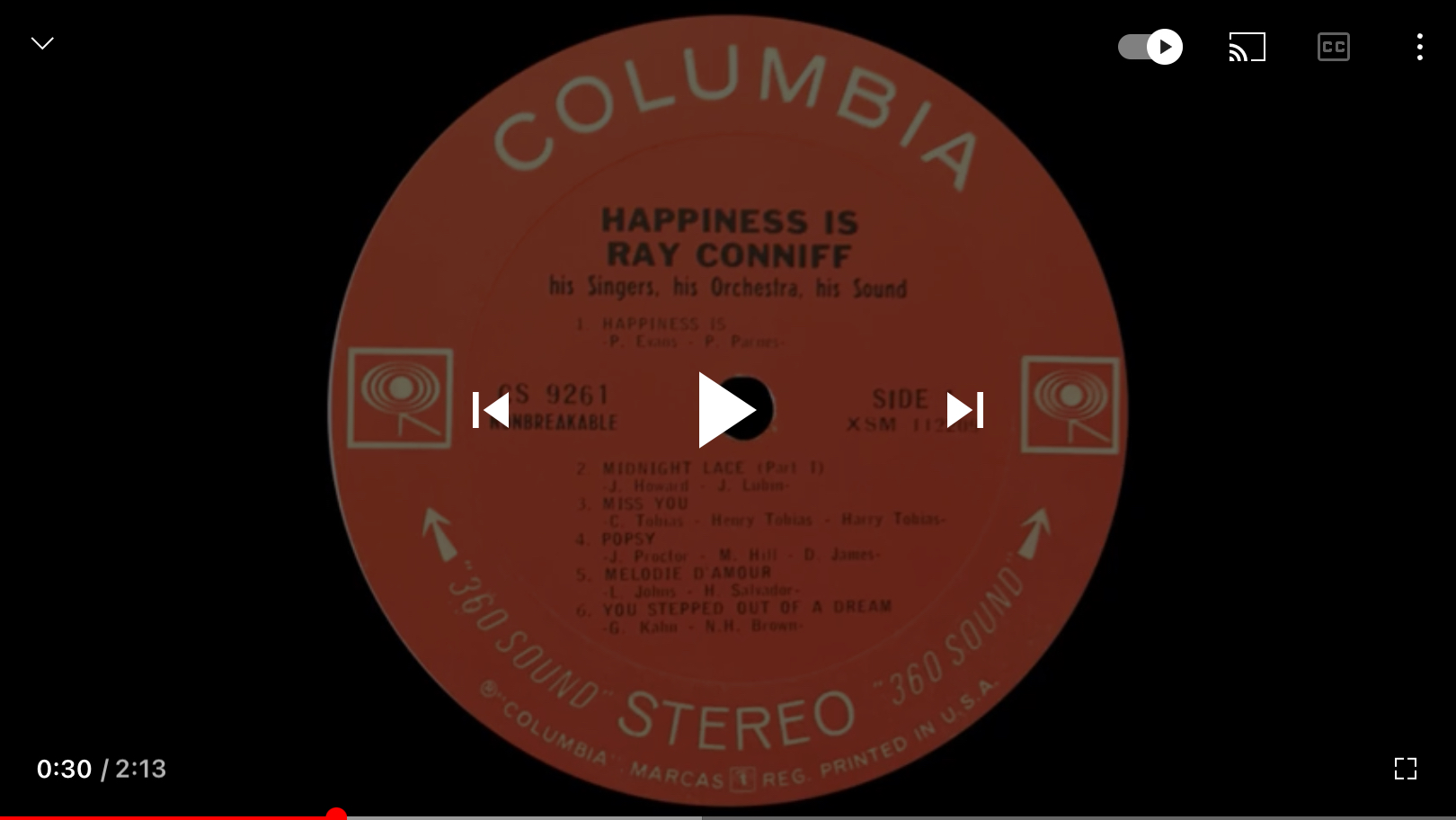
A couple days ago I was doing my housework and had just completed the vacuuming part of the dust and vacuum routine. I looked across the room as I was stowing the machine’s cord and broke out into a big smile. I might have broken out in song but if so I was singing subconsciously. If I was singing at all, I would have been singing along with the Ray Conniff Singers as they warbled they way through the 1966 Parnes and Evans composition, “Happiness Is,” for few things instigate as big a smile on my face as seeing those parallel tracks of the vacuum wheels across a newly cleaned carpet. I was struck so happy by the event, I actually remarked on it to a friend later in the day, questioning if she too experiences that odd joy. “No,” she literally deadpanned, “but the husband does. It must be a guy thing,” and dismissed the entire event as something only half the world could enjoy.

Eh. She’s probably right. In fact, vacuum tracks in carpets bring inordinate happiness to probably even less than half the world because I know for sure there are way more men who haven’t even pushed a vacuum around a living room to have seen such a remarkable sight. To them, an oil pan drain plug not leaking after a DIY oil change likely brings that profound happiness.  The point is, as Ray’s singers will have you singing along, happiness is “different things to different people!”

These aren’t the pillars of happiness: life, liberty, and the pursuit of really big, life changing events. These are the little things that are part of getting us from one hour to the next, the things that turn drudgery into if not joy, at least something faintly tolerable.

It won’t solve all of earth’s problems, but it is possible that if we spent more time enjoying what makes us happy and less time becoming frustrated when we can’t figure it why we aren’t as happy as others doing what makes them happy, or worse trying to foist our idea of happiness onto anyone else, we might all end up a little happier. And happier people are less likely to instigate world wars.

People are unique. Even people who grow up together, live together, and love together, don’t have to love everything about each other. Yes, it is the differences among people that make us collectively great, but it is appreciating the differences and encouraging others to pursue those differences that bring them happiness that make us collectively awesome!

Somewhere in your psyche is some quirk of life that brings you immense joy. Relish in the quirk and savor that joy. Don’t give it up for anybody and if somebody should ever admit to you that they get untold happiness from hearing the creak of a rocking chair, encourage them to creak all they want and hope they someday will encourage you to continue chasing your dream of parallel tracks on carpets, or whatever makes you smile at the enjoyment of living life. Because, that’s what happiness is.

What’s your happiness?

IMG_0002

Happiness Is


Blog Art (16)Did you stop by ROAMcare last week to read the meaning of life in five words. It’s worth the 3 minutes it takes to read the other 495 at www.roamcare.org. And check out the rest of our site too. Everything you need to refresh your enthusiasm for life with that extra motivation you need to push through the day! Stop by and visit, then share us with your friends and family!

Brain Dump – Again!

Welcome to a new edition of “Let’s clear those brain cells!” or “Of all the things I’ve lost, I miss my mind the most.”

IMG_2117Stay in your lane

Well, this fellow actually found his own lane to hang out in. I’m not sure what the laws in your state are but here, that much yellow paint in unmistakable diagonal lines means “no parking.”  This isn’t so bad. At least he isn’t parked in the diagonal blue lines next to a handicap space.  [sigh]

Shopping math, cyber edition

If you haven’t read any of my posts on toilet paper math, go there first. My daughter brought this one to my attention. So many discount, rebate, and coupon sites now are online, and all of them offer to find you the absolute best deal available – compared to regular posted prices. When you load multiple versions you are apt to find one offering you 5% of the regular price but only if you shop at the store with a coupon, another with 2% off the sale price but only if you shop online, or another offering free shipping but only if you buy it in magenta and are willing to answer a 45 question survey first. On a Tuesday. This all started when I mentioned I bought a new iPad last week from Amazon but I could have gotten the same deal at Target and saved 5% with their Red Card. I was all set to do that when it dawned on me that I was using a couple hundred dollars in gift cards that I had gotten by answering a variety of 45 question surveys and that beat 5% any day! [duh]

IMG_2029Old enough to drink

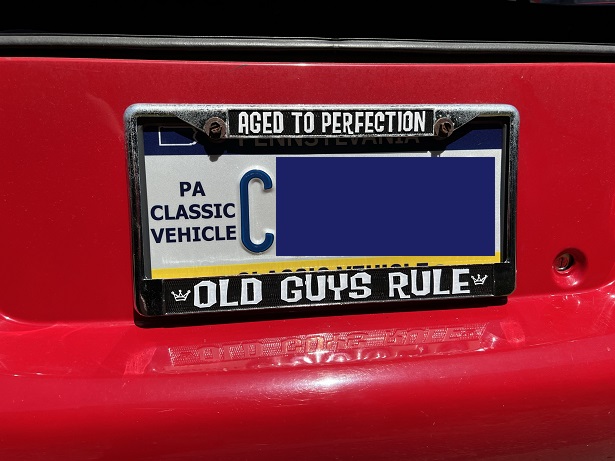
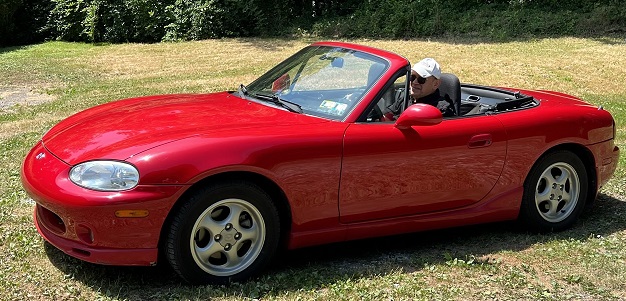
Last month my little car hit a milestone. It turned 21. Actually, It’s nearly 23 now but I don’t count the years before I adopted it. In honor of it’s birthday I had it retitled as a classic vehicle. As a classic I was able to negotiate a replacement price with my insurance company which is a good thing because given its condition, it’s worth more than 2-1/2 times the actual “blue book value.” Oddly enough, now that it is insured for 3 times what it was two months ago, the annual rate dropped by exactly half. I know the insurance company isn’t going to lose money on this deal. Hmm. I wonder if those guys ever took toilet paper math.

samsung-and-apple-logoBrand Disloyalty

I mentioned a few brain cells ago that I recently purchased a new iPad. It replaced a Samsung Galaxy tablet which itself replaced a Nook e-reader, which replaced a Bookman. (If you don’t recognize Bookman, you aren’t missing much. I don’t think it has been around since sometime in the 90s.) For some people, the thought of switching operating systems is absolutely unheard of. Families have been torn apart because someone dared stray from whatever everyone else had. Not me. I can flex. Right now I have an Apple phone and tablet, a Dell laptop and an HP desktop running Windows. The old tablet could mirror with the laptop but the desktop is so old it’s more of a paperweight right now and it only mirrors my reflection in its almost always darkened screen. It’s only the third desktop I’ve owned, the previous was a Gateway (wow, remember them!?) and before that, an Apple. Yes, in 1984 I bought my first Apple which was probably before some of the people who are running that company now were born. I doubt I’ll ever replace the desktop with another Apple. I doubt I’ll ever replace the desktop. When the laptop goes (and boy do they go – I can’t keep track of how many laptops I’ve had), I’ll figure out who has the best deal for what I want to use it for, of there are any deals available, and who has the best coupon code to use. But only after I review my post on toilet paper math.

That’s it for now. See you later!

IMG_2076


Blog Art (14)Did you stop by ROAMcare last week to read our take on “Special are those who plant trees knowing that they shall never sit in their shade,” the counterpoint to my post here last week? If you missed it, you can check it out now at www.roamcare.org. (Later this week we explain the meaning of life in five words! That posts Wednesday, July 20. You’ll want to read that one for sure!)

Mortgaging the future

Mortgaging the future. That’s a term now more often associated with sports. When a team’s general manager is willing to trade young players and prospects for an established star player who can help the team win right now, usually at trade deadline, usually with the hope that one roster addition means the difference between a championship and an also-ran season, he is said to have mortgaged the future of the team, knowingly trading away the two in the bush for a bird who might not eat out of his hand.

What got me thinking about giving away the farm for a chance at immediate fame and glory? It was a different blog for a different audience at a different site doing the final edits for this Wednesday’s post to be released on the ROAMcare site. That post has nothing to do with giving anything away, especially the future. Quite the opposite. I will share the teaser for it.

“We have a responsibility to prepare for the future even if we might not be here for it. We become truly great when we are willing to plan, prepare, act, and do that which will not benefit us. Are you ready for that?”

When you spend so much of your time always motivating you can, and I do get a little wacky now and then. It’s hard to be motivating without getting emotionally wrapped up in all that those topics touch. Perhaps we should be called emotionalvating authors and speakers! Anyway… I got to thinking. If we become great when we do something now when we know for sure it will not benefit us at all in the future, what do we become when we are willing to give up something we know we are guaranteed to have in our future for a few extra minutes of immediate gratification.

First, let us understand there are sometimes when it might be perfectly acceptable to trade something in the future for something in the now. For example, there might certainly have been some time in your life when you said, “I would give up anything to be able to [fill in the blank].” That might well be considered an altruistic approach to life. No, the type of trade off I am thinking of is more like, “I don’t care if I ever get to do that again if I can only have what I want right now.” And not even what I want right now and then have forever. Just for what I want right now. For another example, would you give up having contact with your entire family forever if you only could have an hour of somebody’s unwavering attention right now? Preposterous, you say? Nobody would ever do that?

Think about it. Isn’t that what an unfaithful spouse is gambling? The loss of a lifetime partner in exchange for an hour of physical bliss. What about the child who leaves home, swapping all the ups and downs of being a family to set out alone because “they won’t support my dream?” What about the addict, knowing they are an addict, but having to have that “one more bump even if it’s my last” and not caring if indeed it will be? These are far different than “I’d give anything to have one more dinner with my deceased parents.” These are, “He (or she) makes me so happy I don’t care if you don’t ever talk to me again” and really meaning it, which then more often then leads to “I’d give anything to have one more dinner with my not yet deceased parents.” And really meaning it.

Often the idea of giving up the future to satisfy the present really doesn’t mean giving up the future. Perhaps it means altering it a bit, but rarely do people truly mortgage their future. The otherwise never disgruntled employee who leaves a job because he “can’t believe they would promote that fool,” doesn’t leave without knowing he still has a talent he can sell, and he will still see his colleagues at meetings and conferences. He isn’t giving up anything.  But when that same person who says, “These few minutes with you mean everything in the world to me and I don’t care who knows it,” when he is not speaking to his wife and his wife knows it, and so does her lawyer, now he has mortgaged his future. The child who says to his parent, “If going to school across the country means I never see you again in my life, then I would rather never see you again in my life,” is mortgaging his future.

Have you ever wanted something so badly you would give anything (really, anything!) to get it? Have I? Had I? Is it possible we may have had done just that without realizing it? If you think about it, the people who would trade their futures, and presumably others’ happiness, to indulge themselves would seem to be pretty low on the “nice to be around” scale. But maybe at the moment we don’t realize that. They, or we, likely have many good qualities. They may enjoy professional success and the company of friends. Maybe it is only after discovering there could have been something more permanent, more committed, more faithful, that the question of “what brought me here?” is raised. Maybe they (we(?), I(?)) have traded the commitment of close companionship or the unconditional love of others for the attention of the few and immediate gratification and not yet realized it.

So, are there any good people who thrive on commitment and pure love? Yep, there are. They are the people willing to do now that something they will never get enjoyment from so others will benefit in their futures. I will be speaking of them in that other blog on Wednesday. It’s a better story than this one. Mark you calendar to go read it in a couple days.

Blog Art (15)


roamcare_logo-3If you haven’t had a chance to visit ROAMcare yet, stop by, refresh your enthusiasm and read our blogs, check out the Moments of Motivation, or just wander around the site. Everybody is always welcome.