It’s a Hockey Night

The National Hockey League season began last week and I got for the second time to see the Stanley Cup and watch a championship banner being raised on an opening night. I’ve been watching hockey in my home town since before there was a NHL team in my home town. I saw a pro AHL hockey game before I saw a MLB baseball or NHL football game. And I even understand most of the rules.

Hockey is the perfect sport. It has the grace of skating, the power of football, the strategy of soccer, and the speed of Formula One racing. Hockey fans are engaged with the play on the ice. The pace of the game means most minutes are spent watching the action. Without stoppages between each play and possession change there are few opportunities for bad behavior. I defy anybody to go to a hockey game and not have a good time. In the words of hockey Hall of Famer “Badger” Bob Johnson, every day is “a great day for hockey!”

greatdayforhockeyIt’s been great days for hockey since the 1920s when the NHL fielded ten teams. Because of the Great Depression and World War II, several of the original teams folded or suspended operation. By 1942 only six teams remained and are today considered the NHL’s Original Six – Boston Bruins, Chicago Black Hawks, Detroit Red Wings, Montreal Canadiens, New York Rangers, and Toronto Maple Leafs, all still playing. In 1967 the NHL undertook a major expansion and added six more franchises, the Next Six or Second Six – California Seals, Los Angeles Kings, Minnesota North Stars, Philadelphia Flyers, Pittsburgh Penguins and St. Louis Blues. The Los Angeles, Philadelphia, Pittsburgh, and St. Louis teams continue to play in the NHL. The California Seals originally out of Oakland, California moved to Cleveland in 1976 and played as the Barons until they ceased operations in 1978. The Minnesota North Stars moved to Dallas and changed their name to the Stars. Today the NHL consists of thirty teams across the United States and Canada.

Just because the action stays on the ice doesn’t mean that hockey fans don’t bring their own fanaticisms to the rink and don’t have just as many of them outside of the games. For years there was an enthusiast who sat somewhere behind me who began early in the game and continued throughout the 60 minutes of play exhorting the home team to “bury the biscuit!” So persistent was he in his chanting that we dubbed him Barry the Biscuit. I didn’t hear his cry last week at the opener. Perhaps he has given up his song.  Or perhaps because I changed my seats I just wasn’t within hearing range although my daughter claims she even heard him on a televised gamed.

Over the weekend I got one of what seems a weekly hockey catalog in the mail. Each one can be counted on to display replica game jerseys (or sweaters as hockey aficionado prefer), shirts, caps, jackets, cards, pucks, and sticks. Over the year more – um relaxed apparel has been featured including tank-tops, pajamas, robes, even swimwear. Perhaps they’ve always been available and I just missed them but this year, in quite a prominent spot just opposite the order form, was a full page of intimate apparel including women and men (yes, men) thongs. Hmm. I suppose somewhere for someone it’s a great night for hockey.

That’s what I think. Really. How ‘bout you?


Troubled Waters

Perhaps the almost constant news of Hurricane Matthew got me thinking about water and oceans and being safe. Being about 350 miles away from the Atlantic, my personal experiences with hurricanes have been mostly rainy days and newscasts. The last time I remember a hurricane making a direct impact on my town was Hurricane Ivan in 2004.

I can never figure out why American journalists have decided that the best time to go to the beach is when a hurricane is due to hit land. While the news anchors are exhorting the public to move inland, the field reporters stand on a dock somewhere in the wind and rain with boats jostling on the waves behind them telling those who tuned into the newscast that they are on a dock somewhere in high winds and heavy rain battering the boats left behind by their evacuating owners. The boats will be fine, fellas. How about spending some time with the boat owners and everyone else hunkered down in a shelter fearing for their lives and loved ones.

Something completely unrelated then got me thinking about ships at sea. I’ve never been on a ship at sea. The only times I’ve been on any boat larger than one you can pull behind your SUV was a ferry from Long Beach to Catalina (a once was enough experience), a sailboat in the Gulf of Mexico (a once in a lifetime experience), and a fishing boat on Lake Erie (a perennial favorite). In yesterday’s paper there was an article about some guy who posted a video of a ghost ship sighted on Lake Superior near Marquette, Michigan. Experts said it probably was a lighthouse that appeared to be moving because of visual illusions due to water vapor and mist. The article wrapped up saying that between 6,000 and 30,000 ships have been lost on the Great Lakes.     le-griffon

Wait a minute. Between 6,000 and 30,000 ships have been lost on the Great Lakes? That’s a heck of range. Because I have that kind of time (as you by now undoubtedly know) I thought I’d do some research. I found about 150 documented shipwrecks on Lake Erie alone. (I started there since if it ever should come to it, that’s the body of water that would probably do me in.) In all, I found documentation for 302 ships that sunk in the Great Lakes since the “Le Griffon” went down in a storm on Lake Huron in 1679. That’s a far cry from 30,000 but that’s still a bunch of boats. How would that compare to an ocean, say the Atlantic Ocean with its annual 6 month hurricane window?

Again, because I still have the time, I did some research. As near as I have been able to put together, beginning in 1600 (so we can compare oranges to oranges) I found 310 ships going down – excluding warships during times of war – in the Atlantic and her contiguous seas. The cynic in me thought with the size, scope, and weather on an open sea that there would have been more. The good guy in me appreciates the lives spared on all the thousands of ships that stayed afloat. Although many wrecks were attributed to weather conditions, I was only able to determine that five went down in hurricanes. The most recent was the freighter “el Faro” that was lost in Hurricane Joaquin last year.

I’m not sure how I got from hurricanes to Lake Huron nor from there back to hurricanes. If you do, you probably understand my mind better than I. And that is truly something to be scared of.

That’s what I think. Really. How ‘bout you?
(Image of “Le-Griffon” By Father Louis Hennepin, via Wikimedia Commons, PD)


Finding America

Happy Columbus Day. Sort of. Traditionally in the United States Columbus Day was established on October 12 commemorating the day when Columbus landed on what is now San Salvador in the Bahamas. But then the greater American tradition of moving as many holidays to a Monday to create 3 day weekends overwhelmed the quaintness of memorializing an event on the date the event happened so we are celebrating it on the second Monday of October, October 10 this year, instead.

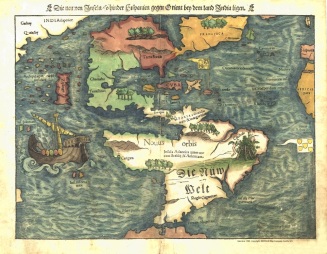
Now we can contrast that with the traditionally traditional argument that we shouldn’t be celebrating a Columbus Day at all, on a Monday or a twelfth day, or an any day. We should instead recognize the contribution of Leif Erikson who landed on what is now Newfoundland almost 500 years before Columbus made his pitch to Ferdinand and Isabella. To that end we have Leif Erikson Day celebrated on October 9, every year. Nobody really knows exacnewworldtly when Leif wandered past Baffin Island so somebody picked that date because it is the day an organized group of Scandinavian immigrants reached New York City in 1895.
One thing that is certain is that even though Columbus made 4 trips from Europe to “The New World,” the only time he actually landed on continental soil he was somewhere around modern day Honduras, fairly far from Washington D.C. where all the fuss about what day to celebrate emanates. On at least two of those voyages, the first and the fourth, his expressed intent was to land on land bearing resemblance to Asia or India. On the second and third voyages he at least partly intended to colonize the islands he had previously visited. None of the four were huge successes but he did well enough to warrant all federal employees getting an extra day off and have a city in Ohio named after him, all from a country within whose border he never trod.

A bit less certain is if Leif even meant to sail past Baffin Island. Leif was the second son of Erik the Red, who established a settlement on Greenland in 980. We don’t know if he was born there or on Iceland from where the family moved, perhaps urgently. Around 1000, Leif Erikson sailed from Greenland to Norway, hung out with King Olaf I for a while, converted to Christianity, and was to return to Greenland to spread the new faith. Many believe that Erikson’s landing on the north coast of Newfoundland was due to missing Greenland on that return. Whether he missed it or intentionally detoured his return to find new lands for subsequent explorers, he eventually made it to the settlement on Greenland and never returned to the continent. But that one stop made him the darling of anti-Columbian agitators and gets him a day of observance and a presidential proclamation every year, all from a country within whose border he never trod.

Continuing to contrast, it can be argued that it’s inappropriate to recognize anybody’s discovery of America since there were already people living here. How they got here is somewhat fuzzy due to the lack of record keeping from 10,000 years ago but they came from Siberia, Australia, or the Middle East depending on your source and/or obsession.

Then again…archeologists can deduce American societal findings dating earlier than the 25,000 years ago that migration would have been practical and there are indeed native cultural formations.It could be that those who place original settlements in America to a time the world began its exit from the most recent ice age (and the beginning of global warming?) may be the ones who should get an extra day off in October.

Whatever camp you belong to, don’t look for mail this morning.

That’s what I think. Really. How ‘bout you?

Picture Perfect

I was watching an old TV show yesterday when it was noted that the then most popular hobby was photography. Then was in the mid-1960s.

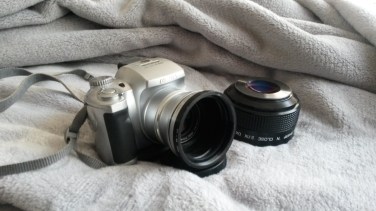
In mid-60 I was still measuring my age in single digits and picture taking was a natural extension of any structured family gathering – birthdays, Christmas, opening pitch at the local little league. After the pictures were taken the film was developed and the printed pictures camerabecame the center of attention for an evening. They were passed around among the family, mounted in (or at least stuck between the covers of) one of the many family picture albums, and that’s where there seemed to rest until happily ever after.

Fast forward 50 years. That’s when my father passed away. I don’t know when the custom began or if it was/is even a custom but then it was a thing to display pictures on French memory boards and scatter about during the viewings. My mother and sisters spent hours going through albums and boxes and envelopes to select the images that represented as many of the 8 plus decades my father walked the earth. Pictures I remembered from those family “picture shows” were there and there were also pictures from milestone events since and not so milestone events before. Faces of relatives who had died before I was born shared space with the one of a much younger father. While we were occupied fitting remembered names to forgotten visages we became caught up in remembering lives lived rather than one so recently lost.

The interesting thing was that after the funeral and things returned to their normal paces and places, those pictures didn’t. Every time I stopped by at my mother’s house a new old picture found its way into a frame on a wall, a spot on the mantel, a corner of a mirror. “Who is that,” was answered with who, when, where, what was happening, what happened next, what everyone else in and not in the picture thought about it, turning a simple question into a wonderful story.

Today the most popular hobby is, depending on what site you pluck out of the 2 million or so that a search returns, either gardening or fishing. Photography is still pretty high on all the lists. A quick peek at Twitter, Instagram, Pinterest, or any other social site confirms that. Hopefully some of those images will last for 50 years so when today’s generation fast forwards the next mid-60s they will turn into their own stories. And rest happily ever after.

That’s what I think. Really. How ‘bout you?


The Road Un-Traveled

Boy the United States is a big place. I realized that when it hit me that the farthest I have ever traveled to get somewhere didn’t even get me out of the country. In fact, I had traveled farther more times when I hadn’t left the country than when I had gotten outside its borders. That’s a big place.

Becauseworld I have that kind of time, I took a few minutes over the weekend to figure this out. The greatest distance I’ve traveled from home to somewhere is a few miles over 2,500. That didn’t even get me completely across the country

I’m not complaining about any of this. I think Americans sometimes forget how close other countries can be to each other and how much of a challenge that might sometimes be. We can go pretty far and still be in a part of the  world where people speak the same language, eat the same food, and respect the same routines. We may have come from different places but we have a sameness that is quite comforting. If you live in the middle of the United States you have a long way to go before you leave home. But if you live in the middle of Europe, you’re never more than a day away from a different world, often from several different worlds.

Sometimes I envy a European version of me who can step across borders and immerse himself in other cultures as easily as I travel from state to state seeing few changes other than the colors of the license plates. While we take pride in our backgrounds and traditions it’s very likely the customs we observe in our families and friends may be our only exposure to different cultures. From generation to generation our ways of life mingle and meld becoming even less different. Other times I recognize how wonderful it is that I can sample fairly authentic foods and dances, customs and costumes of so many nationalities just by visiting nearby nationality days celebrations.

Yep, the US is a big place. It’s not the only one of course. Canada, Russia, China, India, Australia, and Brazil are all big with lots of space from end to end. Iceland isn’t so big but it’s so isolated that it’s still a trip to get anywhere else. And then Greenland is big and isolated.

I suppose this like many other things in my life if I could change I probably wouldn’t. I may not get to see a different country every time I want to take a trip somewhere but then I haven’t had to add any pages to my passport.

That’s what I think. Really. How ‘bout you?


Trust Me

Tonight, across America, viewers will be avoiding the season’s most unrequested multi-station premier of the new situation comedy, the U.S. Presidential Election Debate. Like all good comedies the magic starts with the scripts. Since this show was written primarily in Politispeak, the RRSB is thrilled to present to you this Politispeak-English dictionary. You may find it also handy for everyday use particularly if your day involves interactions with bosses, workers, children, parents, friends, siblings, enemies, or aliens (legal, illegal, or extraterrestrial).


We begin with some key phrases.

Connect the dots – I have no idea how these things go together but I’m pretty sure they are right, good, or otherwise suitable to whomever I am speaking so let’s go for broke and put all our eggs in one basket.

Hard work pays off -or- It takes hard work to get the job done – You do the work, I take the credit and/or reward, preferably monetary.

I approve this message – Although there is little if any truth in this message, my legal team tells me that there is little to nothing that anyone can prove is at all to completely untruthful.

I got your back – You really are gullible.

In all honesty – I have no idea what I’m talking about

No offense intended – You suck

People are our most important asset – People who agree with me are sort of tolerable; people who disagree with me are scum.

Together we can make a difference – I need your vote/approval to accomplish my personal goal. If you happen to get anything out of it, isn’t that a happy accident?

Trust me – Yeah, right.

What you think matters or Your opinion is important to me – You’re kidding me, right?

With all respect -Boy, you really suck!

With great power comes great responsibility – with great power come large book deals and obscenely high speaking fees.


In addition to key phrases, professional misleaders also rely on certain words to confuse, confound, or bewilder the listener.

Actually – “I haven’t given it any thought.” When a speaker uses “Actually” as in “this is actually what writers of the Constitution intended,” they are really saying “My advisers/handlers/trainers told me that this would be a good place to interject something thought provoking but I haven’t given it any thought myself.”  Everyday users probably recognize this as a common phrase uttered by spouses, partners, or persons otherwise of interest to yourself as in “That’s actually a good idea.”

But – Everything before the “But” is bullshit. Examples include, “You are the most wonderful person I have ever met, but I think it’s best if we never see each other again.”

Honestly – In its most basic meaning, everything after “Honestly” is bullshit as in “Honestly, I value your opinion.” Occasionally “But” and “Honestly” will be used together to create a compound incredulity. Thus, “I have the greatest respect for you but honestly I feel we need to explore this idea a little deeper” translates to “You suck and your idea does too.”

Really – When used to indicate degree of something positive as “I had a really good time,” the speaker means the opposite. To imply a good time was had, the correct phrase would be, “I had a good time.” Likewise, in Politispeak, “Really” interjected into an otherwise positive phrase such as, “I am really the best option,” means, “I question my own press releases.” Note that “Really” interjected in negative phrases can be successfully removed from the phrase without changing its meaning. “You really suck,” generally translates to “You suck.”

Seriously – When used as an adjective it means the opposite of what is being modified. For example, “This is a seriously important issue,” means “This has no bearing on life as we know it.” You may be more familiar with “this is seriously good coffee,” meaning “this coffee tastes like brown toilet water.” When used as an introduction, “Seriously“, connotes a desire for the listener to consider the speaker as a personal friend of the listener as, “Seriously, you can count on me.”


There you have it – the official, first ever Politispeak-English Dictionary. This is seriously the most fun I’ve had writing a post. I have researched this topic thoroughly but I’m sure there are some words or phrases I have left out. In all honesty, I value your opinion, so if you think of any really fabulous examples, add them in the comments section.  Actually I know our hard work will pay off and people will soon be able to completely understand what others are saying. Honestly, I look forward to continuing this discussion. Together we can make a difference. Trust me.

That’s what I think. Really. How ‘bout you?


Pressing My Luck

Today marks the first day of autumn and the transition from those lazy, hazy days into the dark, blustery days. It’s a day to reflect on what I didn’t do on my summer vacation. I’ll warn you right now this post is just a tad long, but I think you’ll find it fun and interesting.

For the purposes of this discussion, the vacation season began on the unofficial beginning of summer in May sometime during the Memorial Day weekend and not the actual but much too late first day of astrological summer in June or the anticipatory but much too early first day of astrological spring in March.

Actually, for me, every day is a vacation. I have no urgencies in life nor engagements to keep but those imposed upon me by me. The list of things urgent or imposing this summer was pretty short. One thing both of those was wear long, adult-style pants. And save for a few hours in June, I didn’t wear long pants for the entire summer. It was a great summer to let your legs hang out. A pair of shorts, a golf shirt, some comfy footwear, and I was living the great outdoors. Adding to the comfiness of my summer attire comfy, it was iron-free.

I mentioned there were a few hours that I had to dress like an adult. As much fun as I had hanging out at the pool, using much less sunscreen that I really should have, there were a few hours in June that required a traditional shirt, tie, jacket, long pants, and uncomfy footwear. No, it wasn’t a wedding. It wasn’t a graduation. It wasn’t a life-event celebration of epic proportions. It wasn’t even a night of champagne, caviar, and cocktails at a mid-summer gala. Nope, none of those. For a few hours in June I dressed and acted like an adult in order to witness two evenings of my state’s daily lottery drawing.

You’ve probably seen them or something like them. Three or four machines blow some bingo balls around and then a vacuum cleaner sucks up a few numbered balls and somebody becomes rich. All in 35 seconds of bingo ball madness. You’ve probably never wondered if somebody is watching what’s going on there. Somebody at the state lottery office did more than wonder and required that each drawing be witnessed by a member of the public. That’s why they do it. Why I wanted to was because it seemed fun and interesting.

The 35 seconds of the actual drawing probably don’t need a “member of the public” witness. In my state each drawing is conducted under the eyes of two on-site lottery officials, two on-site auditors, two cameramen (camerapeople?), one floor director, one off-site lottery official, one announcer, one off-site auditor, and the two (yes, two) “public” witnesses. In addition, each ball is tagged with a RFID chip read by a sensor as it passes through the capture tube and transmits its ID number to a computer receiver. That confirms the number you see on TV is actually the number that got sucked out of the pack. And all that is just for those 35 seconds.

But the actually witnessing started a couple of hours before those frantic on-air seconds. It took three different people to disengage the alarm and unlock the room and cabinets where the machines and balls are kept at the television station where the drawing was held. Once inside, the witnesses select the machine that will be used for each game and the ball set that will be placed into the machine. One lottery official verifies the weights of the balls and the operation of the machines. Another official places the selected ball set into the chosen machine for a particular game. On the first night that I witnessed, six games requiring six machines and 16 separate ball sets were scheduled. Six machines out of a possible 12 were selected for the four daily number games and 14 sets of 10 balls each were picked from 30 possible locked sets. Four two additional games two machines out of a possible 8 and two different sets of balls (one of 42 and one of 47) were chosen from 6 possible sets of each. All of the ball sets were confirmed to be complete and properly weighted. Each chosen machine was loaded and confirmed intact. Then all the machines were moved from the storage room to the studio by lottery and studio employees under the eyes of the auditors and witnesses. And under the eyes of at least a dozen security cameras that I was able to spot plus who knows how many other.

Once in the studio each game was simulated three times to confirm proper operation and allowed the auditors to confirm that all drawn numbers were within appropriate randomness limits. Then a rehearsal was held, the 35 frantic seconds played out, a final round confirming each machine’s operation run through, the machines locked, returned to the storage room, and the sequence reversed where the machines were emptied and put into their places, the removed balls were re-weighed, reset in their cases and lock away and the three people locked the various cabinets and doors, and the alarm was reset.

Twenty-one hours later I returned to the studio for day two of my witnessing obligation which was more of the same except that there was one less game and thus one less machine and one less set of drawing balls required.

Because on one of those days I would appear on camera I had to be dressed at least a little less like Ernest Hemingway on Key West. And because the TV station where all this was taking place is about 200 miles from home, those clothes made the trip in a suitcase. So wouldn’t you know it, the only times I had to not only be in long pants and a real shirt I also had to iron them.

It was still fun and interesting.

That’s what I think. Really. How ‘bout you?


Bridge for Sale

Labor Day has come and gone and you know what that means. No more white shoes or Seersucker! Uh, no. It’s the start of a new season. I don’t mean the change from unofficial summer to unofficial fall. What with meteorological autumn and astronomical autumn and autumnal equinox and the fall TVseason the last thing we need is any unofficial season. No, the period after Labor Day is the beginning of a new festival season.

Ok, those of you who have always suspected that I’m closing in on batty it’s probably official – or maybe even unofficial. I’ve been marking the seasons by the changes of festivals for years. Winter heralds holiday festivals, spring brings my beloved maple festivals, summer is the season for arts festivals, and fall is the time for covered bridge festivals. This should be nothing new for regular readers of RRSB. I’ve brought up the local covered bridge festival before. (See “Passages of Fall,” September 15, 2014.) (Come on, give me a little break. I’ve been doing this for almost five years. We’re going to revisit some things every now and then.)bridgeforsale

But let’s digress here for just a moment. Festivals have morphed terribly from the traditional definition. That is, “a day or time of religious or other celebration, marked by feasting, ceremonies, or other observances.” Modern festivals often include feasting, otherwise the corndog and kettle corn industries would be in shambles, but around here they’re known more for jamming as many hand-made and/or ersatz hand-made crafts, foods, clothes, and furniture into any open field and for the greatest concentration of the Square point of sale app per vendor per acre.

And that’s what I love about them! You can buy anything at a festival – and I have. Chain sawn eagle yard ornament? Bought one. Framed, numbered, signed pencil sketch? Bought one. Metal sculpted snowman family. Bought one. Commemorative newspaper front page parodying offspring’s eccentricity? Bought one. Hand-hammered silver jewelry ensemble featuring recycled place settings? Bought one.  Hand-made left-handed wooden kitchen utensil set? Bought one. Full scale carved wooden Jack-o-lantern? Bought two!

Oh sure, you can buy maple syrup at the maple festivals and real art at the arts festivals and traditional Christmas decorations at the holiday festivals. But you can get that stuff at lots of places. But where else can you find a four foot, hand carved, wading flamingo carrying a surfboard under its wing? What can I say? I live for kitsch.

That’s what I think. Really. How ‘bout you?

You have the right. . .

I don’t listen to satellite radio often, but when I do I prefer the commercial free channels. The funny thing about satellite radio is that on the channels that are not commercial free, a great many of the ads are for credit repair, an unusual sponsor for a service that charges hundreds of dollars a year in subscription fees. Or maybe not. One in particular caught my ear lately.

It began, “You have the right to reduce your debt.” My first thought was, no you have an obligation to reduce your debt and it’s called bill paying. Actually, my first thought was to switch channels but I fought that off, not because I need to reduce my debt but that once upon a time I was so heavily in debt that your average homeless person had a higher credit score than I. I reduced my debt by stopping indiscriminate buying, selling off assets, paying off creditors, and closing credit cards. I was pretty sure the fellow espousing my rights to un-indebtedness didn’t have those notions in mind.

I’m sure there are many reasonable ways to reduce debt. Just because most governments haven’t figured out a way to do it doesn’t mean that we have lower ourselves to their levels. Especially on this weekend – Labor Day weekend. Huh? The thing is, you don’t want to reduce debt that’s going to cost people their jobs. Huh?

It doesn’t matter if a business is a 12 seat diner owned by the guy down the street or a multi-national banking business run by a bazillionaire. If you take money away from them they will work out a way of making it up. Either that means raising prices or lowering expenses – and the biggest expense of any business is its human resource.

Yes, you have a right to reduce your debt. It’s not right up there with life, liberty, and the pursuit of happiness. But then again, maybe it is. If it makes you happy, you should reduce. You also have a responsibility to reduce honorably. When you sign an agreement to accept the terms of credit it includes the expectation of repayment. It’s what the people who lend you money deserve.  And it’s what the people who are paid their salary based on the money you pay them deserve.

Back to that ad – while most of it was playing I was mentally drifting thinking about most of what you just read. But I came back to earth in time to hear the tag line – “Don’t let the credit card companies trick you into thinking that you have to pay them what you owe.” Huh?

Happy Labor Day.

That’s what I think. Really. How ‘bout you?


I’ll Drink to That

Remember the McDonald hot coffee lawsuit from back in the 90’s? Some batty old lady spilled coffee in her lap, got burned, went to the hospital, went to a lawyer, went to trial, went to jury, and won! The verdict was something like $160,000 for medical expenses and $2.7 million (!) in punitive damages. Punitive means punishment; McDonald’s was punished for serving hot coffee.

Yesterday, a California judge dismissed a case against Starbuck’s for misrepresenting the size of their iced drinks because they contain, in addition to the drink, ice. Apparently the legal system runs hot and cold when it comes to frivolous lawsuits.

But wait! Lawyers have long argued that the McDonald Coffee Case was far from frivolous. It was a wake up cup err, call to the damaging practice of big business putting profits over safety. And the public has the efforts of the tireless lawyer people to thank for seeing that those danger-mongers pay for their negligence. Yeah, right.

I’m sure lawyers serve some purpose. Unfortunately the very visible fruits of their labors have been left out to rot. Over the last several months I, and some hundreds of thousands others, have gotten e-mails about settlements reached that protected my rights and punished companies that have taken advantage of me. I got about $12 from Barnes and Noble because somebody claimed they overcharged for e-books or some such thing. I can get $5 from Angie’s List because they might have taken money for ads from service providers, and I got two free tickets for one or several concerts that have no available seats from Ticketmaster for them being Ticketmaster. My “damages” come to a whopping not quite twenty bucks.

I would thank the lawyers who worked so diligently to get me my double sawbuck. I worked hard for my money and I didn’t appreciate those big, bad companies taking advantage of me. Of course it’s only right that they get some of the windfall. As near as I’ve been able to figure, those lawyers who worked on just these three cases made about $281 million.

I don’t know about you but if I ever figure out how to use that Ticketmaster free ticket voucher and can actually score two free tickets to something, I’m bringing a lawyer!

That’s what I think. Really. How ‘bout you?