Next One Up

Sometime last week a friend mentioned she was going to pick up a copy of the new book by the the author of her favorite book. She was pretty sure of this favorite book because the memory cells in my brain perked up at the title and recognized it as one she has previously named as her favorite book. Of course in the conversation she had to ask what is my favorite book. Umm.

For as many books as I’ve read I couldn’t come up with a favorite then. I said I’d have to think about that. I’m still thinking about that. Can I single out a favorite or are books like children? All are my favorites. My own of course. Which is easy because I have only one. Children, that is. Err, child, that is. I really have given this some thought. Every time I think of one book that I like more than another, another comes to mind that I like more than that one.

I thought some more. Some books have a personal connection. I love Bill Bryson’s A Walk in the Woods maybe because I’ve been on the Appalachian Trail. Not all if it though so maybe that’s why I like it because I can see the parts I’ve part and the parts I haven’t. Yet it doesn’t resonate with me as much as his Neither Here Nor There and I’ve never been to Europe. Any parts of it. I just finished Larry’s Kidney: Being the True Story of How I Found Myself in China With my Black Sheep Cousin and His Mail-Order Bride, Skirting the Law to Get Him a Transplant … and Save His Life by Daniel Asa Rose, a topic clearly near my heart (but lower and more toward the back and sides) and thought it was the most enjoyable memoir I ever read until I thought about Neil Simon’s Rewrites, and Tuesdays with Morrie by Mitch Albom, and Twelve Years a Slave by Solomon Northup, and Ernest Hemingway’s  A Move able Feast, and … you get the idea.

Then I said to myself I don’t know why I’m going nonfiction. Maybe because I just finished Larry’s Kidney I had life on my mind (in more ways than one), but I’m more apt to read fiction than anything else. That’s such a broad category. Not a category really. More a phylum. Maybe even a kingdom. And that shifted my thinking so fast I almost got mental whiplash. I’m not a liberal arts guy, I’m a scientist! Shouldn’t my favorite book be scientific? Can a scientific book even be read like a book or aren’t they all just references. I checked out my bookcase and found indeed lots of references. And among them a slim volume, Laughter: The Drug of Choice by Nicholas Hoesl, given and inscribed to me by the author. I hadn’t thought of that book in years and although seeing on the shelf didn’t jog many memories of the content it did of sitting with the author and trading manic medical memories. Does that make a favorite book, a personal copy being a very personal copy?

I thought of another slim volume, recently directly received from and inscribed by the author, The Woman in the Window by W D Fyfe. If that name is familiar you may have read his blog. You should also read his book. It’s a wonderful collection of short stories, none that end like you thought they would. And that set me off in another direction. Modern fiction.

LibraryTruth be told my most enjoyable reading comes from modern fiction. Not “literature.” Mystery, murder, intrigue, spying. My favorites authors are people like Sue Grafton, Lawrence Block, Lawrence Sanders, and Jonathan Kellerman who write books that never ended like you first (and sometimes second and third) thought they would. Could I find my favorite book amount those? Or do I go back a generation and consider a book famous for not ending as even the author thought, The Big Sleep? True. While working on the screenplay for the movie version, William Faulkner and Leigh Brackett couldn’t figure who murdered a particular character. They phoned Raymond Chandler, who said the answer was right there in his book. Later he returned their call to say he couldn’t figure out who killed that character either. Now there’s a whodunit!

Speaking of Faulkner, the Nobel, Pulitzer, and National Book Awards winner who I better know for his screenplays than his novels although his short story “A Rose for Emily” is a favorite. But is it the favorite?

Since we’re into more classics what about some of the classical classics? I have actually read the Divine Comedy (probably taking longer than Dante took to write it) and Don Quixote (definitely taking longer than Cervantes took to write it). I am glad I did but I wouldn’t go back and reread them. Still… Closer to our time I also can put Victor Hugo’s Les Misérables in my “have read and enjoyed” list although I more enjoyed Alexander Dumas’ The Three Musketeers and The Count of Monte Cristo. I suppose even in the 19th century my tastes run more to adventure. How adventurous does a favorite book have to be?

What about the works too long to be a short story but too short to be a novel. When I was working these were often my go to readers. A full shelf is devoted to the novella from Capote’s Breakfast at Tiffany’s to Grisham’s Playing for Pizza. So is there a favorite among these? I really just don’t know.

What about the books I didn’t read but we’re read to me before I even knew that if enough words are put together in a particular order, they can hold such a power over me as to make me wonder some day what particular set of them might be my favorite. I’m sure I once counted Pat the Bunny by Dorothy Kunhardt as my favorite book, way back before I could count. Should it not be at least a favorite now?

I just don’t think I can come up with a favorite book. If I did I’d just be in danger of having it replaced by a new favorite whenever I read, reread, or remember something at a newer given time. I think instead my favorite book might be whatever one I’m reading now. Or maybe the one I just finished. Or better still, the next one up.


Learning Life, Again

It will be hockey nights in just a couple more. NHL hockey returns October 3. In recognition of this momentous occasion I’m repeating one of my favorite posts, “Everything I Know About Being a Gentleman I Learned From Hockey.” Why? Because everything I learned about being a gentleman I learned from hockey, that’s why. If only politicians watched more hockey.

So, from November 2016, I give you…


When I was at the hockey game this weekend I got to thinking how much as a society we can learn from hockey. Yes, the sport that is the butt of the joke “I went to a fight last night and a hockey game broke out,” is the same sport that can be our pattern for good behavior.

Stay with me for a minute or two and think about this. It started at the singing of the national anthem. I’ve been to many hockey, baseball, football, and soccer games. Only at the hockey games have I ever been in an arena filled with people actually singing along. Only at the hockey games are all of the players reverent to the tradition of honoring the country where they just happen to be playing even though they come from around the world – Canada, Russia, Germany, Sweden, Finland, even a few Americans.

A decent dose of nationalism notwithstanding, hockey has much to offer the gentility. Even those fights. Or rather any infraction. If a player breaks the rules he is personally penalized for it. Ground isn’t given or relinquished like on a battlefield, free throws or kicks aren’t awarded to the aggrieved party like victors in a tort battle. Nope, if you do something wrong you pay the consequences and are removed from play for a specified period in segregation from the rest of your teammates. No challenges, no arguments, no time off for good behavior. Do the crime. Pay the time. In the penalty box. Try doing that to a school child who bullies and you’ll have some civil liberty group claiming you’re hurting the bully by singling him out.

Hockey is good at singling out people but in a good way. At last Saturday’s game the opposing team has two members who had previously played for the home team. During a short break in the action a short montage of those two players was shown on the scoreboard screens and they were welcomed back by the PA announcer. And were cheered and applauded by the fans in attendance. There weren’t seen as “the enemy.” Rather they were friends who had moved away to take another job and were greeted as friends back for a day.

While play is going on in a hockey game play goes on in a hockey game. Only if the puck is shot outside the playing ice, at a rules infraction, or after a goal is scored does play stop. Otherwise, the clock keeps moving and play continues. Much like life. If you’re lucky you might get to ask for one time out but mostly you’re at the mercy of the march of time. Play begins. After a while play ends. If you play well between them, you’ll be ok.

The point of hockey is to score goals. Sometimes goals are scored ridiculously easily, sometimes goals seem to be scored only because of divine intervention. Most times, goals are a result of working together, paying attention to details, and wanting to score more than the opposing team wants to stop you from scoring. There is no rule that says after one team scores the other team gets to try. It all goes back to center ice and starts out with a random drop of the puck. If the team that just scored controls the puck and immediately scores again, oh well.

Since we’re talking about scoring, the rules of hockey recognize that it takes more than an individual to score goals. Hockey is the only sport where players are equally recognized not just for scoring goals but for assisting others who score goals. Maybe you should remember that the next time someone at work says you’ve done a good job.

handshakeThe ultimate good job is winning the championship. The NHL hockey championship tournament is a grueling event. After an 82 game regular season, the top 16 teams (8 from each conference) play a four round best of seven elimination tournament. It takes twenty winning games to win the championship. That’s nearly 25% as long as the regular season. It could take as long as 28 games to play to the finish. That’s like playing another third of a season. After each round only one team moves on. And for each round, every year, for as many years as the tournament has ever been played, and for as many years as the tournament will ever be played, when that one team wins that fourth game and is ready to move on, they and the team whose season has ended meet at center ice and every player on each team shakes the hand of his opponent player and coach, wishing them well as they move on and thanking them for a game well played. No gloating. No whining. No whimpering. Only accepting.

So you go to a fight and a hockey game breaks out. It could be a lot worse.


What Faux Fall Flora Wrought

We are almost half way through September which means if you haven’t yet, you soon are going to be too late to buy any of the good Halloween decorations. I was thinking about this last weekend when I was taking stock of my meager faux fall flora for my coffee table and front door. I like fall. I like the colors. I like the calmness that seems to fall upon fall mornings. But except for fun size candy bars, I’m not so much into Halloween.

Apparently I didn’t get the memo. Last year Americans spent over $9 million on Halloween decorations. Right around 9,100,000 dollars according to The Balance e-zine. They went on to say that is because it’s an economical holiday and people “are willing to spend money on something if it provides a lot of value. Halloween does that.” I guess they didn’t see the $14 hairy spider at Big Lots. Or maybe they did and their idea of value is different from mine.

FauxFallFloraIf you crunch some numbers and divide this into that, that being how many people claim to celebrate Halloween with more than spiked cider and this being that 9 million figure, you come up with a spend of about $86 per person. I’ve spent that much on a nativity set and I have well over 50 of them. (Really. Some people are into hairy spiders, I’m into nativities. I have them, many complete with wise men, made of clothes pins, cheesecloth, corn husks, ceramic, glass, plastic, straw, bronze, wood (carved, sculpted, machine cut and assembled, hinged, and nested), bronze, stone, steel, marble, paper, wool and rubber, sawn from barn board, and cut out of paper.) It’s what I do for Christmas so I can’t say if you want to eighty-some bucks on Halloween you’re nuts. But if you’re planning on spending eighty-some bucks on Halloween, you’re nuts! Except for the little candy bars. Those are cool.
Anyway…just yesterday I was going through my email and I came across a headline “Ugly Halloween Sweaters Were Made For People Who Are Too Lazy to Dress Up.” Well, I couldn’t pass up that piece of bait and I clicked away. What I discovered is, like ugly Christmas sweaters, the ugly Halloween sweaters really aren’t. This is just my opinion but that opinion is that they are kind of cute. The other thing I discovered is that somebody’s going to have to revise that $86 per person spending estimate. Those sweaters go for about $40 per.

For myself, I’m sticking with the faux fall flora. Maybe I’ll spend my $86 on another manger scene this Christmas.


Step 1 Again…The Donor Perspective

Now that I’ve been added to the kidney transplant waiting list the hard work begins. Finding a donor. On one hand you can sit around, stay healthy, make sure the transplant center has your current contact information, and just wait. On the other hand, you can try to find a living donor and go through all new sorts of levels of stress.

My immediate family has dwindled to a pair of sisters and a daughter. That would not be a good hand to hold in poker. But all three have expressed interest in donating and that closes the odds. They decided they would go through the donor evaluation process before we would ask if we should look to others. All three are currently in the process but at different stages. Two have been determined to be acceptable matches, one still awaits those results, and none is anywhere near completing the battery of tests donor candidates face.

You remember all the examinations and tests I had to go through? If you don’t, type “kidney transplant” in the site search bar and refresh your memory. We’ll wait. … Ok, ready? Well, as the saying goes, you ain’t seen nothing yet!

Like mine, their first appointment was a phone interview, a few basic questions designed to screen for obvious exclusions like diabetes, untreated high blood pressure, or various cancers. Also like mine, their first on site appointment meant lots of tubes of blood, a chest x-ray, an EKG, and face to face interviews with a nephrologist, surgeon, nurse, social worker, and transplant coordinator. Unlike mine, theirs also includes a donor advocate who is also a previous donor.

Like my first appointment at the hospital they left with a handful of appointments for follow up tests. Unlike mine, theirs were unlike mine. Where mine were targeted to make certain I could sustain the rigors of the operation and maintain the required follow up to prevent rejection, potential donors are tested to make as certain as possible that they are as healthy as possible and will be able to withstand the rigors of life with a single kidney.

Potential organ donors must be at least 18 and not more than 70 years old. That’s quite a range and obviously an 18 year old is going to be and is going to expect a different level of health than a 70 year old. My potential donors are just shy of 29 and a little over 67 years old. The one in between just turned 56. Three different stages of life, three different batteries of tests. Any single test can exclude the person or become the focus of a follow-up test. Surprisingly the youngest has the biggest list of baseline tests. As she explained it, the reviewing nephrologist said a 48 year old who is healthy today has a pretty good chance of still being healthy in 20 years. He has already passed the age when chronic illnesses would have taken hold even if they aren’t obviously obvious. Being healthy today means less to the 28 year old and how she will be at 68, 58, or even 48 so her testing will be more in depth and her expected results more stringent to mitigate missing sign of problems that might develop in the future.

In all cases they are going to get the best physical they’ve ever received. And if they pass all the physical exams they even get to have a go with a psychiatrist.

That’s just in case you thought you were nuts giving away part of your body.

——

If you’d like to re-read all the posts in this thread as well as other related posts, I’ve put links to all of them on one page. Go here, to join the journey.

Related posts

First Steps (Feb. 15, 2018)
The Next Step (March 15, 2018)
The Journey Continues (April 16, 2018)
More Steps (May 31, 2018)
Step 4: The List (July 12, 2018)


All of the Somebodies

Before I begin I want to say that if you’ve become accustomed to my constant comments and I’ve become inexplicably silent on your blogs, I’ve had some issue commenting. For some reason, WordPress doesn’t think I’m logged in to my account even after I log in to my account. I can post. I can “like.” I just can’t comment. Sometimes. Most of the times. But not not all of the times. I can comment on all of the people some of the time; I can comment on some of the people all of the time; but I can’t comment on all of the people all of the time. And if I haven’t been commenting on yours, you’re probably some of the all. But probably not all of the some.

And before I continue, you might have noticed over the past few weeks I hadn’t posted as often or as regularly. As regularly or as often? I’m sure it makes a difference as to which comes first but not to the world which remarkably kept spinning regardless of me posting often or regularly. Or regularly or often. Anyway, I hadn’t. I hadn’t had much to say.

I think I might have not had much to say because I hadn’t been feeling myself. This was odd because so many people I have run across the past few weeks have taken what seemed to be pains to tell me how well I looked. I’m not sure why that surprised so many. I don’t have a flesh eating bacterial infection which with maybe gross morbid obesity are the only conditions that could make one not look well. Just about anything else isn’t readily evident. Well, just about any other chronic condition. You give somebody a full blown summer cold with the sneezing and the running nose and the watery eyes and that person will look like the definition of not well for a week to 10 days. But if you saddle somebody with a chronic condition, particularly one controlled with medication or treatment, that somebody tends to look like everybody else.

I almost cringe when I see the commercials on TV for this month’s miracle cure in which the person playing the person in need of the cure looks into the camera and says with all the sincerity a poorly paid commercial actor, “but I look normal.” Well, guess what? So does everybody else. It is not only the rare diseases that masquerade as normal. I bet you couldn’t pick out of the crowd somebody with high blood pressure, diabetes, high cholesterol, COPD, or hypothyroidism.

I also almost cringe whenever I hear people use the terms “chronic disease” and “chronic illness” when what they really want to say is “this thing I have that nobody understands and took me a dozen doctors before I found one who understands it.” I can say that because I’ve probably done that. But really, if you’re going to add for special consideration or exceptional treatment because you have a “chronic illness” you better include somebody with high blood pressure, diabetes, high cholesterol, COPD, or hypothyroidism because those are just as chronic.

But I digress. I guess I haven’t written much because I haven’t felt like myself. Don’t worry though. The world indeed will continue to spin and I’ll soon snap out of it and will be back to rambling in no time.

Until then, I think I might try to comment on this post. That should really confuse WordPress.

Never Underestimate the Power of an Offspring

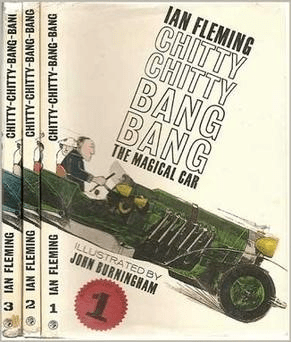
A while ago WD Fyfe posted “Stuff I’ve Learned from Literature,” a collection of life’s lessons from the pages of best sellers such as “never volunteer for anything” as taught by The Hunger Games. In a comment I added “never underestimate the power of a woman” learned from “anything by Ian Fleming” to which he replied, “Including Chitty Chitty Bang Bang.” Of course my reference to Ian Fleming was to the Bond Girls of the 007 franchise but the famous children’s story turned movie has several strong female characters. Perhaps a Fleming trait?

CCBBYou didn’t know that the author of sixteen Bond, James Bond spy novels tossed in one book about a magical car? He did. Published right between You Only Live Twice and The Man with the Golden Gun it was the last book he wrote. Based on bedtime stories he told his son Casper, he wrote as he convalesced from a heart attack from which he never fully recovered.

That got me thinking which as you know not only do I have the time for but is also rarely a good thing yet often results in a blog post. Thank you Bill.

So … the world is full of talented authors and more than a few of them are both quite well known and are parents. So how many of the well-known parents have favored their children with tales that themselves became well known in spite of the parent not being well known for authoring children’s books. I found three. Four if you stretch a point.

The second to come to mind and first in the “I didn’t know that” list is Mr. Fleming’ famous tale of the famous car. The first author famous for a child’s story harkening back to his child to come to mind but on the “but what else did he do” list is A. A. Milne. If before this summer’s film release you didn’t know Christopher Robin was indeed Christopher Robin Milne and Pooh, Piglet, Eeyore, Kanga, Roo, and Tigger were the younger Milne’s childhood toys, you do now. But before the poem featuring Winnie-the-Pooh appeared in When We Were Very Young, the elder Milne was known as a playwright.

Also on the list is one known more for penning songs. Kelly Clarkson, former “American Idol” winner and singer/songwriter has also published two children’s books inspired by and featuring her daughter River Rose. Though not yet classics, who knows what we might be saying about them in fifty years.

PatTheBunnyAfter extensive research spanning at least 30 minutes, the closest I could come to uncovering another author who was known for one thing but exploded on to the scene with a book inspired by an offspring is the historian Dorothy Kuhnhardt, author of the 1965 winner for longest title, Twenty Days: A Narrative in Text and Pictures of the Assassination of Abraham Lincoln and the Twenty Days and Nights That Followed–The Nation in Mourning, the Long Trip Home to Springfield. The book she wrote as her gift to her daughter is more succinctly titled Pat the Bunny. I say this is a bit of a stretch to my search because although Kuhnhardt was a legitimate historian and author, the books she is better known for are the children’s volumes which she was putting out before the first bunny was patted but the patting was going on before she wrote the first book. It’s all very confusing and probably doesn’t belong on the list but I liked the book both as readee and reader.

There are many well-known authors who have written children’s books but were they inspired by stories they told their own children? Google doesn’t know about any so I guess not. If you do, share, but be sure to tell Google too. Can you tell Google anything?


More is Less

It is said everybody has a number. That might be a number of dollars to commit an otherwise distasteful physical act, or a number of times the car stalls before you break down and finance a new one, or perhaps the number of proposals before you finally say yes. For me it was the number of ways to prepare avocado. And the number is 73.

Seventy-three ways to use an avocado was the subject line on the email. A trusted food magazine’s daily email with a new recipe, a reasonably thought out kitchen hack, and some cutesy new way to do something you’d not previously considered like perhaps how to juice concord grapes at home, had with that one subject crossed the line into click bait. And I wasn’t biting.

It was one thing to occasionally sneak in 5 ways to use a watermelon or six flavors to make your coffee. I’d gladly scroll my way through a half dozen ways to spice up my morning caffeine dose. But everybody knows there are only three things you can do with an avocado – chunk into a summer salad, spread onto a wrap, or turn into guacamole. Anything else is a pathetic attempt to create relevance or justify buying a Tesla. See avocado oil.

CensoredWhile we’re talking about Facebook (I did say click bait), did you hear about the spat going on between Dutch tourism and the harbinger of all things questionable? Apparently the Visit Flanders tourist bureau would like to advertise their museums on the site but because the video they prepared includes shots of paintings by Rubens, the site usually not known for decorum refuses to allow the video to post because Rubens painted, er, nude models. It seems the number for Facebook is 1/4, as in the number of inches wide the shoestring covering the nipple of a spring breaker frolicking on the beach must be to make the post “decent.”

Another number that seems to be is 29. As in dollars spent to be free. Once Wayfair was the only site that blatantly barked “the shipping is free” in their ads but it wasn’t unless you spent a minimum amount, theirs being $50. Not to be outdone, etailer after etailer is including free shipping as one of the perks of shopping with them. It just doesn’t happen to be completely free. Shipping charges still show up at checkout sometimes with a little note saying how much more you have to buy in order to qualify for free shipping. Usually that number is 29 less whatever you have already committed to your purchase. Completely free. At least they tell you how much free costs, unlike the infomercial people who will double your order for free. Just pay a separate fee.

So, what’s your number?

McReally

I really like sandwiches. I’ve done that bit before so I’ll not bore you twice with it. Maybe even three times. Anyway, I like sandwiches. Today I came close to a sandwich trifecta. I made an egg and sausage on English muffin for breakfast, for lunch I had grilled chicken with provolone and zucchini on a hoagie roll, and I came close to grilling a hamburger for dinner. Fortunately I came to my senses and grilled a pork chop instead and actually got to use a knife and fork for one meal.

But that hamburger got me thinking about the sandwich world. Every restaurant has sandwiches. Maybe not the Top of the Marque type places but I can’t afford them so they don’t count. Yes I said that. If you want them to count, put them in your blog. Anyway…every restaurant has sandwiches but it took one that nobody wants to admit patronizing to have made it an institution. New York delis notwithstanding. Of course that is McDonald’s. And I’m not getting any consideration from them for this.

The hamburger thought that popped into my head when that hamburger got me thinking was the Quarter Pounder. You know McDonald’s recently upgraded the Quarter Pounder. No? You didn’t? That’s right. Nobody actually goes to McDonald’s so of course you didn’t. That’s ok. I did. They recently upgraded the Quarter Pounder and a couple of weeks ago I had one. I’m not going to sit in my kitchen and ponder if I would rather fire up the grill and burger it on my own or make the trip down the road to cop dinner. But if I’m on the road and hungry, and an arch topped sign beckons, I could do another one of those.

McRibAh but there’s more to the story. The hamburger thought that popped into my head when that hamburger got me thinking wasn’t just about hamburgers. Because one of the hamburgers that thought popped was the venerable Quarter Pounder, that particular hamburger got me to think about a non-hamburger sandwich from that chain, the McRib. Or you prefer: the McRoo (inaccurate though since it contains no kangaroo meat although rumors do persist) or the McTripe (actually quite accurate since tripe is one of its 70+ ingredients) (sorry) or even the McOhNoI’dNever which is probably also inaccurate because they sell between 30 and 50 million whenever they are released and I only get one) (really).

It’s true. I am a McRibber. I don’t know why but every fall I start looking for the signs that the everything but the kitchen sink sandwich is coming back because I have to have my McPig Fix. Fortunately, unlike certain potatoes chops, I can stop at one. Fortunately because even I will admit they are weird and they also have over 400 calories and you don’t keep a boyish figure like mine (yeah, right) by chowing down on a bagful of those things.

Yes, I really like sandwiches. Even the marginal ones.

One of Seven

I’m doing something today I don’t usually. I’m complaining. Yes, you’re right, I have expressed displeasure from time to time but this is different. This is head shaking, head scratching, “what did you expect” vent-age.

You can tell by how late it is that I wasn’t even certain about posting this, but clearly I have. If you don’t want to think of me as a complainer stop here and I’ll see you again on Thursday.

Yesterday’s paper featured an article, “Why aren’t wages rising?” It stated that although some of the brightest economists in the country can’t agree on the reason, they do agree that wages are not increasing any faster than the rate of inflation. Today’s paper had a headline that a local company’s employees are “set for raises” for the next three years after the company and a local union agreed to a new contract.

So salaries are going up, nobody is losing spending power, yet nobody, or at least not one headline writer, is happy.

Was I the only one to see this 60 years ago? There used to be a time wages were commensurate with results. Now they are time released. Ever year everybody gets more money for doing the same work they did the year before. The widget maker doesn’t make more widgets for the widget company to sell yet the widget maker makes more money from the widget company. The widget company can’t report to the widget investors they are turning a smaller profit because they are spending more money paying the widget makers so they raise the price on widgets. Now that the price of widgets is up, everybody who buys a widget, including the widget makers, go to their respective companies and say next year they will need bigger raises, inflation isn’t making their dollar go as far. The next year the companies, including the widget company, increase workers’ salaries, sometimes by predetermined, contracted amounts. Again there are no more widgets to sell to offset the increased expense so again the price of widgets goes up. And the snowball continues its run downhill.

I never have and never will understand how people believe it is their right to get more for doing no more. I also never have understood and never will understand how the same people upon receiving this windfall instead of voluntarily sharing their increase with their church or synagogue or charity or charities of their choices complain about it being not enough while simultaneously complaining about others getting increases for not doing anything to deserve them. The price of everything keeps getting more and more expensive they say.

NoMoreMooneySo wages aren’t going up but are going up just not enough because they only go up as much as necessary to keep with inflation but that’s not enough because everybody else gets more too.  It won’t end. It can’t end. For it to end everybody has to simultaneously say they want no more increases, even minimal cost of living increases. You can’t do it piece meal because somebody will (with a capital WILL) break the chain and not give back. And you can’t just rely on people. You need industry, large and small companies, profit based and non for profits to agree to no increase fees or prices except for bona fide improvements. Wages will go up in response to increases in output and profits will go up when true efficiencies result in lower expenses. Won’t happen. Can happen but won’t. Too many people have to make the right choice. The right choice never made anybody anything for nothing.

Greed is one of the seven deadlies, isn’t it?

Step 4: The List

We are making progress. Tuesday afternoon I received a call from the transplant center at the hospital that the test results are in, the clearances have been reviewed, the committee has met, and I can now say I am officially sick enough to need a new kidney if one can be found for me. Have a seat, pour your favorite beverage, and I’ll tell you the next chapter of this story.

Saying I am sick enough for a transplant is really not accurate and was not the point of three months of testing. We knew the level of my sickness of those organs the first time they stuck a pair of needles into my arm, attached the other ends to a dialysis machine, and said it will get easier over time. They were, they still are, and it hasn’t yet so it probably won’t. It won’t.

The point of the tests, the examinations, and the reviews was to see if I am healthy and strong enough to withstand the surgery, recovery and follow-up to replace those pieces of mine that zipped right on passed middle age outpacing the rest of me to done for. And we discovered and now have documentation that I am. Er, healthy and strong (sort of), not yet done for.

Now we just have to find a replacement for those pesky, unproductive pods. Unlike other parts of me that have been unceremoniously replaced, there aren’t any replacements for a kidney other than another kidney. That means finding somebody who is done using his or hers or someone who is ready to part with one of the two that come as standard equipment in homo sapiens.

And now we come to the point of Step 4. The List. People, including me (well, I’m people too), refer to The List. There really is no single, all encompassing, first to last list. If you want to think of a list, it would more appropriate to think of each donated organ having its own list. When a person is accepted into the program and begins waiting for an organ, his or her matching criteria is placed into a database. When an organ becomes available, the organ’s criteria is compared to the database and all those people whose needs match the offered organ are retrieved. With some exceptions they are retrieved in the order they were entered into the system. Thus, The List for that organ.

There are exceptions to being positioned on the list from the order a person entered the system. Neonatal and pediatric patients are given some preference and people in need of a transplant who had earlier in their lives donated an organ receive placement preference.

When my blood was drawn in April at that first test in the transplant center, there were already over 114,000 people waiting for an organ transplant in the United States. When I became approved on Tuesday, 143 other people joined me being added to The List. About 95 transplants were performed that day and 20 people died waiting. The List grew by about 3,600 since April.

A recent poll revealed that 95% of people support organ donation but only 54% have ever signed up to be a donor. Unfortunately, only 3% of deaths result in actual available organs appropriate for transplantation. And so, the list grows. I could wait for 3 to 5 years until I make it to the top of an organ’s list.

There is a way off the list without dying or becoming too sick that a transplant’s benefits no longer outweigh the risks. The living donor. Kidneys and portions of livers can be donated by live individuals directed for a specific recipient. (Some people actually make altruistic donations that enter the general pool and are designated to a recipient as a deceased donor organ would be.) Under very rare circumstances, lung, pancreas and intestine live donations may be possible. Living uterus donations are undergoing clinical trials.

Living donors account for about a third of kidneys transplanted in the United States. Kidneys from live donors not only mean a faster transplant for the recipient but a more successful transplant.

Already four people have stepped forward and asked about making a living donation of a kidney for me. Their evaluations will begin next month and can take two to six months to complete. I’ll take you along that side trip as we make this stop on my journey. That way you’ll know what a potential living organ has to go through.

Just in case.

——

Related posts

First Steps (Feb. 15, 2018)
The Next Step (March 15, 2018)
The Journey Continues (April 16, 2018)
More Steps (May 31, 2018)