I Participated

I was working on a blog post for the foundation when a thought occurred to me. Let me give you some background. That post is about the carrots and the sticks we use on ourselves. It began with a package sent to a friend. When I asked a few days later what she thought of it she said that she hadn’t opening it but was saving it as a reward for herself when she completed a project she was working on. And there that post begins down the trail of why we incentivize our happiness with promises of work completed rather than the other way around. If you want to see how that ends, it will hit the ROAMcare website in a couple weeks. Until then, let me tell you some of the things I thought that I didn’t write.

You see, days went by, a week went by, then a week and some days went by and then project was not much nearer completion than before the first days that had gone by. The project ran into snags. Other work encroached. Another job came up. The package remained unopened.

Perhaps this is something we’ve learned along the way to becoming mature adults. As children we were likely subject to bargains such as “If you get ready for bed I’ll come in and read you a story,” or “You can have dessert when you eat all your vegetables.” As we got older, we may have heard, “You can get a driver’s license when you get better grades,” or “You can go to the dance when you can buy your own dress/suit/dancing shoes.” Even as adults we tell ourselves things like “I’ll take a break when I finish this order.” We’ve grown up with the enticement of a reward for completing a task.

The all wise and famous “They” say a mark of maturity is to be able to defer gratification. Another sign of maturity is unconditional respect for others. “They” don’t say what to do when the objectives conflict. If you decide you that you won’t make your favorite dessert until you complete a project and if the project completion Is delayed, only your joy is interrupted.  When another enters the equation is it fair to defer their gratification also, to take away their joy when they cannot assist on the side of the equation to improve the situation. Or is that when respect trumps deference.

The point of the blog that someday will appear on the ROAMcare site is that decision should never have to be made. We should not go through life bargaining with ourselves to be able to enjoy life.
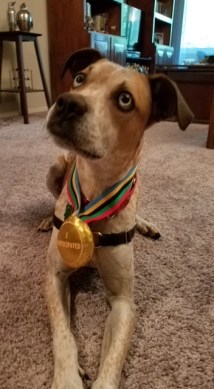
image0There are still those who feel participation awards for children eliminates their sense of accomplishment when there are no winners or losers. The argument may be valid on a baseball diamond or tennis court, but not in life. In life, living is the reward. There is no part of life that is a reward for doing something. The reward is being able to do something because you have mastered how to enjoy life. When my life is over and I look back at what I have done, I will feel much better being able to say I participated and not worry so much much if I won.


If you haven’t had a chance to visit ROAMcare yet, stop by, refresh your enthusiasm and read our blogs or check out the Moments of Motivation archives. Everybody is always welcome,

A well regulated argument

I had a hard time debating with myself if I wanted to post this or not. It’s a topic that gets beaten to death so often you’d think it would be reasonable enough and just die but then, it’s not a reasonable topic. I also thought about putting out a “special” post last Friday because it was Gun Violence Awareness Day. But then I thought, the last thing you needed was me throwing in a nickel’s worth of my two cents on that day.

There is no doubt there is gun violence all over the place. Every week brings new mass shootings to the national news and local newscasts are filled with stories of shootings every day. In my greater metro area, between Friday and Sunday of this past weekend, four people lost their lives to gun violence and several others injured. There have been less than a handful of days a shooting hadn’t been reported here since a local mass shooting at an AirBnB party the night before Easter, including one when the victim was a one year old sitting in the back of a car targeted in a drive by shooting. If you’re not aware of the gun violence in the United States, then you’re really too stupid to be reading this.

So let’s summarize, all the people who think the Second Amendment gives you the right to own a gun, you’re wrong.

“A well regulated Militia, being necessary to the security of a free State, the right of the people to keep and bear Arms, shall not be infringed.”

That was, is, and forever will be until its repeal, all the Second Amendment says. Nobody can deny you the possession of a weapon used to defend the STATE (i.e. the USA) if done so needed as a part of a REGULATED military effort). Considering we have a perfectly acceptable armed forces system now that was not in place in 1789, there is no longer a reason to guarantee anybody to right to maintain a weapon. But even if there was, the right is only protected when used to defend the country. Not to hunt, not to target shoot, not to defend oneself, not to forget you have it in your carryon bag at the airport, not to settle suburban hedge trimming disputes, and not to commit mass, or even single murder.

I am nothing if I cannot look at both sides, so let’s look. Gun control advocates point to the numbers, the most often quoted is that in the U. S. of A. in 2020, there were 45,222 gun related deaths (I don’t know why but that’s the last year the total is available). Gun advocates will say, “Woah, woah, woah. Over half of those were suicides.” And they are right. Fifty-four percent of the 45,000+ deaths, or about 24,000 were suicides. They don’t mention, but I will, that 2% (a little over 900). That leaves 43% or 19,455 people intentionally killed by another American presumably exercising his or her right to own a gun as part of a regulated militia to protect the country. That is over 19,000 people who were victims of gun violence.

The gun advocate will say that of those 45,222, almost 25,000 people were going to die anyway. (Maybe, maybe not, but let’s stick with saving the 19,000 for now.)  How does that compare. Forget deaths due to cancer, heart disease, train derailments, bad lettuce, or anything else not gun related. Let’s compare that to those who are participating in protecting the country in the modern well-regulated armed forces system. And let’s not just look at 2020. Let’s look at the entire twenty-first century to date. So far, in all armed conflicts since 2001, there have been 7,075 fatalities, about an average of 36 per year. That’s 18,964 LESS deaths due to defending the state in a well regulated military than deaths due to gun violence. Per year.

I could stop there but somebody is going to say, “But I just use my gun for hunting or target shooter or protecting my family. Not to randomly shoot somebody.” First, let’s ignore the protect your family argument because if you have a gun for protection and you are not planning on shooting somebody if you need protecting, then why do you have it? Then for the hunters and sportsmen (sportspeople?), you don’t need an assault rifle to shoot a deer, nor a 60 or 100 shot magazine to fire 20 times at a paper target. And really, you don’t need any ammunition at all until you’re ready to hunt or competitively shoot. I recall reading an argument to not regulate guns but, given that the Second Amendment is quiet on what you load into those arms, to ban ammunition. Maybe not such a horrible idea.

Consider this. For years, I shot skeet recreationally. (I’m not sure why because you just can’t make a good meal out of them, but even so … anyway) Every Sunday afternoon I could be found at the rod and gun club blasting clay pigeons into oblivion. I travelled to and from the club with my unloaded shot gun and at the club bought only the amount of ammunition I would use for the afternoon’s festivities and then go home with an unloaded shotgun. They say never to store you gun and ammunition in the same place. Mine were separated by about 15 miles. I’d call that safe and responsible.

It always amazes me when people toss around the word “Right” in their argument for … well, for anything. Gun rights, women’s rights, students’ rights, union rights … like they have a right to do whatever they please and find somewhere in the Constitution to defend it. And there are a lot of guaranteed rights in the US Constitution. But in each case there are also qualifiers and limitations. Rights are guaranteed. Unregulated license is not.  We are a nation obsessed with the Rights without bearing the Responsibilities.

Now I’m not going to say we should or should not repeat the Second Amendment, although I will say before anybody tries to use the Second Amendment as a justification for killing 19,000 people this year, they really need to see a good psychiatrist.

Sorry, no cute picture for this post. I couldn’t seem to put one together to celebrate so much death.

Present Tense

I did it again. I was working on a project for the foundation and man, did it ring true. Naturally they are supposed to be relatable. If not, the topics brought up there would hardly be inspirational and that’s the whole point of it. Sometimes, ‘relatable’ and ‘chill-inducing’ cross paths and it makes the hair on the back of my neck stand up and take notice.  And believe me, when you don’t have much of it, you notice where your hairs are doing something.

Three weeks ago, we posted to the ROAMcare website and social media accounts the message:

Days don’t check in with your calendar or daily to do list. They go where they will and your only choice is to go where they take you. You take what’s given and make the most and the best of each one and every day you still show up because every day is a gift.

 It’s not the most profound thought in the world. Everybody has heard the old saw, “Yesterday is history. Tomorrow is a mystery. Today is a gift. That’s why we call it ‘The Present.’” So said First Lady Eleanor Roosevelt. And so said billions and billions of others since. Okay so maybe not quite that many people but a lot of people have worked “today is a gift, that’s why we call it the present” into speeches, articles, and the occasional blog post.

In this particular blog, just two weeks ago, I opened a post with these words:

Do you ever do something and surprise yourself at how profound you are? Me neither, but I did something that really had me thinking for a few days. I kept saying to myself “Yeah, that’s me, damn it. I can do better!”

Truer words were probably spoken but I can’t recall when unless they were those same words a week earlier when we were batting around the “Days don’t check in…” and I found myself going back to those three little sentences over and again for days! Yes, once again I said to myself, “Self,” I said, “that’s me!”

Days indeed go where they will, they don’t check in, and we’re only along for the ride. But here’s the thing. We aren’t in control of the ride and that annoys the dickens out of a lot of people. Our intent with that now three week old post was to acknowledge our lack of control, but in exchange we get an opportunity to make the best of each day as it comes. As with so much of life, that is an opportunity easier granted than accepted. It certainly makes sense, but how can we show up every day and make the most of it. And still I pondered.

Those mental meanderings brought us to this week’s entry on the ROAMcare site. This week we expanded on that thought from early May with:

“Yesterday is history. Tomorrow is a mystery. Today is a gift. That’s why we call it ‘The Present.’” Eleanor Roosevelt knew what she was talking about. For over 8,000 Americans, tomorrow won’t come. Transform “It can wait till later” into “There’s no time like the present!” If you want to do something, if you need to say something, today is a great day to do it, a great day to say it, a great day to go for it! Today is the gift!!

It doesn’t seem to say much more than we already said but oh, yes, it does! It comes right out and says, “There’s no time like the present…do it…say it…go for it!” If you don’t, you may never get the chance again. (And will notice, we gave credit to Mrs. R.)  

At the risk of looking back rather than ahead, please always remember, “You can’t change the past. You can only learn from it.” (Now that quote has been attributed to all manner of people and the words always get changed just a teeny bit.) Really you can’t change the past. You can’t play “what if” with something that’s already happened. You can’t ask for a do-over from life.

In my life, there have been many times when the right moment for the right words or the right gesture presented itself and I chose to wait for a better opportunity, when the boss is in a better mood, when the sun is a little brighter, the words chosen a little better, or the setting a little more perfect. Second chances don’t happen. Once upon a time I wrote a blog post claiming the odds of anything and everything in life happening are 50/50. Everything from hitting the lottery to meeting your soulmate can be boiled down to it will, or it won’t. There is no it might if I wait for things to be just a little better. Once the moment is gone, the moment is gone. Once the present becomes the past, it is untouchable but until the future becomes today, it is unreachable.

Your only chance is to do it, say it, go for it today, because today is the gift of all gifts, the gift you’ve been given, the one and only time you control. And that is a most wonderful present.

Blog Art (2)

Do you know the way?

Do you know the way to San Jose? Well, when you get there, please turn out the lights.

The U.S. is coming up on a milestone – one million COVID deaths. That’s 1,000,000. About the population of San Jose, California (1,005,000 give or take). Or if you’d rather think about it this way, that’s a little more than all of Delaware (990,000 plus or minus), or just about half of New Mexico (1,054,000 a couple years ago, that would be half of all the New Mexicans), however you want to think about it. You probably should, although you likely aren’t.

COVID news has been pushed way off the front pages. So much so you’d think it isn’t around anymore. For the week ending May 13, the United States averaged 302 COVID deaths per day. Those families are likely thinking about it. Worldwide we averaged 1,803 for that same time period. (New York Times, WHO). That doesn’t seem like a lot. But it’s more than those who die of diabetes in the U.S. (283/day), not far from how many die daily from stokes (385), and way more than those who die in another form of unnecessary death, violent crime (67/day) (CDC).

I bring this up because locally our case numbers are rising. Schools are returning to mask requirements and people aren’t happy about it. “The CDC says we don’t have COVID anymore” is their battle cry. Which at least is a refreshing change from “COVID is a hoax.” Neither is true but folks are in a tiz over it. Isn’t two years enough, they ask.

Another reason why I bring this up actually is just that. It’s been two years. COVID had a remarkable run in the public eye. The American attention span is seldom much longer than the current NFL season. We’ve already moved the war in Ukraine off the front page and that’s only into its fourth month, which perhaps not too coincidentally, is about as long as a football season.

I’m a big fan of Eleanor Roosevelt’s favored observation, “Yesterday is history. Tomorrow is a mystery. Today is a gift. That’s why we call it ‘The Present.’” Eleanor Roosevelt knew what she was talking about. For over 7,700 Americans in addition to the 302 that will succumb to COVID, tomorrow won’t come. But that’s not to say we should no longer take caution to try to improve the chances that tomorrow will come.  I don’t say we should all be locked in our homes, venturing out only when covered in full surgical garb. I’m saying we should take note of the world around us. When mask mandates were lessened or eliminated two months ago, it wasn’t a sign that all is right with the world. But it was a sign that we are getting better. If we can get better with a dastardly, ever changing, so small you can’t see it with the naked eye enemy, why can’t we work to get better with the so many other things out there threatening our tomorrows.

COVID is still among us. As are flu, heart disease, dementia, war, unrest, questionable judgement among awards show attendees, violent crime, and bad breath. Some of that stuff will kill you. I’m just saying, let’s be careful out there even if you don’t remember why and may not be here tomorrow anyway.

Blog Art (1)

Bee Present

Do you ever do something and surprise yourself at how profound you are? Me neither, but I did something that really had me thinking for a few days. I kept saying to myself “Yeah, that’s me, damn it. I can do better!”

Many of you know that in an alternate universe I am co-founder of an education foundation, more life and self-preservation than education but you have to slot these things somewhere. One of our routines is a weekly social media fixture, A Moment of Motivation, in our words, “small doses of positivity.” (I came up with that!)

Motivation Posts (50)Let me tell you, it’s hard work to build up to a single motivating moment. In preparation for this morning’s release, I drafted the first iteration of image and theme: Be Kind, Be Present, Be Grateful.

Then started the series of texts back and forth. (You want motivation? You have to be motivated to work together when you’re separated by 2100 miles and three time-zones. But that’s a different story.) After discussion, major changes, minor refinements, lots word-smithing, my partner and I settled on: Don’t Be a Busy Bee – Bee in the Present. Now with an image and theme it was up to me to come up with a motivating message to accompany it. Here is the final form:

Motivation Posts (52)“Life is a busy place. We come here every morning and start the day with a mental list of things to do.
Meetings meals, classes, jobs, tests, housework, work work…stop! 
Stop doing and start being!
Sit, pray, meditate, experience nature, see the people around you. Be part of the world.
Stop making a living. Start making a life.
Be present!”

Now if you ask me, I say that’s excellent advice. Boy I wish I had thought of that forty years ago! Even without “work” I start each day asking myself, “What am I going to do today?” Did I learn anything from my experiences? Maybe from the experience of getting it wrong. How often as a young professional did I tell my young family, “See you later, I have a meeting. No nothing to do with work but the right people will be there and I have to make myself seen.” Or not thinking twice about taking on the extra project at work because it will look good on the resume. “So what if it means staying home and not joining everyone for a week at the shore? When will a chance like this come again?” What seemed like a justification for doing the work are the very same words I wish I had use to talk myself out of that work. Even today I tend to skew everything in terms of “what may be” rather than in the “what am I,” always looking at what could happen if I do or don’t do something, say or don’t say something, go or not go somewhere. Yes, we need to plan, we need to set goals and we need to be certain we do the things that will keep us around for a long time for those who love and need us. But we need to also see that the most important thing is why we are, not the who or what we are.   

We cannot simply concentrate on the task, like the bees setting out to gather nectar. Nor can we sit on the outside waiting for something to happen. We have to immerse ourselves in everything around us. We are part of the beauty of the world, and we are loved for that. Not for the work we accomplish or the words we write. We are loved because we are us. We belong because of who we are. When you wake tomorrow and ask yourself, “What am I going to do today?” make the first item on the to do list, “sit, pray, meditate, and experience,” and then repeat as necessary.

Stop making a living. Start making a life. Don’t be so busy. Be present!

(If you have the urge please follow us on Twitter, Instagram, Facebook and LinkedIn at @roamcare or visit our website http://www.roamcare.org)

opensesame

I had to change a password on one of the many password protected sites we access what seems hourly! I didn’t have to change it because it was that time whether that time is every month, every 6 months, or any time like the site feels like messing with you. I didn’t have to change it because I forgot my password. I had to change it because I kept mis-typing it. I am the king of typos! I’m lucky I can get through an entire sentence when I can actually see the letters taking shape on the screen in front of me. Hid everything behind ******************** and it’s a crapshoot if I got +#^ or +@&. Even if I see them I may not be able to tell if I have it right. But that’s a story for later – later in this post.

When I entered the “select your password” phase of reestablishing my password, the site provided me with their rules. Oddly, not all sites do that. This site, in addition to the upper and lower case letters, numbers, and special characters (why do they call them special, aren’t they the same symbols that have appeared on keyboards since the time keyboards were attached to typewriters? Can’t we just call them “symbols” or is that too symbolic?), this set of rules featured – for the first time ever, live on our stage! (sorry I got carried away – this set of rules included the querulous instruction to not end with a number. Naturally I can’t take an instruction like that and not dig deeper so I dug deeper.

Yes, it appears somebody who studies these sorts of things has determined that passwords ending in numbers are more likely to be hacked. I think maybe it has to do with something about some people’s predilection to serializing their passwords so like maybe they don’t forget them. You may have done it, or perhaps are doing it yourself. OpenSesame1, OpenSesame2, OpenSesame3, etc.  I also discovered that once very popular, opensesame has fallen way down the list of people’s password choices. Now this brings up a couple of questions. First of all, if passwords are supposed to be such closely guarded secrets, often under penalty of on-line death if revealed, how does anyone know what once was and what is no longer popular. (Many of the same sources even noted people are still out there using “password” for their passwords. -Same question fellas!) The other question I have about opensesame is why didn’t I ever think about that? What a great password! And so versatile. The user who selects opensesame or one of its variants (perhaps OpenSesame1, OpenSesame2, OpenSesame3, etc) might be an Antoine Galland fan, a lover of the Three Stooges, or trapped in the seventies singing their way to internet access with Kool and the Gang. Opportunity lost.

Anyway, back to the point of this post (yes, yes, go ahead and smirk), I can live with the odd rules, making my passwords at least 8 characters and not more than 20, using upper and lower cases, tossing in a few numbers as long as one isn’t at the end, even the inclusion of “special characters,” but can I at least see what I’m typing? It appears that the two most common methods of breaking the password code are guessing and “entry intercept” whereby a program, bug, virus, or some malevolent genie captures the keystrokes made to enter the password characters (special and otherwise) and shares them with the head virus writer, bug-programmer, or Ali Baba. So, while we’re struggling with trying to accurately enter jkwp9y%Roa&&fmMqrs!! the virus may see what we’re typing, but all we see is   ********************.

Now I ask you, is that fair?

Blog Art

The polarizing of America

At a time when most everybody in America is lining up, taking sides for the next us versus them battle, I read an interesting article last week that posits America is not as divided as some who may be benefiting from division would have you think. Joseph Ratliff, an editor at Allsides.com opened with a critique of a Washington Post article reviewing a recent survey of American priorities for education. (“How Media Bias Makes Polarization Appear Worse Than It Actually Is,” allsides.com, Apr 6, 2022) The gist of Mr. Ratliff’s commentary was although the Post headline “Democrats want to teach kids sex education. Republicans want to teach them patriotism” and lede highlighted significant differences on two education initiatives noted in the survey, it buried the striking agreement on 10 other initiatives, including respect for people of different races, languages besides English, and independent thinking.

Why is the division between the two controversial initiatives emphasized rather than the 10 that the ideological groups agree on? Because conflict sales. It may be healthier for the country and its populace that to note there is more consensus and commonality than discord and disagreement among Americans, but it is healthier for a new outlet’s bottom line to focus on the disparities, People pay more attention to news that can adversely affect them than positive reports. But people also want to know that others are even more adversely affected. This is reinforced in the “us versus them” manner of reporting, establishing clear lines between us and them so the outlet can rely on a consistent audience to present to its advertisers, sponsors, and contributors. By manipulating the importance of datasets and presenting what they feel is of importance to its consumers. outlets can honestly say they are not manipulating the data, only reporting it, although not necessarily all of it or not all of it until after the average reader/listening/surfer has reached his or her attention span limit.

The media has been able to take advantage of the average American to be unaware of much outside his or her own social network. An unawareness that has also been exploited by social media’s algorithms. This unawareness was described in detail in a report of a pair of surveys conducting in January of this year by YouGovAmerica. (“From millionaires to Muslims, small subgroups of the population seem much larger to many Americans,” yougov.com, Mar 15, 2022) When people’s average perceptions of group sizes are compared to actual population estimates, Americans tend to vastly overestimate the size of minority groups, but underestimate the size of majority groups. For example, people surveyed estimated that 19% of Americans make more than $500,000 per year when the actual is 1%, that 24% of Americans are gay, lesbian or bisexual when the actual percentage are 3, 3, and 4% respectively, that 37% of Americans are military veterans and the actual is 6%, and that 52% of Americans own a gun and the actual is 32%. Similar findings were noted for ethnic and religious minorities. However, when groups are clearly in the majority, Americans underestimate. Those surveyed estimated 49% of Americans own their house and the actual is 65%, that 61% of Americans have flown on a plane and the actual is 88%, and they estimated that 68% of Americans have a high school diploma or equivalent when the actual is 89%. It is important to recognize that Americans by and large cannot determine what is and is not prevalent because if the public cannot make that determination, the media can more easily skew reporting and maintain the polarization that benefits them.

they is so wrong (1)

How do we avoid becoming pigeonholed by media influencers. Always read complete articles rather than just the headline or highlight. If you see a blurb on social media, go to the full article cited in the post and if a full article is not cited, consider the information suspect. And know your own susceptibility to misunderstanding. I recommend you review the YouGov survey results and see how you estimate common standards). The survey explored how people estimated groups in family, religion, ethnicity, sexual orientation, politics, income, and education.  Actual percentages were determined based on information from the U.S. Census Bureau, the Bureau of Labor Statistics, and the results of well-established polling firms.

Don’t be stuck on one side of “us versus them” when the middle group is actually where you will likely find most of your neighbors.

They isn’t right

I wish I could find in online so you know I didn’t make this up, but it doesn’t seem to be there. Last week on the local news they had a little throw-away story to fill up 15 seconds. The big news? Grammar mistakes. The line that stuck with me, and a couple of those in the studio also, was that of those surveyed, questioned, interviewed, or whatevered, the most common mistake they encounter is “when to use there, their, and they’re.” Well ain’t no wonder nobody can talk good English no more – that’s not grammar at all. That be spelling, you fools! And while we’re ranting over these three, you really need to be dumber than rocks to not know when to use witch, err, which.

Is it so bad that we now must include the misuse of grammar in our newscasts? Actually, [cue the groans] back when I was in school it would have been news to commit an error in grammar. What happened to the 3-Rs in grammar school. Oops, it’s elementary school now. No grammar required. If you ask me, and I know you didn’t just as well as you know I’m going to tell you anyway, 2+2=4, and you have to be dumber than a rock to not know when to use there, their, or they’re.

I wonder… Do you suppose this started when phones began to automatically correct and/or complete misspelled and partially entered words and phrases? We no longer need to know how to spell there. If we enter t-h-e-e-r, the computer in the phone, which one would think is smarter than your average rock, will correct it. Maybe. It can kind of go either way there. Their? Hmm. More significantly, if you enter t-h-e-r and stop right there, it might even think “hey, this here feller is wanting to type “there” so let me just put in the rest of it in there for you.” There now.

Or maybe… Do you suppose this started when Twitter popped on the scene with its original 140 character limit? (A limit which technically wasn’t a Twitter limit but was the most SMS could transmit which was how the initial Twitter messages were delivered which back then you might have known as twttr which also was an SMS limitation.) (But I digress.) Folks then were busy tryna make everything short. It was like reading vanity license plates. RU w me ther Spelling, grammar, and punctuation were superfluous to the message. Who knew that someday someone would be picky about word choice, spelling, and usage on say, a job application for a company other than twttr or Google.

(By the way, you should see what Word’s spell check and grammar checker are doing to this document. There are more red and blue lines than outside a polling place at election time!) (It was a struggle but I got politics into the discussion.)

Whatever is was to prompt people into thinking a spelling error is their most serious grammar error, it begs the question, how bad is their grammar – their real, actual grammar. How often are their nouns and verbs in agreement? (I’m going with “nouns” and “verbs” here because I’m not sure how they would react to “subject” and “predicate.”)  Have they ever met an infinitive they could not split? Do they know where they misplaced their modifiers? See, these are what I would cite if asked for the most common grammatical errors. Not a spelling issue! (Okay, so every now and then I don’t use a technically complete sentence when I write. Sue me.) And while I’m still thinking about those out there who are as dumb as rocks to be so concerned that they are misusing there, their, and they’re, why did nobody mention its and it’s? If they can grasp its versus it’s, what’s the big deal with there, their, and they’re? Too many to choose? Oh, or should that be two many, or maybe to many?

Rocks, I tell you. Dumb as gravel.

they is so wrong

The envelope please…

And the envelope please…

Ah, Major Movie Award time. The Academy is cracking down in unauthorized used of the gold statuettes’ nickname but you know what Major Movie Award I mean. The Major Movie Award ceremony was last night and I missed it – again. Intentionally. I love movies and this year I actually saw most of the nominees for the Major Movie Award best picture award. But I love old movies a whole lot better and I dislike awards shows even more. Awards shows, awards banquets, recognition ceremonies, even graduations, but especially awards show when anybody who ever got lucky enough to be cast in a good movie demonstrates how valuable screenwriters are. Anyway, I didn’t watch the ceremonies but instead, as is my custom, I watched a couple Major Movie Award winners from 60 years ago.

In general, forty years is my cut off.  If a movie is still entertaining (and relevant, if possible), 40 years after it first hit the theaters, then that’s a good movie. I would say I’ll be re-watching this year’s winner in 40 years but in 40 years I’ll be well ensconced in the centenarian camp, so…that’s a maybe.

So with all this experience of watching long-lasting, significant award winning movies from 40, 50, 60, 100 years ago, you’d  think I could pick out this years winner effortlessly. Yeah, no. A hundred, 90, 60, 50 years ago, significant was defined differently. Right around 40 years ago, it started to be more important to have the right message than to have the right stuff. But that’s okay. That only holds true for the “big” awards.  The true magic in movies, the costumes, sets, music, and cinematography are still awarded on merit so there will always be good old movies to watch. Even forty years from now.

moviefilm

It so happens that I am writing this before the Major Movie Awards ceremony and the announcement of best picture. So, given that I’ve seen them, what movie would I vote for if I were a member of the Major Movie Award voting bloc?  I will say I don’t think the one I would vote for will win, but it should.  I think several of the best picture nominees are definite possibilities for cinematography and costume and would be worthy of those honors. But those same movies have no story, no coherence, or are just not good enough to be “best.” And there are so many this year (10 nominees for best picture), the field is clearly watered down.  But I digress.

What movie would I vote for if I were a member of the Major Movie Award voting bloc? West Side Story. It will have a hard time getting to the podium.  Although remakes dominate moviedom, rarely do remakes get nominated for the best picture award. To win the award, the odds are greater than finder teeth in a hen, but just barely. Only twice has a best picture been a remake. (Ben-Hur in 1959 and The Departed in 2006). To make it an even higher mountain to climb, West Side Story is the first time a remake of a previous best picture winner (1961) has even been nominated for best picture.

So … if I don’t think the. Ivies I would vote for will win for best picture, where would I put my money? Although almost all of the rest of the world thinks, The Power of the Dog will be so honored, I think last night’s winner was CODA. But wouldn’t it be a hoot if Licorice Pizza walk away with it?

We could do this for the other 23 categories too but I have to get dinner on the table.

How did I do?