Hack no

After last week’s mini diatribe (would that be a monotribe?) I started thinking about word usage more than usual. As one who writes and speaks, words are my tools, and usage has to be precise if I expect to be understood. I decided if I could bump off any word, have it struck from all dictionaries, pulled from thesauri, and eliminated from internet searches, the one that stands out more than any other as offensive to my ears, more so than even the inappropriate use of weaponize, practicability, and disenfranchisement that will escalate over the next 15 months, that one word would be “hack” when used as a tip, hint, or suggestion. (A word I’d like you to consider not considering is “run-on” as in sentence.)

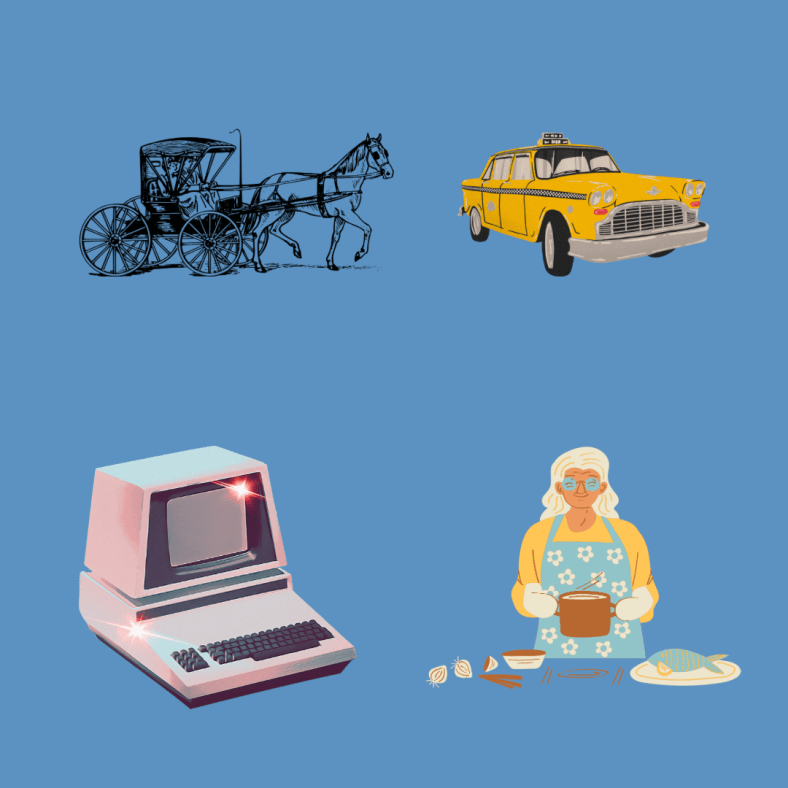
The word hack comes to us from Middle English, hakeney, a horse used for riding. It has been in common use as hackney, a horse of small stature appropriate for riding or pulling a small carriage (versus one used for plowing or pulling wagons) since the 1600s, perhaps earlier. Hack, the obviously shortened version, it along with its adjectival form hackneyed, almost immediately took on more sinister uses.

The hackney pulled carriages became a favorite for rides for hire throughout London, the horse and carriage combination commonly called a hack (which is why we still call taxis, cars for hire, hacks), and anything or anyone offering himself or his property out for hire, also was considered a hack. At this same time, the hackney pulled carriages became so prolific, hackneyed was coined to describe anything commonplace.

Hack continued to grace the pages of English dictionaries as a carriage or vehicle for hire or, in a pejorative way, one of common upbringing, skills, or expectations, and it continued without much controversy as such until Americans got involved. Through the early twentieth century, hacks here were also cabs and commoners but we expanded hack to refer to one who did the bare minimum to earn his pay in almost any field, whether a hack writer or a hack surgeon. And then, just about mid-century, something weird happened. Hack took its turn as a verb in American verbiage, as in, “That’s too much for me, I just can’t hack it anymore.” And that may (MAY) be its entry into computerese.

Mid-century computer programming was a long, difficult, and often trial and error experience. Those who were successful at programming proudly claimed they could hack it. And hack, hacker, and hacking became positive references to those proficient with the inner workings of computers and programming languages. About the time Matthew Broderick was changing grades for him and his high school sweetie, hacking with reference to computers, regained its negative connotation.

None of this explains why today, hack is synonymous with a handy dandy household hint. Etymologically there is no connection. Yet today there will be no less than 48 billion headlines in cyberspace addressing life hacks, kitchen hacks, productivity hacks, dating hacks, health and beauty hacks, and probably hacking hacks. Perhaps 48 billion is a tad hyperbolic. I’ll check for a writing hack on how to get large numbers across in dramatic fashion.

Perhaps it is as one Quorum user suggests, “It sounds edgier. “Tips” are merely interesting and useful. “Hacks” sounds as though you’ve been devious and insightful, perhaps even forbidden. “Hacker” used to be somebody with exceptional skill at computers. “Hacking in” to a computer system was something that required a lot of knowledge and cleverness. “Hacks” carries some of that sense of astuteness, along with some of that sense of having inside information that others don’t have. So it makes people feel important.” He goes on to say, “To me they just sound like a…” but I’ll stop there. This is a family blog. I’d had to get hacked and have my posting privileges revoked.


Etymologically, bias is assuming something. Cognitive biases, nobody listening or discussing, assumes outcomes based on past behavior and can have significant consequences. In the most recent Uplift!, we discuss how with respectful communication we can live, work, and play well together. Take 4 minutes to read it and see if you agree.
B1529247-670A-4E42-8322-870ACCA73E39


No more word smithing

I was building discussion points for a project in another part of my life and I got stuck for a word. I needed something to describe what someone who originates an idea does – or did. I thought “introduce” didn’t capture the work involved, “create” sounded too supernatural, “instigate” seemed somehow sinister, and “initiate” was much too formal. Well that exhausted the listings in my mental thesaurus. Time to dig up Mr. Roget’s best seller and see if I could find just the right set of letters to satisfy my word quest. I was actually out of the chair when I slapped myself in the forehead, fortunately not wearing a heavy ring, when I sat back down, keyed in o-r-i-g-i-n-a-t-e, hovered, and right-clicked on it.

  • Create (already eliminated that one)
  • Invent (no, not the feeling I’m after)
  • Initiate (again, I thought of that one without anybody’s help)
  • Instigate (still sounds sinister)
  • Make (dull)
  • Devise (wouldn’t have thought of that in a million years but that’s ok because I don’t like it anyway)
  • Patent (I’d argue that’s the same as originate but that’s just me)
  • Coin (ooh, good word – not the right word but a good one)
  • Begin (blah)
  • Derive (again, I argue that derive and originate are not synonymous)
  • [ ] (notice, they didn’t even come up with “introduce” like I did, not that it mattered)

In the end, or actually middle given that I’m still working on the project, I went with “originate” knowing I’ll never be completely satisfied that I did my best at creating an original set of discussion points. (See what I did there? Hmm?)

Although my mini-search hadn’t satisfied my curiosity for an appropriate substitute for “originate,” it raised my curiosity about words. I seem to end up with three of four posts about words and language each year. That’s a lot of words! I’ve gone back and forth to suggesting we need more words to we have too many words to we need better words. I know we need still need better words and I offer my ambivalence toward “originate” for proof. I’m not so sure we need more words, yet we keep inventing them. In one of those posts up yonder (or should I say heretofore mentioned), I wrote, “The English language is said to have close to a million words in it. I’m not sure who counted that but the most complete, or as they would put it unabridged dictionary of the English language, the Oxford English Dictionary, has about 620,000 words. But language doesn’t equal vocabulary. And vocabulary doesn’t equal language. The average educated English speaking person knows around 20,000 words and uses but about 2,000 words in a week.”

That was in 2017. Now things are even more confusing. The OED still contains over 620,000 listings, listings not words, many are duplicates because we use the same word for different uses. (See that. I did it again.) It lists (yep, again) 171,000 different words. But now those same sources say the average American English speaking person knows about 40,000 words. How did we double our word count in six years? For comparison, Classic Latin is composed of (comprised of?) 39,500 words.

There’s something not right here. I’m just not sure exactly how to express it.


Looking for your own perfect word? Practice your vocabulary. They say practice makes perfect, no? No! If no one can be perfect, why practice? Practice has to make something. What practice makes is a more positive you! Our most recent Uplift! digs into how that can be.

Go take a look for yourself. You can be there and back in about 3 minutes.


Untitled design-3


A tale of two speeches

It was the best of speeches, it was the worst of speech…no, I’ll leave that cliché alone today. It was a good speech, or presentation if you will. But it ended up with an unexpected twist when I was mingling with some of those still around as we wrapped up the evening.

Over the last few weeks there have been a number of things to remind me that people, whether they expect it or not, react differently to the same stimulus. I’d say I’ve read 4 or 5 blog posts, one journal article, an online article, and even had a discussion with my daughter after a retreat she had last week about it, so I certainly should have expected it. People see things differently. Nothing wrong with that.

The program I had just finished was one I’d written similarly here if you want to get the gist of what I had said that evening. The intro was different. I had couched the events comparing miracles to long shots, using the current billion dollar MegaMillion jackpot as the definition of long shot. I started with “Yes, I bought my ticket. Oh I know the odds are astronomical but I’ve faced longer odds than that and won. On, no. Not a cash jackpot. I hit it big in the miracle lottery!” and from there described my journey from secular “guy grabbing with both hands” to true believer in the power of prayer and that miracles do happen (although it is our job to figure out why), in four brushes with death over a span 20 years.

As usual, the after-crowd included those stopping by to say things like “You’re so brave to tell your story like that.” (Not really, it’s not like the audience was made up of grizzly bears, just other people). “Wow, so inspiring!” (Thank you.) “Did you ever just want to give up?” (Hmm, no, I never did even though I knew things were going to be different no matter how they turned out.) And “I want to thank you for talking about prayer here, here, not in a church. I just discovered a few months ago what I was missing. Faith. Believing in something. You don’t see that out in public. It meant a lot to me to see you put your faith out there for everyone to see.” (Wow. That’s the one I didn’t expect.)

I expected to give an inspirational speech, one saying that you are never alone, you ask for help from whom you know will stand by you wherever you find your helpers. He heard a motivational speech, one that told him that you can be the person you are meant to be no matter where and with whom you are.

Two speeches out of one set of words? Maybe four speeches: one of strength, one of hope, one of inspiration, one of motivation. In truth, one speech for everyone present plus one for me. Everyone hearing the same words and taking from it what they need to hear, what their mind, soul, spirit, or heart wants to take from it. For me, whatever I need at the moment: confirmation, validation, acceptance, fulfilling a promise. I’ve often said you write for yourself and you speak for yourself. What your reader or listener hears are more than the words, but the message they need at the moment.

Yes, it was the best of speeches, and we’ll leave it at that.


Not getting everything out of everything you’re working on? Maybe you’re trying too hard. If you try to give 110% you will always end up at least 10% short. Try easy and surprise yourself when you exceed expectations! We explain our logic in the latest Uplift! Spend 3 minutes and see what we’re talking about.


5D96E523-4104-401E-9B76-441266AD2FC9


Things people didn’t say

I’ve spent much of the last week out, in public even! A variety of appointments and a need to replenish my gas tanks and cupboards has had me at more offices, stores, and service centers than usual (and even some fast food drive thru lanes and coffee shops). And all of them presented some great opportunities to make us aware of some things that desperately need said.

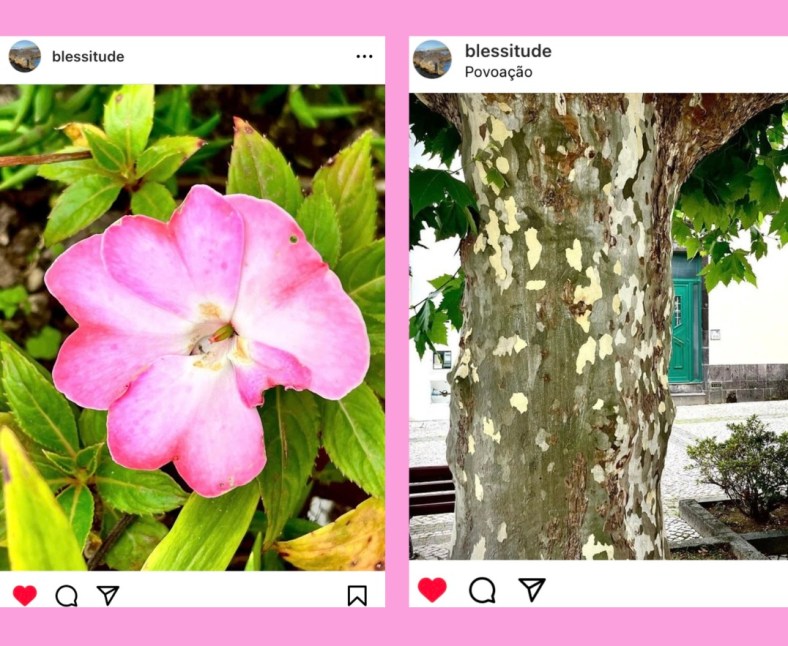
Before I start down the path from which they may be no return, here is something I never hear anybody say and you all really should be saying. “Let’s see what’s happening on the Blessitude Instagram page.” Blessitude is run by a most dear friend of mine who since January of 2019 has been posting images of hearts out in the world, proof that we are precious and loved. She describes Blessitude as the art of being gratefully blessed. Her photography is as special as the imagines she captures. There’s nothing for sale, nothing being asked for. It’s just a place to see His beauty that surrounds us, the precious and the loved. Here are a couple samples of her latest finds.

Untitled design - 1

Now, on with the rant, errr I mean discussion. Actually not so much a discussion, just the thoughts you know these people are thinking and would probably show up in a little balloon above their heads if they were in the comics section – where some certainly belong!

  • “Do you think it’s a good idea to wear a nose ring, especially one that looks like it was last used by a large bull, while I wait on tables?”
  • “Yes, the ad says buy three tires, get one free, and that’s why we have to charge you $75 for the valve stem for each wheel and naturally if we put that in the ad too, you’d realize you just paid $300 for that free $250 tire. Did we also mention balancing is extra?”
  • “Thank you for filling out this 8 page questionnaire. If you have a seat someone will take you to another room and ask you all the same questions.”

The above on the way in, the below on the way out.

“And here’s your reminder card for your next appointment. Don’t worry about getting here on time let alone the fifteen minutes early like that card says as the doctor is always running late. Next time ask for the first appointment of the day. That one he’s at least ha a shot of getting close to.”

  • “Of course there’s a lot more ice cream in the back, and probably even the flavor you want. Come back tomorrow when it’s not on sale. We’ll have it out then.”
  • “Please don’t try to confuse me giving me 8 dollar bills and two pennies to pay $7.27. If I knew math I’d have been an engineer like my mother wanted me to. Besides, it gives me a headache.”
  • “I really should stockpile some generic posts for when life gets busy because of a variety of appointments and a need to replenish my gas tanks and cupboards that had me at more offices, stores, and service centers than usual”

You know something else people say but don’t say often enough. “Hi. How are you. Nice day, Isn’t it?” We talk about how kindness counts, that it is a natural part of living, never out of place, and should be a habit, not just some random act, in the latest Uplift!  We write them to take only 3 or 4 minutes to read so there’s always time for an uplifting message. Nothing for sale there. Just some motivation to help you  through your day.


Rewriting the dictionary

Most of you know I have a passion for old movies. I likewise enjoy old books, not old classics, but old popular fiction of another day. Although it didn’t start when I decided to make a quest of reading the source material for the movies I watched, it took a good, strong hold then. I’m currently working my way through the works of Erle Stanley Gardner, mostly those written under his name and most of them of  the famous “Perry Mason” series, and most of his “Cool and Lam” detective series published as by A. A. Fair. I’ve also read all of Raymond Chandler, and Dashiell Hammett, and good deal of S. S. Van Dine, and Michael Arlen, writers reaching from the 1950s back to the 1910s. Some recognizable, others not quite household names, most standing up well to the ravages of time.

Believe it or not, that was a tangent I got in. What I really want to talk about is how language changed. Or more appropriately, the words. Not how we have added words to our vocabulary, but of how we just quite willy-hilly change the meaning of a word for seemingly no good reason other than that’s what someone wants.

Quite a few changes have had to do with sex and sexuality and are well known. When Hammett wrote of visiting a gay night club, it was a place where people went for a fun night out, perhaps dining with dancing or a floor show. If Chandler wrote that something was queer, he meant Phillip Marlow was puzzled over something. When Arlen had a character make love (and it was always one as he made love to her, not they made love together) he had a male character lavish a woman with flowers, gifts, and nights out, perhaps holding hands or sneaking a goodbye kiss on the front porch. As people became more comfortable discussing sex and sexuality, they did not become more comfortable using the words to describe sex and sexuality so they borrowed these seemingly innocent words and gave them their more blushing, new meanings.

Some words changed meaning because they evolved into their new meanings, somewhat related to what they previously represented. Prior to World War II, when one retired, one stopped work for the day and went to bed. After the war it took to meaning leaving a room at any time of day, and eventually to the now most familiar term describing one who has quit their life’s work and entered their post-employment phase of life.

Many words changed because of the burgeoning computer age. These words did not change as much as they took on new meanings. Cloud, footprint, and firehouse are among words that have added to their definitions to include computing actions or activities. It is likely that 100 years from now, people will still refer to a visible mass of particles of condensed vapor suspended in the atmosphere as a cloud and by then maybe even still to a remote, digital storage system.

While I’m talking about changes, I’m proposing no word changes but I am considering changing the blog name. I am consolidating some personal projects under one umbrella site, iammichaelross.net. I expect that to be live within the next 10 days. My next blog post made be delivered to you as you are used to, The Real Reality Show Blog by WordPress or via the new site, also hosted by WordPress. (If you’re wondering, this change won’t affect ROAMcare.org which is an arm of a separate not for profit education foundation that I just happen to be partnered with.)


Speaking of ROAMcare, and talking about words, we mentioned a word not usually mentioned around the dinner table, propinquity, whose meaning also changed over time. We mention when we talk about why some people work so well together, seeming to mesh effortlessly as we talk about strange forces at work (and at home too) in the latest Uplift!


7045BBA1-037B-48F8-93E4-A54FF8A9E031


Making Beautiful Music Together – Revisited

While I was pondering what to post on a day that falls between the second of July (lower case “s” and the Fourth of July (upper case “F,” aka Independence Day), I found that recently I had definitely overplayed the not as entertaining as it used to be “weekend holiday sales theme,” the self-righteous “everybody is wrong about what this holiday means” theme, the angry “why do people keep referencing their [fill your favorite amendment] and what they authors of [that favorite amendment] meant when nobody alive now was around when [said aforementioned amendment] was passed” theme.

What was I to do? I went back and checked on some of the previous Fourth of July aka Independence Day posts and found one that I really like, and it wasn’t even sarcastic or flippant. So I’m reposting that here and then I’ll be back at the end to tell you what I think about it today. (This post isn’t that old and some of you might actually remember it.)


For some reason I was thinking of a time ago when my daughter was a teenager filling her after school day hours with after school activities. Two of those activities, or one with two arms perhaps, were concert band and marching band when she played flute and piccolo respectively. The thing about those particular winds is that, except for perhaps in the fingers of Ian Anderson, they rarely play much that by themselves would be recognizable as music. While she would practice, I couldn’t be sure she was playing the right notes but during the performances, with the other winds, strings, and percussion, all the individual pieces came together to form true music. Every now and then an instrument might be featured in a solo, but for far longer the group played ensemble to make the really good stuff.

In a sappy poetic way, America is like those bands. Alone, we don’t sound like much. We’re single instruments playing random notes that make little sense alone. If you put all the piccolos together, they still don’t make much musical sense, only now they make it louder. Likewise, groups of like-thinking individuals spouting the same lines make little sense even when making a lot of noise. No, it’s not the number of people that make the country, it’s the variety. It might not work for other countries and that’s fine, but for America to work, there must be different voices, playing different parts of the same song.

Lately too many of us have been closing our ears to the other instruments that make up the American band. We’re content hearing only our own part, or worse, playing only solos. Then we question why others aren’t thinking the same thing. Oddly, the others are wondering likewise, everybody convinced their part is the main part, that their idea is the right idea. Why won’t everybody think alike? It really isn’t a matter of why everybody won’t think or say or do the same things. It’s because we can’t. We can’t think the same things because we don’t have the same backgrounds to formulate those thoughts. No matter how hard a piccolo tries, it cannot reach the same notes as a tuba.

You can only listen to a tuba solo – or piccolo or sax or marimba – for so long before you get up and walk out on the concert. The strength of the band, the beauty of the music, is not in the instrument. It is in the players who know when to play their notes, trusting that by allowing the other musicians to play their own notes, they will make beautiful music together.

This Independence Day, take a moment to think about how our differences are what makes us unique as a country. Yes, celebrate those differences, but celebrate the whole also. The music sounds best when all the instruments are playing together. Celebrate this Independence Day and enjoy our rights to life, liberty, and the pursuit of really good harmony.


We’re quite thankful for the freedoms we have and for those who continue to work to keep them for us.  I was one of those some years ago doing just that.  So maybe that’s why when I talk about what freedom means, or how I’d like to envision an harmonious country, I’m willing to take a few liberties with our liberties.  Be as rebellious as you want, but be mindful that freedom doesn’t come easy.  Nor does it come by the actions of one person, one group, or one party.

Go ahead and selfishly enjoy your freedom tomorrow. Wednesday, get back to the work of playing your part to see that next year you can again celebrate with those you don’t see eye to eye with, but you couldn‘t be an American without.


“Love begins with listening,” says Fred Rogers. In the latest Uplift! we say why we think that listening is an essential way of saying I love you, and might be the greatest gift we can give to somebody. (Approximate reading time = 3 minutes)


Happy Birthday America!


With liberty and justice for all who are just like me

Listen up Americans. Today is Juneteenth, a legal, federal holiday in the US. That means no mail, don’t stop at the bank, and keep alert for road closures during parade hours.

That’s about as much as most Americans know about this holiday. And frankly, that’s about all that most Americans know about any holiday other than Super Bowl Sunday. Something that happened 150 years ago isn’t on the collective radar. “Do I get to keep my gun” and “It’s my right to free speech” are all about what most Americans are concerned with when it comes to American history. It’s a shame that more effort isn’t put into the wide-ranging interpretation of so many other things that are ensconced in the National Archives, like “All men are created equal.”

Back in the middle of the nineteenth century, there was no Internet, no Twitter or its various alternatives, no Facebook, no 24 hour cable news networks. There was basically word of mouth supplemented by telegraph. Even routine mail delivery was limited to few cities and newspapers took the “news” part of their name somewhat tentatively. So the fact that it took over two years to inform the entire country that slavery had been abolished is, although not the best look for the rebuilding government, not completely surprising. The fact that it took 156 years to formally recognize it as a happening worthy of celebration is appalling.

There is another fact that is -ing-worthy. The fact that so little has been written anywhere about Juneteenth is concerning. It has gotten so little press you might think it still is 1865 and the news media is slow in getting around to the news part of things. Granted, this is only the third official celebration of Juneteenth as a national holiday. I suppose the American retailers haven’t yet decided if it will be a good holiday to sell mattresses, used cars, or major appliances. A holiday isn’t a holiday without its own merchandising identity. Coming so close to Father’s Day, propane grills and patio furniture are out of the running.

Again, considering the holiday is but three years old, there hasn’t been enough time for the crazies across the country to work up their usual rallies, protests, or boycotts. There is a chance that Juneteenth might escape those demonstrations of ignorance and anti-inclusivity since many of the loons who would be organizing them are so busy in June protecting us from the terrors of Pride Month.

For those who have made it this far, here is a serious and real history lesson. The Emancipation Proclamation was signed by President Lincoln on September 22, 1862, and took effect January 1, 1863, declaring that slaves held within the rebellious states “are, and henceforward shall be free.” The last state to release slaves as directed by the Proclamation was Texas on June 19, 1965 (hence “Juneteenth”), but that was not the last state to free slaves. The Emancipation Proclamation addressed only states under Confederate control. It wasn’t under the Thirteenth Amendment to the US Constitution was ratified in December 1865, that slavery was officially abolished in the United States. Sort of. The Amendment was ratified by the legislatures of 27th state to do so as required then by the Constitution on December 6, 1985 and it was certified by the Secretary of State on December 18, 1865. Because of some conflict with an existing state law on the gradual release of slaves, New Jersey had to amend its state constitution in order to comply with US law, and it wasn’t until January 23, 1866, when New Jersey, a Union State, freed its last 16 slaves.

The Thirteenth Amendment to the Constitution of the United States of America

Neither slavery nor involuntary servitude, except as a punishment for crime whereof the party shall have been duly convicted, shall exist within the United States, or any place subject to their jurisdiction.


Rest, recovery, and reflection are the three Rs we are not taught. We need rejuvenate ourselves so we can get back to the serious stuff of life. Just not 24/7. Read our tale in the most recent Uplift! of a time seriousness was seriously overrated. Approximate reading time = 4 minutes.


Untitled design

Remember why we remember

Most Memorial Days, a blog post writes itself.

  • Remember why we remember.
  • They gave so you can live.
  • It’s not all about parades and picnics.

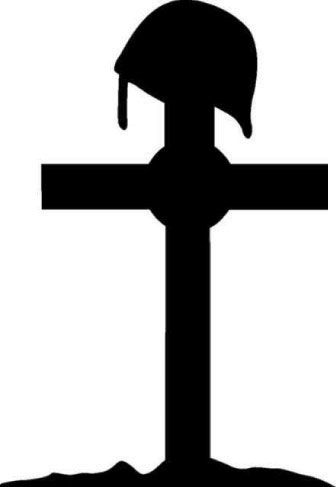
Toss in a graphic with a soldier kneeling in front of a cross holding a helmet and we’re ready to move on to next week’s post.

This year feels different. I just know those whom we remember when we get around to remembering didn’t give themselves over to our faulty memories for what we’ve turned their country into. I think I can say that because I too served.  You likely didn’t know that. I’ll mention it now and then but it isn’t what defines me. Just another one of the many “used to be”s I used to be. But I used to be one long enough that I spent much time getting to know why we do what we do, or did.

Most of the people I served with were volunteers, those who weren’t had long served their obligations and their continued service was by choice, so we were all there by choice. People chose to serve for a variety of reasons. Some traded education for service time. Some looked to the service to learn or strengthen skills. Some looked to it as an end in itself, a career. Some just felt the need to do something.

None of the men or women I served with were killed in action while we served. Their names won’t be called out at noon today. It makes hearing the names, the bells, and the wail of a single bugle that much more meaningful to think others who held the same positions, did the same jobs, work the same duties would not be picnicking after noon.

Fortunately they won’t have to see what a mess we’ve made of their country.


We are called to serve one another and most days, there are plenty of opportunities to do so. Good caring friends can serve others to make life more meaningful. The most recent Uplift! explains how even among 3 geese, friend mean a more meaningful life!


SoldiersCross


Untitled

I had a very busy month the last couple of weeks. Yes, you read that right. I had more things going on in April than there were days in April! Some of them resulted in more than a few hilarious moments and were more than blog-worthy. Somehow, I couldn’t bring myself to write about any of them.

Last week there was an unsettling piece in the local news.  Four and a half years almost to the day after the Tree of Life shootings added Pittsburgh the list of cities that had hosted mass shootings, jury selection finally began for the trial of the man seen on camera, walking into a local synagogue and shooting 13 people, 11 fatally, while they were attending Saturday morning services. Four and a half years those families had to watch other families of victims of violence find some solace and maybe even some closure from crimes that happens years after the massacre that took their loved ones. Are we so jaded by killing we can take our good old time seeking justice?

During those 4-1/2 years over 1,900 mass shootings have happened in the US (I’m using the definition of mass shooting is one where 4 people excluding the shooter are killed or injured in a single incident.), 53 in April. Perhaps the most heinous was one of the most recent occurring on April 29 when 5 people were killed after asking a neighbor to stop shooting his gun in the front yard in Cleveland, Texas.

After each of the 1,940 mass shootings in the last 4-1/2 years, calls for gun control have been made and successfully opposed in the name if the Second Amendment. You remember that one.

A well regulated Militia, being necessary to the security of a free State, the right of the people to keep and bear Arms, shall not be infringed.

Some day, somebody from the NRA can tell me how killing 5 of your neighbors because they asked for some quiet, or killing 11 of them while they worshipped their God, is “necessary to the security of a free State.”

I’ll try to find some hilarious anecdotes for next week.


Too often we are defined by the work we do. Is that because we surround ourselves with work friends? We owe to ourselves and our closest contacts to see that our “loved ones” truly are our loved ones. In the most recent Uplift! we talk about why.


cropped-noexceptions-e1570754917696.png


I’ve been had

They’re out to get us!

In the course of 12 hours on Saturday I got 45 legitimate, expected emails. I thought that was a lot. That’s why I counted them. But there they were and there they were all with a reason for being there. They were headlines form the two local papers and headlines from the Associated Press and from Apple News and updates from two magazines I subscribe to. Three were from clubs or associations I belong to. There were five from Word Press, three new blogs from those I subscribed and two were stray “likes” to older posts of mine. A few were from stores I routinely order from, one was a delivery update on an order I am expecting. Oh yes, and there were even a handful from real people checking in. I had accounted for 45 emails that didn’t surprise me by being there.

Unfortunately during that 12 hour period, I had received a total of 141 emails. Sixty of those were shuttled to the Junk email box. That left 36. Those 36 were hanging out in my regular Inbox but weren’t expected to be there, nor were they from legitimate correspondents. Yes, they were spam. And not the tasty kind Hormel packs into those neat little tins. These were not only spam, they were phishing schemes designed to wheedle personal information to leverage my embarrassingly low financial accounts. Well, 28 of the 36 were phishing schemes. The other 8 were just annoying.

And just to make things a little more interesting, of the sixty emails that were sent to the junk folder, two were from my electric company following up on the power outages created by the storms during the previous week. Yes, the people who created the rules for our spam filters thought that I would be interested in “Real Russian women looking for love” but not in service updates from a legitimate public utility. [sigh]

Why do I bring this up now. Well, a couple of things happened that make this all a little more interesting. I don’t recall if I mentioned in a recent post but I am in the midst of a move, a personal relocation, a “pack everything you own into 80-100  itty bitty boxes and some strangers in a big truck will get them to your new abode” activity. One of the related activities is notify everybody who routinely sends you real mail – banks, insurance companies, magazine publishers, and such – of my new physical address. The last time I moved, all that sort of stuff had to be done in person or by phone. Now, many of them can be done on line. In the process of updating all the personal information profiles in all these sites are requests from them to add, confirm, or change any emails I’d want from them. From most I prefer no email correspondence. In fact, in most instances, I prefer no correspondence from them. Of course there were some companies I had not had a previous “internet connection” (tee her) and had to complete their profile including an email address along with a local street address, and all of them with the obligatory, “check here to confirm you have read and understand our 574 page statement of privacy practices.” Now I’m wondering if one of those that I so blithely clicked my way through was informing me they would be selling their mailing lists to the highest bidder. And maybe even the second and third highest bidders as consolation prizes.

Yeah, they’re out to get us, and I’ve been gotten.


Into everyone’s life rain falls. We can’t control what happens in life but we can control how we respond. That’s why in the most recent Uplift! We suggested that when life gives you lemons, make banana bread! Read about it here!


60F50B37-3B42-49EF-BF94-B4E9EC552C79