There have been a lot of stories this year regarding book banning in America’s schools. Legislature has been presented in seven states and parents have approached dozens of school districts specifically to remove specific volumes or entire categories of books from school libraries. Legislation was introduced in Florida to not limit challenges to school library holdings to parents but allowing any individual to challenge any holding. In Texas, Llano County Commissioners Court forced the closure of the local public library (public library!) so librarians could review all reading material for their younger readers to make sure books are age appropriate. That’s just this year. And it’s only March. That’s following up on a flurry of year end interest around books and children. According to NPR, Texas State Representative Matt Krause put more than 850 books on a watch list, targeting materials he feels “might make students feel discomfort, guilt, anguish, or any other form of psychological distress because of their race or sex.” (npr.org, “A Texas lawmaker is targeting 850 books that he says could make students feel uneasy,” Oct. 28, 2021.) No word on whether he read those books.
Questioning whether the Honorable (Ha!) Krause read all 800+ books on his list isn’t me being ornery as usual. It’s a legitimate question. Not just by me but legitimized by those in the know. Deborah Caldwell-Stone, director for the American Library Association’s Office for Intellectual Freedom said in a recent interview, “We’re now seeing challenges pop up based solely on social media posts. A video gets posted of a parent complaining at a school board meeting, and within days, we see challenges across the country using the same reasons. People are complaining because they saw it on social media, not because they actually engaged with the book.” (Triblive.com, “Book challenges are becoming more frequent, driven in part by social media,” March 14, 2022.)
My concern isn’t about the books being challenged. Book challenges and banning have been going on basically since there were books. It’s the way these challenges are being conducted. Small numbers of individuals uneducated in the library sciences making noisy demands of schools to conform to their (the uneducated small number of individuals’) idea of decorum based on what other uneducated small number of individuals are writing on Facebook, et.al.. In a recent CNN poll, only 12% of Americans believed parents “should have the most sway over which library books are on the shelves” and twice as many felt teachers and school personnel should have more control over library content. (cnn.com, “CNN Poll: Economy and education could shape how Americans vote in 2022,” Feb. 11, 2022.) In the past, challenges were based on the challenger’s personal experience with the book (that means he/she/it actually read the book) and may have actually been able to intelligently debate the content of the book and verbalize why he/she/it felt it (the book) was inappropriate. Now, the majority of challenges are opposing titles simply because they are on some list of ‘controversial’ books. I pointedly use “title” in that sentence because so often the title is all the “concerned” parent knows about the book.
There is no evidence that the current wave of book banning is accomplishing what I think the challengers to the titles are intending, that is a purge of all material contrary to their mores. I’m just not sure they know what their intentions are. Or possibly what mores are. And if anything, the publicity for these books, the classic titles and those barely known to anybody but the most dedicated librarians, has generated increased sales for the books.
We’ve seen when we let anybody with a computer and the ability to cut and paste how America responds to a global pandemic resulting in a death rate twice the rest of the worlds, how we’ve graciously accepted the transfer of power, and how we are politely carrying on primary election campaigns as we run up to the mid-term elections this fall. Perhaps the proposed bans shouldn’t be of books whose only intent is to encourage thought and generate intelligent discussion, we should instead be banning social media whose intent increasingly seems to be to pass off incomprehensible opinion as fact among those who never spent time in their school library back in the day when it was their school library.



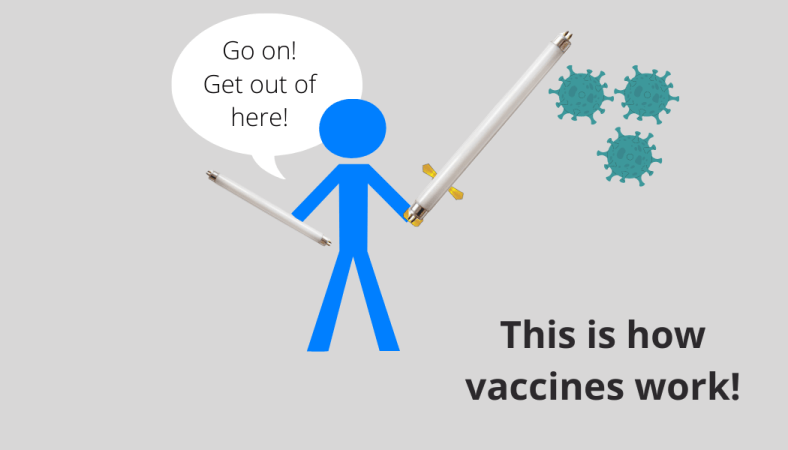
 On Thursday January 13, I drove myself across town to one of 3 clinics administering the more precious than gold elixir. About an hour later I actually felt better. The fever was low-grade rather than raging, the shaking and chills were reduced to a mild tremor, the squeezing headache relented, and the sore throat, eyes, sinuses, nose, in short everything north of the neck stopped hurting. I figure in 2 days I’ll probably be breathing again. Ha!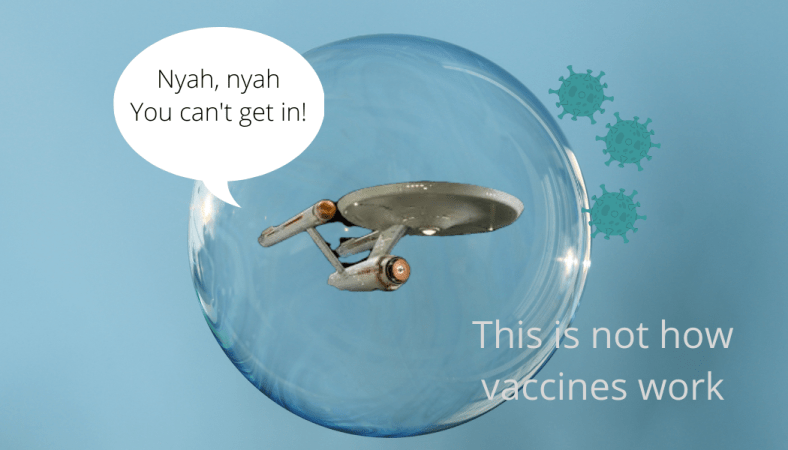
 My current favorite Christmas movie is the 1940 production of “Remember the Night,” pairing Fred MacMurray and Barbara Stanwyck four years before they team up to become the couple you love to hate in “Double Indemnity.” Here they are the non-couple you want so badly to become the couple you love. All the printed synopses are blah. The story they describe isn’t the movie at all. I saw this movie years ago and promptly forgot about it. Maybe it was where I was in my life. Maybe I wasn’t looking for joy. I saw it in the summer and maybe the joy was there but lost in the stifling heat of July. I saw it again a few years ago at Christmas and fell in love with it. This year I can’t get enough of it. To me, it really is “a perfect alternative to an imperfect world.”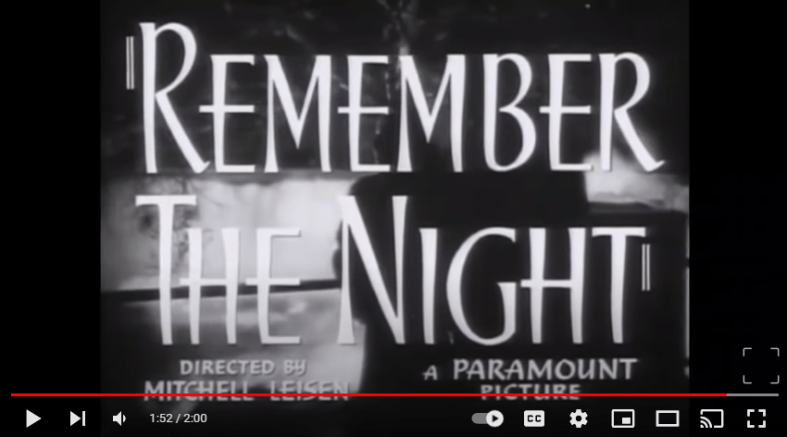

 I was heeding my own advice to take time at the start of December and see where the year has taken me, or started me toward, and what is left to do or want or need before this year becomes last year and next year turns into now. It’s my idea that the beginning of December should be a time spent reviewing the year, clarifying unmet goals, tidying loose ends left by the current year so we can meet January and the new year with the gusto they deserve! (Yes, those we my exact words. More on that in a few sentences.) We more often rush through December as if running away from the carnage left by the preceding eleven months. (More of my words. I like the carnage reference, particularly to address this year.) (Sorry, once again, I – say it with me – digress.)
 I published the post below in 2017. The world has changed since but our feelings toward it seem about the same. That no specific events are mentioned may be why I can look at that today and not be surprised that it doesn’t intimate the world’s current events. I wonder if it would have been as appropriate in 1945 or will be relevant in 2067. I wasn’t here yet for the former and don’t expect to make it to the latter so I will concentrate on 2017 and 2021 and find we are still just as clueless. Pity.
 The Real Reality Show Blog