May is an interesting month. It starts out somewhat Spring-like with weather in the “Not Too Warm Days, Not Too Cool Nights” range, newly planted gardens beginning to flower and promising what one hopes will be a bountiful harvest, lawns fresh from their first cut already starting to show the unmistakable lushness from the early application of grass food, and energetic people everywhere waiting for the first long bike ride or counting the days until the outdoor pools will again open. And then it ends with hot dry days and hot humid nights, the sun so high you’ve already gone through a year’s allotment of sunscreen, weeds, weeds, weeds and more weeds where you were sure you have planted zucchini, that grass needs cut again(!), the bike rack is still in pieces in the garage and the pool looks more like a mosh pit from an early 80s Slayer concert! Perhaps this explains why May is also National Blood Pressure Month. With escalations like these your blood pressure has a good chance of escalating also.
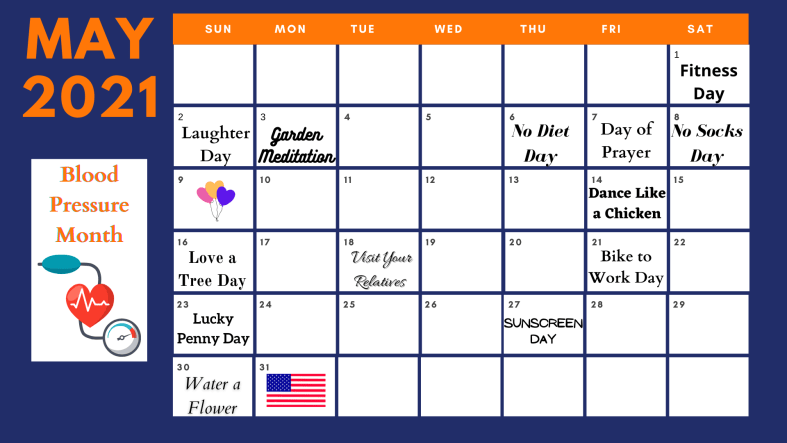
But May is also a month filled with days dedicated to practicing self-care, self-restraint and self-satisfaction, and keeping that blood pressure in the “Make Your Doctor Happy” zone. Seriously, can you imagine stressing yourself to the point of elevated blood pressure readings on Dance Like a Chicken Day?
May’s earliest days have already gone and we may have missed National Fitness Day or World Laughter Day, but you don’t need a special day to stretch out those winter bound muscles or snicker at a corny knock knock joke. We might have missed Garden Meditation Day but meditating any day will increase your positivity.
I’ve listed some of May’s contributions to keeping your blood pressure down. You can keep this list handy whenever your day starts mounting more pressure on you than you are comfortable with and remind yourself of the many ways a little physical activity or mental and spiritual awareness might ease some of that pressure and lighten your heart. (Warning: Visit Your Relatives Day might have the opposite effect on some!)
I have my favorites that I’m looking forward to. Please join me in a discovery of how you can celebrate National Blood Pressure Month and add to your health – body and soul!
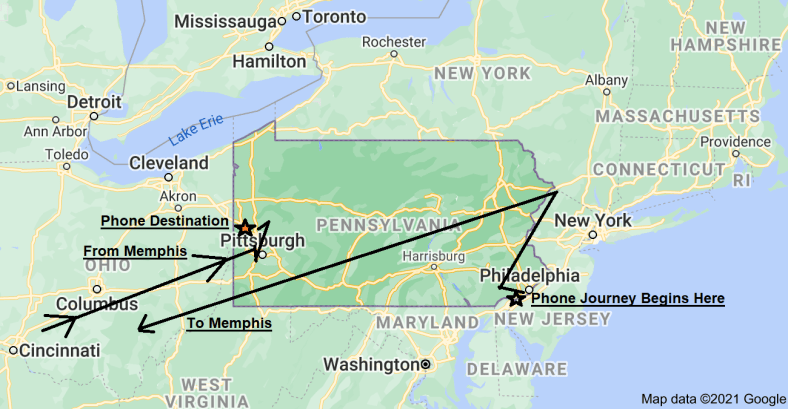 That’s roughly an 1800 mile trek to go about 310 miles in a straight line. Or at least as straight as the Pennsylvania Turnpike can manage. (If you’re wondering, the Memphis to Pittsburgh leg of the journey itself was a foot or two less than 770 miles.)


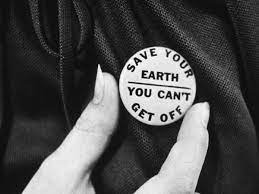 Many posters, PSAs, and other communications will remind us that we have only one earth, we should take care of it. And we are getting better. In 1970, the year of the first Earth Day, there were actually two Earth Days. The first was celebrated on March 21 suggested by newspaper publisher and environmentalist John McConnell to the United Nations Educational, Scientific and Cultural Organization (UNESCO). Mr. McConnell became involved with environmental activities when he began manufacturing plastic and realized how much plastic was being discarded. He presented his vision of a worldwide holiday “to celebrate Earth’s life and beauty and to alert earthlings to the need for preserving and renewing the threatened ecological balances upon which all life on Earth depends,” at the 1969 UNESCO conference in San Francisco. His vision saw the holiday celebrated on the Vernal Equinox (the first day of Spring) symbolic of an equilibrium between man and the planet. Earth Day was first celebrated on March 20, 1970 by proclamation of the city of San Francisco. The following year UN Secretary General U Thant issued a proclamation declaring Earth Day thence to be celebrated on the Vernal Equinox.
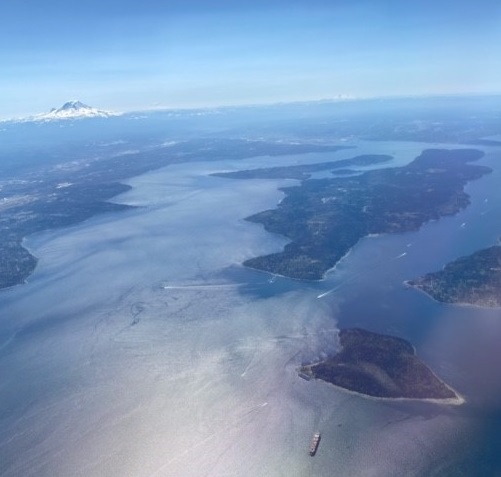 Clean air, clean water, and clean land deserve to be celebrated but not just one day a year. A few miles from my front door there is a county park with a hiking trail labelled on maps as the Rachel Carson Trail. Rachel Carson probably is known best for her 1962 book Silent Spring which questioned the “better living through chemicals” attitude of the time and warned of the dangers from the misuse of chemical pesticides. Many cite her book as the stepping off point for the environmental movement. But Ms. Carson was not an angry activist. She was a noted marine biologist and wrote three earlier books on sea life and marine activity, winning the 1952 National Book Award for nonfiction for The Sea Around Us. In 1935 after graduating from Pennsylvania College for Women (now Chatham University) in 1929 and receiving a Master degree in zoology from Johns Hopkins University in 1932, Ms. Carson was hired as a junior aquatic biologist at the US Bureau of Fisheries (which would later be reorganized as part of the US Fish and Wildlife Service) to write radio programs on marine life. She stayed with service, advancing steadily until she resigned in 1951 to write full time. Despite undergoing multiple operations from 1950 to 1960 for breast cancer, Ms. Carson continue to write and lecture until her death in 1964.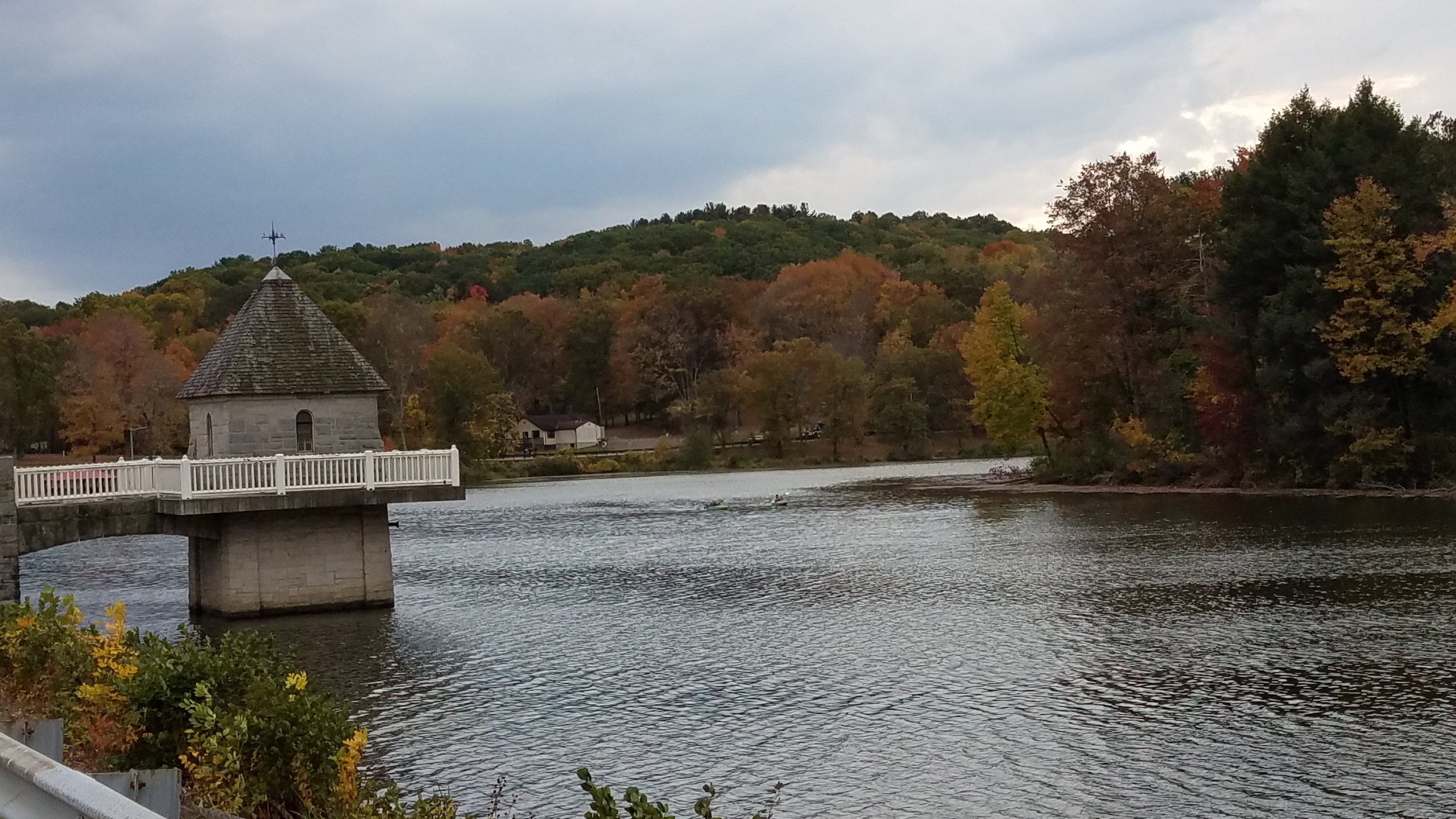

 If the numbers don’t get you – 107,000 waiting for transplant, a new person added every 9 minutes, 17 people dead each day because they did not get their transplant – how about this? April is half over. April is National Donate Life Month. There’s a Presidential proclamation and everything even. How many times did Donate Life Month headline a news report this month? How many people took to the streets to protest the needless loss of life of seventeen people yesterday, and the day before, and before that and before that and the one before that too? How many times did you even hear about Donate Life Month before today?

 The Real Reality Show Blog